
I. Regulatory Boundaries: Why "Muscle-Relaxing Anti-Wrinkle" Is Difficult to Establish Within the Cosmetic Registration Framework
1.1 The Deeper Logic Behind the Cancellation of Conotoxin Peptide Registration
The new cosmetic ingredient conotoxin peptide filed by Vickey Technology (National Cosmetic Original Filing No. 20230010) will be cancelled on August 31, 2026. The official reason given is "the actual function exceeds the scope of the cosmetic definition".
This statement needs to be understood in the context of the "Regulations on the Supervision and Administration of Cosmetics". According to Article 2 of the Regulations, cosmetics refer to "daily chemical industrial products applied to the surface of the human body such as skin, hair, nails, and lips by rubbing, spraying, or other similar methods, for the purposes of cleansing, protection, beautification, and modification".
The key point is: the effect of cosmetics must be superficial and physical, and cannot have medical or pharmacological effects.
The core efficacy claim of conotoxin peptide is "relaxing muscles and smoothing expression lines by blocking sodium ion channels". This mechanism directly acts on neuromuscular signal transmission and has clear pharmacological activity. Although the actual concentration reaching the muscle layer may be very low when applied topically due to the skin barrier, from the perspective of the ingredient's functional attributes, it is closer to a drug than a cosmetic ingredient.
1.2 Signals of Tightening Regulation
The cancellation of conotoxin peptide is not an isolated case. In recent years, the National Medical Products Administration has shown a clear trend of tightening control over the functional boundaries of cosmetic ingredients:
- June 2023: Guangzhou Municipal Market Supervision Administration explicitly stated that arginine/lysine polypeptide must not be marketed as "conotoxin peptide", and 1,480 products were required to rectify their claims
- 2025 Special Rectification: 1,426 batches of ordinary cosmetics claiming to contain conotoxin peptide were sampled, with a violation rate of 77.3%
- August 2026: The filing of conotoxin peptide as a new ingredient is officially cancelled
This series of actions sends a clear signal: any ingredient with clear pharmacological activity may face stricter scrutiny. The functional boundaries of cosmetic ingredients are being redefined, and "strict entry with strict management" is replacing "loose entry with strict management".
1.3 Far-Reaching Impact on the Industry
The impact of the conotoxin peptide cancellation on the entire anti-aging industry is reflected in three dimensions:
Brand Level: Products with "topical Botox" as their core selling point need to urgently adjust their formulas and marketing language. HANSHU's conotoxin peptide series products achieved GMV of 1.84 billion yuan in 2025, and Marubi's Little Red Pen Eye Cream series has initiated the cancellation of its filing.
OEM/Contract Manufacturing Level: A large number of contract-manufactured products using conotoxin peptide as a selling point need to urgently adjust formulas and re-file. OEM companies face multiple pressures including formula adjustment costs, filing cycles, and client communication.
Ingredient Level: Muscle-relaxing and neuromodulatory anti-wrinkle ingredients will all face stricter review. Arginine/lysine polypeptide (a previously used ingredient long colloquially referred to as "conotoxin peptide") has also reportedly been told that shipments will cease by the end of 2026.
II. Compliance Advantages of Medical Device (械字号) Anti-Aging Products
As the space for efficacy claims of cosmetic-registered products is compressed, the advantages of the medical device track are becoming increasingly prominent.
2.1 Greater Space for Efficacy Claims
Limitations of Cosmetic Registration (妆字号):
- Can only claim "cleansing, protection, beautification, modification"
- Cannot claim medical effects or pharmacological effects
- Cannot use medical terms such as "treatment", "repair", or "wrinkle improvement"
- Functional boundaries of ingredients are strictly limited to "superficial effects, physical effects"
Advantages of Medical Device Registration (械字号):
- Can claim "auxiliary wrinkle improvement", "skin repair", "wound healing", etc.
- Can use professional terms such as "medical device" and "medical grade"
- Wider range of ingredient selection, including ingredients with clear biological activity
- Efficacy claims are supported by registration certificates, providing strong compliance
2.2 Higher Consumer Trust
The registration and approval process for medical devices is rigorous, involving multiple stages such as clinical validation, technical review, and quality system assessment. Consumers naturally have greater trust in products bearing a "medical device registration certificate number".
Particularly in the anti-aging field, consumers are becoming more rational. They are no longer satisfied with "concept addition" or "trace addition" products, but instead seek products backed by genuine efficacy data. Medical device products precisely meet this demand.
2.3 Higher Competitive Barriers
Applying for a Class II medical device registration certificate requires:
- A registration cycle of 12-18 months
- Complete clinical validation data
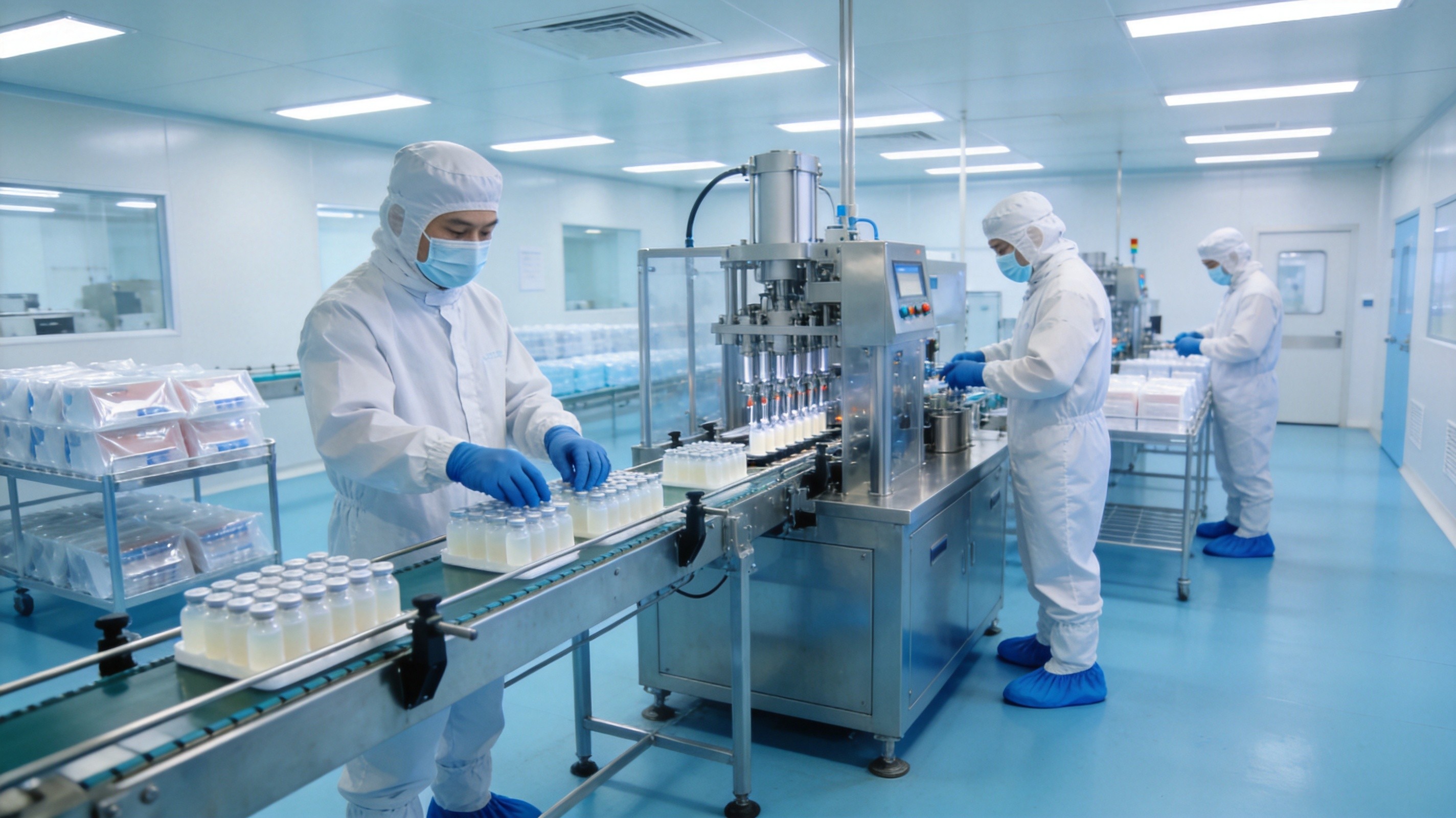
- A Class 100,000 clean workshop
- ISO 13485 quality management system certification
- Ongoing compliance with good manufacturing practice
These barriers keep a large number of small and medium-sized enterprises out. For companies that already have the qualifications, this represents a valuable competitive moat.
2.4 Stronger Policy Support
In recent years, national policy support for the medical device industry has continued to increase:
- Green channel for review and approval of innovative medical devices
- Pilot program for the medical device registrant system
- Policy support for medical device industrial parks
In contrast, regulation of the cosmetics industry is tightening, and compliance costs are rising.
III. Analysis of Core Anti-Aging Ingredients for Medical Device Products
After conotoxin peptide exits the market, which ingredients can take on anti-aging needs within the medical device framework? Here is an in-depth analysis of four core ingredients.
3.1 Recombinant Collagen: The "All-Rounder" of the Anti-Aging Track
Basic Information:
- Collagen obtained through genetic engineering technology expression
- Highly consistent with human collagen amino acid sequences
- Good biocompatibility, no immune rejection reactions
Mechanism of Action:
- Supplements skin structural proteins, improving skin laxity
- Promotes fibroblast proliferation, stimulating endogenous collagen synthesis
- Moisturizes and locks in water, improving skin barrier function
Approved Products: Multiple Class II medical device registration certificates with recombinant collagen as the core ingredient have already been approved for:
- Wound repair after facial laser, IPL, and radiofrequency procedures
- Repair of superficial skin wounds
- Auxiliary wrinkle improvement
Core Advantages:
- Safe and gentle, no sensitization risk
- Dual efficacy of repair + anti-aging
- Policy support, multiple industry standards already established
- Can claim effects such as "auxiliary wrinkle improvement" and "skin repair"
Guangdong Weitai's Advantage: We have completed the registration and filing of 78 Class II medical device products, with the recombinant collagen series covering multiple dosage forms including gels, dressings, and sprays, meeting various anti-aging application scenarios.
3.2 Mussel Adhesive Protein: A Rising Star for Wound Repair + Anti-Aging
Basic Information:
- Adhesive protein extracted from mussels
- Rich in DOPA groups, with strong adhesion properties
- High biological activity, significant repair effects
Mechanism of Action:
- Promotes wound healing, accelerating tissue repair
- Antioxidant, scavenging free radicals
- Moisturizes and locks in water, improving skin barrier
- Auxiliary improvement of wrinkle appearance
Approved Products: Mussel adhesive protein has been approved as a core ingredient in multiple Class II medical device registration certificates for:
- Skin wound repair
- Post-operative care
- Anti-aging care
Core Advantages:
- Significant repair effects, particularly suitable for post-operative care scenarios
- Outstanding antioxidant efficacy
- Natural origin, high safety
3.3 Hyaluronic Acid: A Classic Ingredient for Moisturizing + Filling
Basic Information:
- Naturally present in human skin, joints, and other tissues
- Extremely strong water-binding capacity (1g of hyaluronic acid can lock in 1000g of water)
- Obtained through microbial fermentation
Mechanism of Action:
- Deep moisturizing, improving skin dryness
- Filling wrinkles, improving skin smoothness
- Promoting tissue repair
Approved Products: Hyaluronic acid is one of the most widely used ingredients in Class II medical devices, with a large number of approved products for:
- Facial moisturizing care
- Wrinkle filling
- Wound repair
Core Advantages:
- Mature technology, stable supply chain
- High safety, extensive clinical application
- Controllable costs
3.4 Silicones: Scar Repair + Skin Smoothing
Basic Information:
- Organosilicon polymers
- Good biocompatibility
- Form a breathable protective film
Mechanism of Action:
- Maintaining a moist wound environment
- Softening and flattening scar tissue
- Improving skin texture
Approved Products: Silicone-based products are mainly used for:
- Scar repair
- Post-operative skin smoothing
- Skin protection
Core Advantages:
- Proven scar repair efficacy
- High safety
- Relatively low cost
IV. Transformation Path from Cosmetic Registration to Medical Device Registration for OEM/ODM Companies
4.1 The Necessity of Transformation
The conotoxin peptide cancellation event has made more and more companies realize: against the backdrop of tightening regulation, the space for efficacy claims of cosmetic-registered products is being compressed. For anti-aging products that require stronger efficacy claims, shifting to the medical device track is an inevitable choice.
The necessity of transformation is reflected in:
Market Demand Drivers:
- Consumers have increasingly high efficacy requirements for anti-aging products
- Concepts like "topical Botox" have already established mindshare on the consumer side
- Cosmetic-registered products cannot claim effects such as "anti-wrinkle" or "repair", making it difficult to meet market demand
Competitive Pressure Drivers:
- The cosmetic registration track is highly competitive with severe homogenization
- The medical device track has high barriers to entry and strong competitive moats
- Companies that establish a presence in the medical device track early will gain first-mover advantages
Compliance Risk Drivers:
- The functional boundaries of cosmetic ingredients are being redefined
- Claiming effects such as "anti-wrinkle" or "repair" may face compliance risks
- Medical device products are supported by registration certificates, providing strong compliance
4.2 Core Conditions for Transformation
Shifting from cosmetic registration to medical device registration requires the following core conditions:
Hardware Conditions:
- Class 100,000 clean workshop (ISO 7 class)
- Purified water system
- Clean air conditioning system
- Sterilization equipment
Software Conditions:
- ISO 13485 quality management system certification
- Professional registration application team
- Complete clinical validation data
- Ongoing compliance with good manufacturing practice
Financial Conditions:
- Class II medical device registration certificate application cost: 500,000 - 1,000,000 yuan per certificate
- Registration cycle: 12-18 months
- Clean workshop construction/renovation cost: 2,000,000 - 5,000,000 yuan
4.3 Specific Paths for Transformation
Path One: Independently Applying for a Registration Certificate
Suitable for companies with sufficient financial strength that plan to establish a long-term presence in the medical device track.
Steps:
- Product development and formula design
- Establishment of quality system (ISO 13485)
- Clean workshop construction/renovation
- Product registration testing
- Clinical validation (if required)
- Registration application
- Technical review
- Administrative approval
- Certificate obtained and production begins
Path Two: OEM/ODM Contract Manufacturing Cooperation
Suitable for companies that want to quickly enter the medical device track without bearing the cost and risk of applying for a registration certificate.
Advantages:
- No need to apply for a registration certificate independently
- Rapid market launch
- Reduced financial risk
Guangdong Weitai already holds 78 Class II medical device registration certificates, covering core ingredients such as recombinant collagen, mussel adhesive protein, and hyaluronic acid, and can provide brands with one-stop OEM/ODM contract manufacturing services.
Path Three: Acquiring a Company with Existing Certificates
Suitable for companies with substantial financial resources that wish to quickly obtain qualifications and production capacity.
Advantages:
- Rapid acquisition of registration certificates and production qualifications