
Recombinant Collagen Medical Dressing OEM: Maintaining Activity at 121°C High Temperature is the Real Technical Barrier
Recombinant collagen has been incredibly popular in recent years; any facial mask on the market claims to have "added collagen." But frankly speaking—adding it and adding it correctly are completely different things.
With 15 years in OEM manufacturing, I know the tricks of the trade all too well. To cut costs, some factories use ordinary heat-denatured collagen raw materials. After high-temperature sterilization, the protein structure completely falls apart, and activity is basically reduced to zero. The product indeed "contains collagen," but can this collagen still function when it reaches the skin? Don't you know the answer yourself?
Today let's discuss a hard indicator: Can your collagen raw material withstand 121°C high temperature for 40 minutes of sterilization while maintaining biological activity?
1. Why are sterilization conditions so critical?
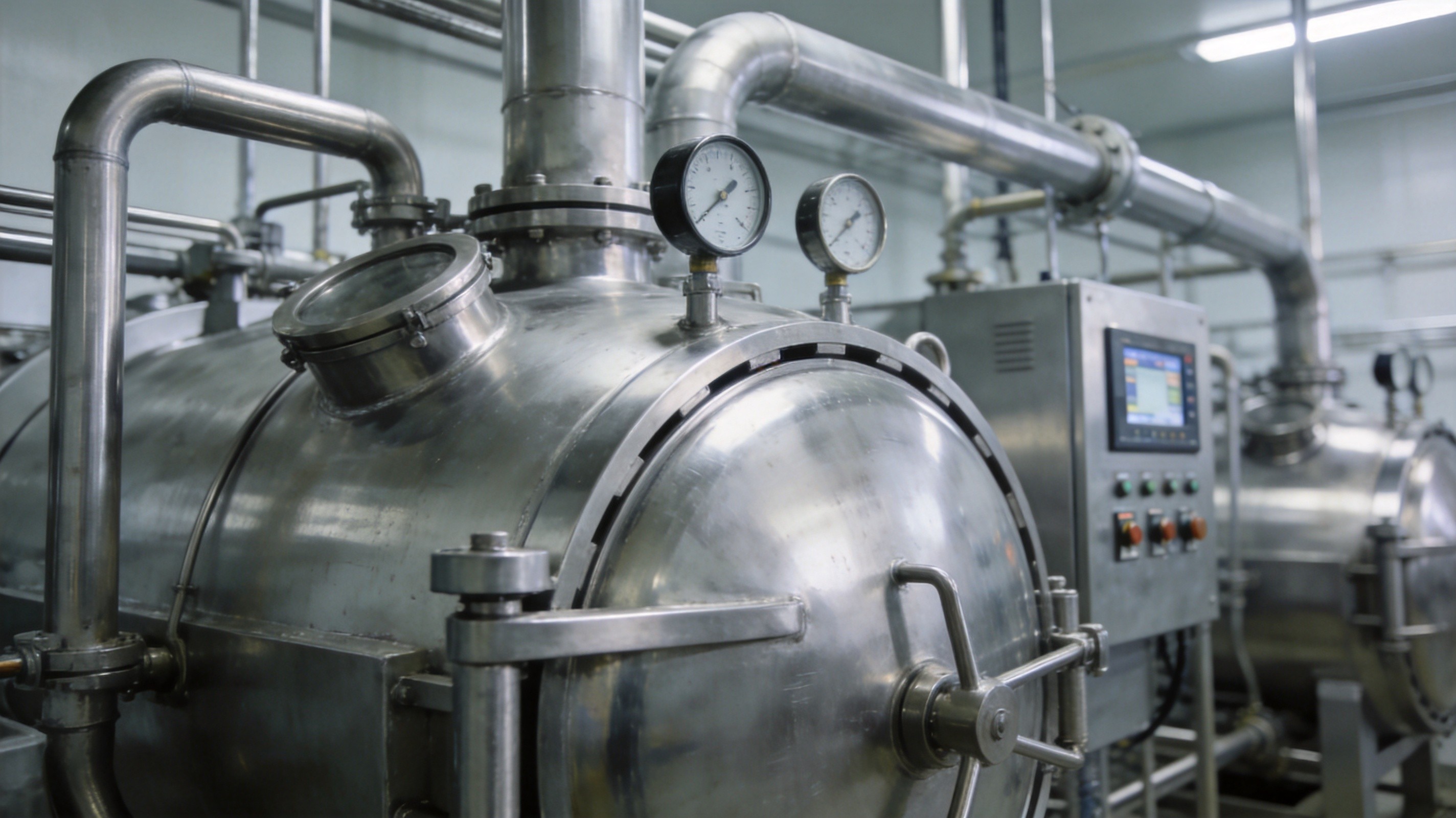
Class II medical dressings must be sterilized; this is a mandatory regulatory requirement. The most commonly used sterilization method is high-pressure steam sterilization (moist heat sterilization), with standard conditions of 121°C, 20-40 minutes. These conditions can kill all microorganisms including spores and are a reliable method to achieve a sterility assurance level (SAL) of 10⁻⁶.
The problem is: the vast majority of proteins will denature under these conditions. Collagen is a large molecular protein with a triple-helix structure, and its biological activity (promoting cell proliferation, promoting wound healing, etc.) depends on the integrity of the triple-helix structure. When the temperature exceeds 60-70°C, the triple helix of ordinary collagen begins to unwind; at 121°C, it basically completely denatures into random coils—the structure falls apart, and the activity is gone.
Therefore, whether a "recombinant collagen medical dressing" is effective or not depends not on "how much collagen is added," but on "how much activity remains after the added collagen is sterilized."
2. What kind of collagen can withstand 121°C?
The technical threshold here lies in the molecular design and expression method of recombinant collagen.
Currently, recombinant collagen raw materials on the market mainly come from three sources:
1. E. coli expression system
E. coli has high expression yield and low cost, but the recombinant collagen expressed usually lacks post-translational modifications (such as hydroxylation), and its thermal stability is relatively poor. After 121°C sterilization, the activity retention rate is typically between 20%-40%. Dressings made with such raw materials will have greatly reduced actual efficacy after sterilization.
2. Yeast expression system
Yeast (such as Pichia pastoris) expression systems can partially achieve post-translational modifications, and protein folding and stability are better than E. coli systems. The activity retention rate after 121°C sterilization can reach 50%-70%. This is the raw material source used more often in mid-range products currently.
3. Special engineered bacteria expression system
By introducing special thermostable structural domains into the recombinant collagen molecule (for example, designing specific disulfide bonds, optimizing the density of glycine-proline-hydroxyproline repeat sequences in the amino acid sequence), the thermal stability of the protein can be significantly improved. Recombinant collagen made with such raw materials can achieve an activity retention rate of over 85% after 40 minutes of sterilization at 121°C.
Our Weitai Group's recombinant collagen raw material follows the third route. After high-pressure steam sterilization at 121°C/40min, our raw material's activity retention rate is stably between 85%-92%, as verified by cell proliferation assays. This is not laboratory data; it is a routine test item for every batch of raw material upon arrival.
3. How can brands verify "no activity loss at high temperature"?
When many brands select OEM factories, the factories all claim their collagen is "heat-resistant" and "has good activity"—but how to verify? Just listening to the factory is not enough; data is needed.
Method 1: Check the raw material supplier's COA (Certificate of Analysis)
Legitimate raw material suppliers issue a COA for each batch, which should include the indicator "thermal stability" or "activity retention rate after sterilization." If the COA does not have this item at all, it means the supplier does not even perform this test—then whether the raw material you use can withstand sterilization depends entirely on luck.
Method 2: Require the OEM factory to perform comparative testing before and after sterilization
Brands can require the OEM factory to conduct a "before and after sterilization activity comparison" experiment during the sampling stage—take the same batch of samples, one unsterilized (as control), one sterilized at 121°C/40min, and then test activity separately (usually using cell proliferation method or ELISA to detect collagen content). The ratio of the two data sets is the activity retention rate.
Method 3: Check third-party test reports
The most authoritative way is to check third-party test reports. If the OEM factory's recombinant collagen raw material has undergone thermal stability testing by a third-party organization, and the report results support the claim of "no activity loss at high temperature," this data has the highest credibility.
4. Besides thermal stability, what else should be considered?
Maintaining activity at 121°C high temperature is a "hard indicator," but not the only one. When brands choose OEM factories for recombinant collagen medical dressings, they also need to consider:
- Protein purity: The purity of recombinant collagen should be ≥95% (SDS-PAGE test). Excessive impurity protein content increases the risk of sensitization.
- Molecular weight: Collagen of different molecular weights has different functions. For skin repair, the usual range is 30-100kDa. Too large (>200kDa) leads to poor transdermal absorption; too small (<10kDa) may lack complete bioactive structural domains.
- Endotoxin content: The endotoxin limit for medical dressings is usually required to be <0.5EU/mL. This indicator is directly related to the raw material's production process and purification steps.
- Batch-to-batch consistency: The fluctuation range of activity, purity, and molecular weight distribution between different batches of raw materials should be within ±10%. Raw materials with large fluctuations will result in unstable product quality.
Our Weitai Group's recombinant collagen raw materials have strict quality control standards for all four indicators above, and each batch has a complete test report. Every data point that brands receive in cooperation can withstand scrutiny.
5. Final thoughts
The recombinant collagen track is very hot now, but heat means chaos. The market is flooded with products that make "conceptual additions"—collagen is added, but the raw material added cannot withstand sterilization, and by the time it reaches consumers, little activity remains. Such products can sell in the short term based on concepts, but in the long term, they will not stand on reputation.
When brands make recombinant collagen products, they must make "no activity loss at 121°C high temperature" a hard screening criterion. OEM factories that cannot pass this indicator should not be chosen no matter how cheap the quote or how good the service—because the foundation of product quality is unstable.
If you have OEM/ODM needs, welcome to inquire. Weitai Group has 15 years of OEM experience, recombinant collagen raw material activity retention rate of 85%+ after 121°C sterilization, and experience with over 110 Class II medical device registration filings, providing brands with full-chain support from raw material screening to formula development to registration application to mass production delivery.