
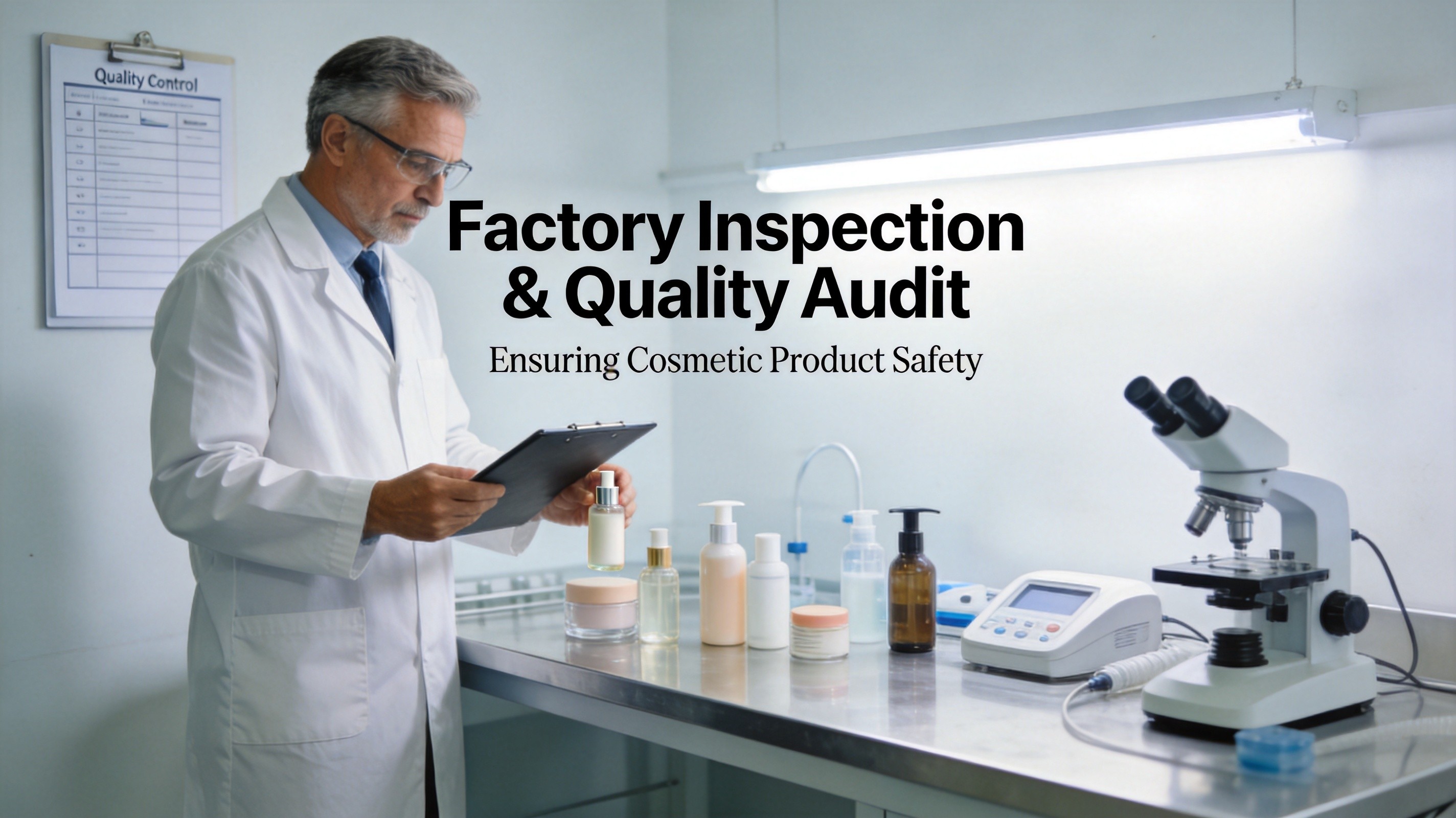
How to Choose a Class II Medical Device OEM Factory? Check These 6 Steps from Raw Material Source to Registration Certificate
Category: Industry News Core Keywords: Class II medical device OEM factory, OEM manufacturing, raw material compliance, registration certificate, GMP workshop, dressing private label
Key point upfront: Class II medical device OEM is not just about finding a factory to put your label on. From raw material traceability → formula development → production quality control → registration filing → label compliance → after-sales traceability, a problem in any step can cause your product to be delisted, fined, or even have your qualification revoked. This article breaks down the 6 core inspection steps, giving specific verification methods for each — ready to use right away.
Making medical device products is completely different from making cosmetic products. If a cosmetic product has problems, the worst case is consumer complaints and platform delisting. If a medical device product has problems, the drug administration will intervene directly, and in serious cases, criminal liability can be pursued.
So when choosing an OEM factory, you can't just look at low prices and fast delivery — you need to investigate from the root.
Step 1: Raw Material Traceability — Where Do Your Raw Materials Come From?
This is the most easily overlooked and the most critical step.
Many OEM factories use raw materials with unclear origins. Ask whether they are self-developed or externally purchased, and they give vague answers; ask who their raw material suppliers are, and they won't say; ask if they have raw material test reports, and they produce a blurry photocopy.
Verification method:
Require the factory to provide the NMPA master file filing number for the raw materials. On the drug administration's official website, entering the filing number allows you to verify the supplier name, quality standards, and scope of application. If it can't be found, it means the raw material has not completed compliant filing, and using it for product registration will result in rejection during review.
Also ask to see the batch test report (COA) for the raw materials, and pay attention to key indicators: purity, endotoxin content, microbial limits, and heavy metal content. A legitimate factory has a COA for every batch of raw materials, with traceable data.
Take recombinant mussel adhesive protein as an example: high-quality raw materials should have purity ≥95%, endotoxin ≤0.5EU/mg, and DOPA content is the core activity indicator — the higher the content, the stronger the film-forming and bioactivity. If the factory can't provide these data, the raw material quality is questionable.
Step 2: Production Qualification — Are All Certificates in Place?
For Class II medical device production, there are three hard requirements:
1. Class II Medical Device Production License. Without this license, you don't even have the qualification to produce. It can be verified on the provincial drug administration's official website.
2. Production Quality System Certification. ISO13485 is the international standard for medical device quality management systems, and GMPC is the Good Manufacturing Practice for cosmetics. A factory with both indicates that its quality management system has passed third-party audits.
3. Cleanroom grade. Class II devices require at least a Class 100,000 cleanroom. Ask the factory to provide the cleanroom test report, and check whether suspended particle count, settle plate count, temperature and humidity meet the standards.
Some factories will say "we have a GMP workshop" but won't specify the grade. Class 100,000 and Class 10,000 differ by 10 times, and the cost difference is significant. Always ask for the specific grade and check the test report.
Step 3: Formula Development Capability — Can They Do Customization?
For OEM private labeling, if you're just using the factory's fixed formula and putting your own brand on it, formula capability doesn't matter.
But if you want to create differentiated products — such as adjusting mussel adhesive protein concentration, compounding sodium hyaluronate and trehalose, or developing new forms like gels or pastes — the factory's R&D team must be able to keep up.
Verification method:
Ask the factory how many R&D personnel they have, what their educational backgrounds are, and whether they can produce samples within two weeks based on your requirements. A legitimate factory typically has an R&D team led by PhDs or Master's degree holders, capable of sampling, stability testing, and formula optimization.
Also ask: do you have your own patented technology? If the factory holds independent patents on core raw materials (such as recombinant protein expression technology or purification processes), it shows their R&D strength is not just talk.
Step 4: Registration Certificate Experience — How Many Reviews Have They Passed?
Class II medical device registration requires submitting a full set of technical documents to the provincial drug administration: product technical requirements, test reports, clinical evaluation materials, label and instruction manual samples, and more. During the review process, deficiency notices may be issued requiring supplementary materials.
If the factory holds multiple registration certificates of its own, it means they have successfully navigated the review process multiple times and know what reviewers focus on, which documents tend to have issues, and how to respond to deficiency notices. When they help you with registration, the chance of making mistakes is much lower.
Verification method:
On the drug administration's official website, search for the factory's name and see how many registration certificates they hold. Note the distinction: certificates under their own name versus certificates they helped clients obtain. Having both is ideal.
Guangzhou Weipei Biotechnology currently holds 13 Class II medical device registration certificates (Xiang Medical Device Registration series), covering recombinant collagen dressings, mussel adhesive protein repair dressings, sodium hyaluronate dressings, and other categories. Additionally, a new paste dressing certificate (Xiang Medical Device Registration 20252140844) was just approved.
Step 5: Label Compliance — Can It Withstand Professional Counterfeit Hunters?
Labels and instruction manuals for medical device products must strictly follow the content approved in the registration certificate. No over-scope claims, no absolute language, no implied therapeutic efficacy.
Many factories don't take this step seriously, thinking labels can be written casually. In reality, professional counterfeit hunters specifically target this. A single "best" character on a label or an unapproved claim can lead to reports and fines.
Verification method:
Ask the factory to show you label samples of their already-marketed products, compare them with the "scope of application" on the registration certificate, and check for over-scope claims. Then have the factory's regulatory affairs department review your label copy — legitimate factories have dedicated regulatory personnel.
Key checks: ① Whether the product name matches the registration certificate; ② Whether the scope of application exceeds the approved scope; ③ Whether there is absolute language like "best," "first," or "100% effective"; ④ Whether data citations are traceable.
Step 6: After-Sales Traceability System — Can You Trace Which Batch Had the Problem?
Medical devices require full traceability. From raw material intake → production process → finished product shipment → distributors → end users, every step must have records.
Verification method:
Ask about the factory's batch number coding rules. A legitimate factory's batch number can trace back to: production date, raw material batch, production line, operator, and inspection report number. If a problem occurs, the batch number allows quick identification of the problem step and initiation of a recall.
Also ask whether they have UDI (Unique Device Identification) coding capability. Starting in 2025, UDI implementation is being progressively promoted for Class II devices, and factories without coding capability will face limitations going forward.
Summary: A Quick Reference Table for Inspection
| Inspection Step | Key Verification Points | Quick Assessment Method |
|---|---|---|
| Raw Material Traceability | NMPA raw material filing number, COA report | Check filing number on drug administration website |
| Production Qualification | Production license, ISO13485, cleanroom grade | Check license on provincial drug administration website, review test reports |
| Formula Capability | R&D team, sampling cycle, patented technology | Ask about R&D personnel backgrounds, request samples within 2 weeks |
| Registration Experience | Number of own registration certificates, deficiency response experience | Search factory name on drug administration website to see certificate count |
| Label Compliance | Regulatory review, no absolute language, traceable data | Compare labels of marketed products against registration certificate |
| After-Sales Traceability | Batch number rules, UDI coding capability | Ask about batch number coding rules, whether raw material batches can be traced |
If the factory passes all six steps, it's basically reliable. If any step has a critical flaw, switch early — don't wait until problems arise after your product hits the market.