
Many people ask us: I want to create my own medical device skincare brand, how do I start?
Honestly, ten years ago this question was easy to answer—you find a factory, and they handle everything for you. But not anymore. After the implementation of the newly revised 'Cosmetics Supervision and Administration Regulation' in 2024, the industry threshold has been raised significantly. Especially for medical device products, which involve Class II medical device registration, the process is much more complex than for cosmetic products.
But complexity doesn't mean it's impossible. Today we'll walk through this path from start to finish.
Step 1: Understand the essential difference between cosmetic and medical device registration
First, let's clarify something many people confuse.
Cosmetic registration refers to ordinary cosmetics. The masks, serums, and creams you use daily are mostly cosmetics. They are regulated by the Cosmetics Supervision Department of the NMPA, and require filing before marketing, but the process is relatively quick, generally taking 2-3 months.
What about medical device registration? It's a medical device. The mask a nurse applies after you undergo a photoelectric procedure in a hospital dermatology department is most likely a medical device. It is regulated by the medical device supervision authority, and requires a registration certificate before marketing—note, it's 'registration' not 'filing'; these two terms carry completely different weight in the regulatory system.
Simply put: Cosmetic registration governs 'beauty', medical device registration governs 'treatment'. One is icing on the cake, the other solves problems.
Step 2: Does your product need medical device registration?
Not all skincare products require medical device registration.
Some brand owners say right away, 'I want to do medical device registration,' but actually their product positioning only needs cosmetic registration. Why insist on medical device registration? Because they think 'medical device registration sounds more impressive.'
This approach is wrong.
The real applicable scenarios for medical device registration are these:
- Post-medical aesthetic repair products: skin barrier repair after laser, microneedling, or fruit acid peels
- Special care for sensitive skin: for problematic skin with damaged barriers and repeated allergies
- Wound care: auxiliary healing for superficial wounds and burns
- Functional dressings: medical cold compresses, hyaluronic acid repair patches, etc.
If your product positioning is for the above scenarios, then medical device registration is the right choice. Because it can legally claim 'scope of application,' which cosmetic registration cannot do.
If your product is just for daily hydration, moisturizing, and whitening, cosmetic registration is fully sufficient; there's no need to spend that time and cost.
Step 3: How to obtain a Class II medical device registration certificate?
This is the most critical and time-consuming part of the entire process.
The application process for a Class II medical device registration certificate is roughly as follows:
1. Product technical requirements drafting
You need to specify the product's technical parameters, performance indicators, and testing methods. This is not just random writing; it must comply with the YY/T standard system.
2. Registration testing
Send the product to a qualified medical device testing institution for testing. The testing period is generally 3-6 months.
3. Clinical evaluation
Class II devices can apply for clinical evaluation exemption (if your product is in the exemption catalog), otherwise clinical trials or same-variety comparison are required.
4. Registration application
Submit all materials to the provincial drug administration and wait for review.
5. System audit
The drug administration will conduct a quality management system audit at your production site, equivalent to a 'major exam.'
The whole process, if smooth, takes 12-18 months. If not smooth? Two years or more is also common.
Therefore, most brand owners do not apply for registration certificates themselves. The cost is too high, the cycle too long, and the trial-and-error cost too great. A smarter approach is to cooperate with an OEM factory that already has a registration certificate—you handle the brand and market, the factory handles the registration certificate and production. This is the OEM/ODM model.
Step 4: What to look for when choosing an OEM factory?
Choosing a medical device OEM factory is completely different from choosing a cosmetic OEM factory.
For cosmetic factories, having GMPC certification, ISO22716, and a cleanroom is basically enough. But for medical device factories, you need to check if they have:
Medical Device Production License
This is the bottom line. Without this certificate, there's no discussion.
ISO13485 Quality Management System Certification
This is the quality management standard for the medical device industry, higher than the GMPC requirements for ordinary cosmetics.
Registration certificate holdings
How many Class II medical device registration certificates does the factory hold? This represents its technical accumulation and compliance capability. The more registration certificates, the deeper the factory's foundation in the medical device field.
Actual production capacity and delivery records
Some factories have complete licenses but limited capacity and can't schedule your order. Some have large capacity but unstable quality control. You need to look at delivery feedback from actual cooperative brands.
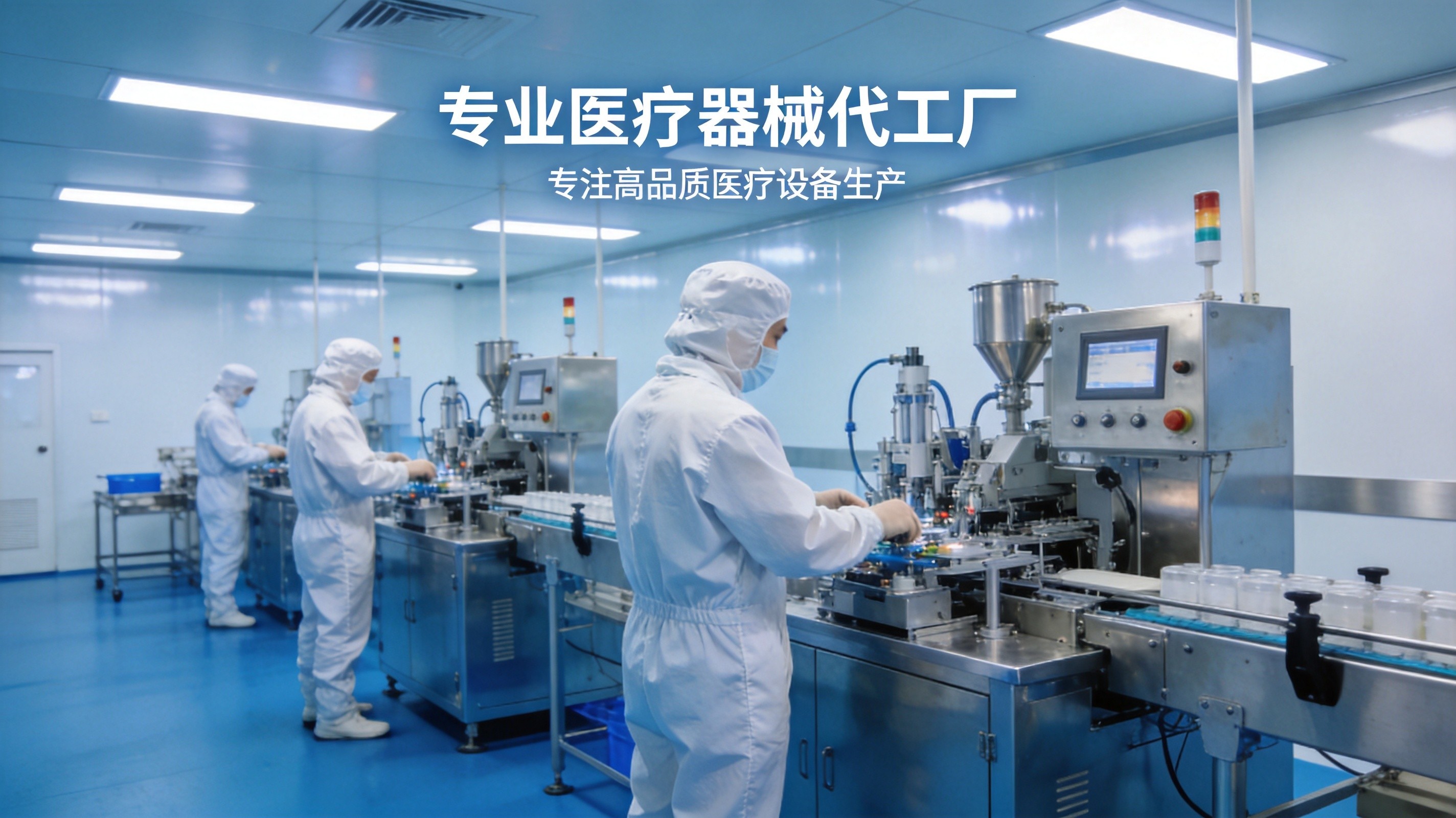
Take Weitai Group as an example—we have four major production bases in Changsha, Hunan, and Foshan and Baiyun, Guangzhou, Guangdong, holding over 110 Class II medical device registration filings, 72 patents, and have passed ISO13485, ISO22716, and US GMPC triple certification. From registration certificate application to mass production delivery, the entire process can be closed within the system. Brand owners come in with a product concept, and we can complete the entire path from formula development, registration application, testing, to filling and mass production.
This 'full-process' capability is actually rare in the medical device OEM field.
Step 5: The real cycle from formula to mass production
Many people understand 'OEM' as: you choose a formula, the factory fills it for you, puts your brand on it, and done.
Cosmetics can indeed be that simple. But medical devices cannot.
The typical cycle for a medical device product from zero to mass production is as follows:
| Stage | Time | Core Tasks |
|---|---|---|
| Formula development | 1-3 months | Determine efficacy direction, raw material screening, stability testing |
| Registration testing | 3-6 months | Submit for testing, issue test reports |
| Clinical evaluation | 2-6 months | Exemption evaluation or same-variety comparison |
| Registration application | 3-6 months | Drug administration review |
| System audit | 1-2 months | On-site audit |
| Mass production preparation | 1-2 months | Process confirmation, packaging procurement, first trial production |
Total approximately 12-24 months.
This is why we repeatedly emphasize: brand owners must plan their product launch timeline in advance. Don't wait until the market trend arrives to look for a factory—by then the registration certificate hasn't been issued, and the trend has passed.
The smart approach is to start the registration certificate application while you are doing brand planning. Advance both lines in parallel.
Step 6: Three things brand owners should care about most
Finally, if you are a brand owner preparing to enter the medical device skincare market, we suggest you focus on three things:
First, ownership of the registration certificate. Whose name is on the registration certificate? If the factory holds it, you will need to re-register if you change factories. If you hold it, you have the initiative. This must be clarified before cooperation.
Second, formula confidentiality. Will your exclusive formula be leaked by the factory to competitors? A reliable factory will sign a strict confidentiality agreement and have an independent formula management system.
Third, quality traceability. Can the raw material sources, production records, and testing data of each batch of products be fully traceable? This is not just a compliance requirement, but also your commitment to consumers.