
What Exactly Is ECM? Collagen, HA, and dECM—Clarifying This Set of "Mother System" Concepts in One Go
Let's state the conclusion in one sentence first: ECM (extracellular matrix) is a non-cellular three-dimensional network present in all tissues and organs, composed of approximately 300 core proteins; collagen is the most abundant structural protein in ECM (accounting for about 30% of total mammalian protein), hyaluronic acid (HA) is the only glycosaminoglycan in ECM that is non-sulfated and not covalently bound to a protein core, and decellularized extracellular matrix (dECM) is a natural biological scaffold that retains as much of ECM's complete components (collagen + HA + GAGs + growth factors) as possible through decellularization technology—the three are respectively ECM's "component/component/complete product." Collagen and HA in skincare products are merely partial "parts" of ECM, not equivalent to complete ECM (Sources: PMC11430160, PMC4185430).
I. What Is ECM: Why Skincare and Medical Aesthetics Are Both Talking About It
Over the past decade or so, the skincare and medical aesthetics industries have successively pushed ingredients like collagen, hyaluronic acid, elastin, and peptides into "star ingredients"; in recent years, terms like "ECM," "dECM," and "recombinant collagen" have frequently appeared in academic conferences, trade shows, and popular science articles. The concepts seem increasingly dense, but they all point to the same underlying object: the extracellular matrix (ECM).
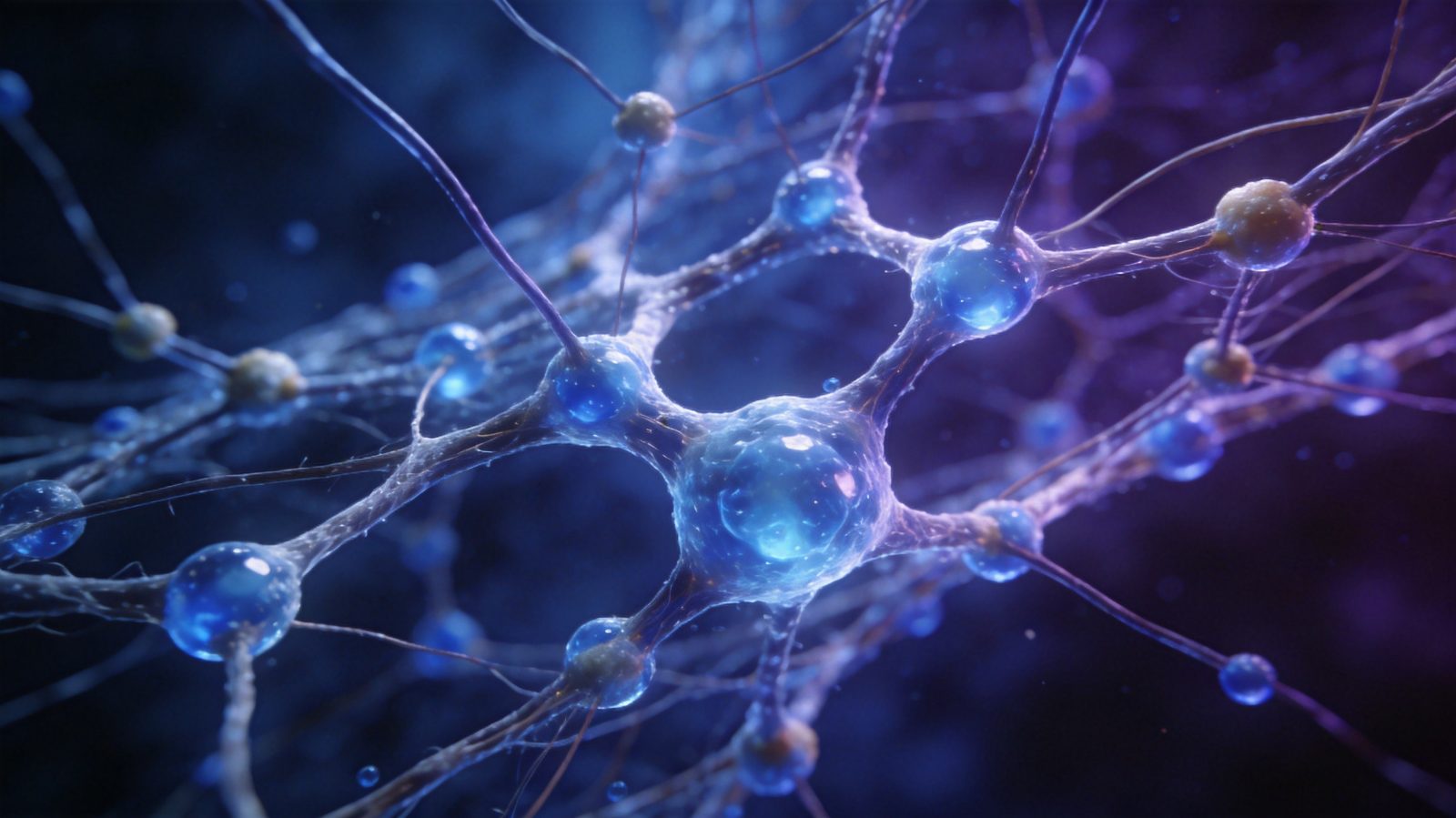
ECM is a complex three-dimensional network composed of various macromolecules that is synthesized by cells and secreted outside the cell. It is not a "component" but the "soil" on which cells depend for survival, communication, and repair. The reason fibroblasts in the skin can continuously synthesize collagen and maintain firmness is the mechanical and biochemical signals provided by ECM; wound healing and tissue reconstruction also rely on ECM as a "scaffold" to guide new cell ingrowth. Understanding ECM clearly provides a coordinate system for the efficacy, boundaries, and future directions of many single ingredients.
II. ECM's Four Major "Frameworks": Collagen, Elastin, HA, and Glycoproteins
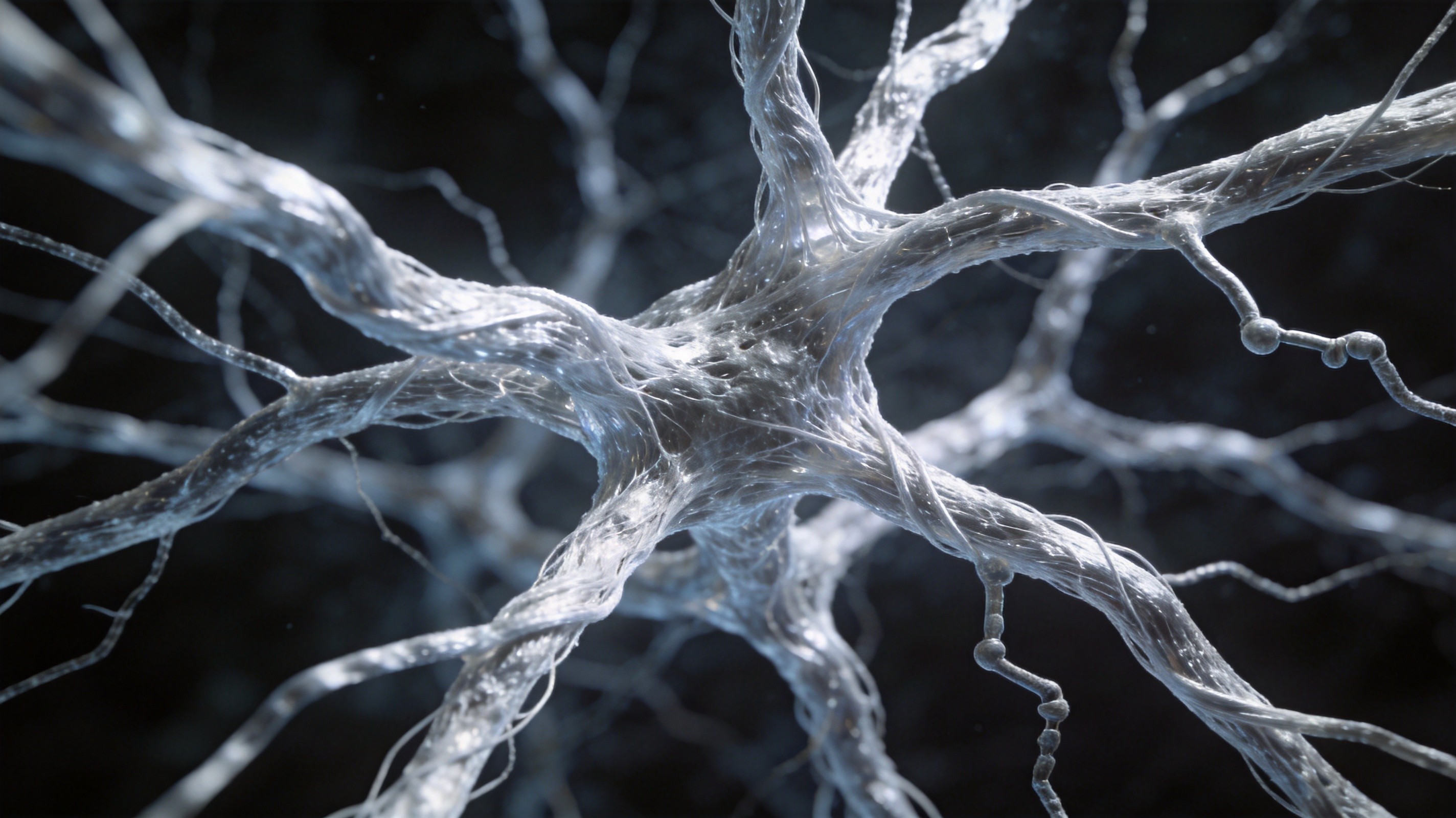
ECM's "core matrisome" contains approximately 300 core proteins, plus hundreds of related proteins (Source: PMC review PMC11430160). Functionally, they can be roughly divided into four major categories:
1. Fibrous Proteins: Collagen and Elastin
Collagen is the most abundant structural protein in ECM, accounting for about 30% of total mammalian protein; type I collagen accounts for 70%–80% of the skin dermis, giving skin its tensile strength. Twenty-eight collagen types (types I–XXVIII) have been identified in the human body, assembled from 46 different collagen chains; among them, types I, III, and IV are the most common types in skin and connective tissue. Elastin, on the other hand, gives tissues elasticity and recoil ability, and is abundant in skin, lungs, and blood vessels.
2. Glycosaminoglycans (GAGs) and Proteoglycans
GAGs are negatively charged polysaccharide chains that covalently bind to protein cores to form proteoglycans, responsible for space filling, lubrication, and growth factor storage. There is one "exception"—hyaluronic acid (HA): it is the only GAG in ECM that is non-sulfated and not covalently bound to a protein core, secreted directly by cells into the extracellular space, capable of binding about 1000 times its own weight in water while also participating in signal transduction.
3. Glycoproteins: Fibronectin and Laminin
These proteins act like "biological glue" in ECM, binding to cell surface integrins through sequences such as RGD (arginine-glycine-aspartic acid), regulating cell adhesion, migration, differentiation, and apoptosis—they are the key channels for "dialogue" between cells and ECM.
4. ECM's Four Major Functions
Overall, ECM plays four major roles in the body: structural scaffold (providing three-dimensional space and mechanical support for cells); signal transduction (transmitting mechanical and biochemical signals into cells through receptors such as integrins); ③ tissue repair and regeneration (acting as a storage depot for growth factors, degrading upon injury to release signals that initiate repair); directly related to aging (UV → MMP-1/3/9 → collagen fragmentation → fibroblasts lose attachment → reduced collagen synthesis, forming an aging cycle, Source: BJD / PMC11626319).
III. The Hierarchical Relationship of the Three: Collagen/HA in Skincare Are Just "Parts"
Once you understand what ECM is, the positions of collagen, HA, and dECM become clear:
- Collagen: ECM's "main beam," the most abundant structural protein, providing mechanical strength and scaffolding.
- Hyaluronic acid (HA): ECM's "lubricant + water reservoir layer," the only non-sulfated GAG, both moisturizing and participating in cell signaling.
- Decellularized extracellular matrix (dECM): Through decellularization technology, all of ECM's components—structural proteins, GAGs (including HA), glycoproteins, and even growth factors—are retained as much as possible, yielding a "complete ECM scaffold."
To summarize in one sentence: collagen and HA are partial components of ECM, while dECM is a natural biomaterial that attempts to preserve the entirety of ECM. Conversely, looking at skincare and medical aesthetics products: applied collagen, injected HA fillers, and injected recombinant collagen injections are all single-ingredient products "extracted from ECM and used alone"; each has its own mechanism and indications, and cannot be equated with "replenishing complete ECM." This is the layer of relationship most in need of clarification in popular science writing, and also where consumers are most easily confused.
IV. Why This Round of "ECM Fever" Is Worth Watching: Three Hard Data Points
Whether a concept is worth long-term tracking depends on real industry investment. Three sets of public data can be referenced (all with sources and years noted):
- Recombinant collagen: The global recombinant collagen market was approximately USD 4.12 billion in 2025, projected to reach USD 23.84 billion by 2032 (CAGR 28.5%) (Source: pmarketresearch.com). The Chinese market reached RMB 19.24 billion in 2022, with Frost & Sullivan predicting RMB 58.57 billion by 2025 and RMB 219.38 billion by 2030 (CAGR 44.93%) (Source: Frost & Sullivan / cited in Jinbo Bio financial reports). As of April 2026, China has 18 Class III medical device registration certificates for recombinant collagen (Source: 21st Century Business Herald).
- HA injectable fillers: The global HA injectable filler market was approximately USD 4.8–5.2 billion in 2025, projected to reach USD 8.2–9.3 billion by 2031–2032 (CAGR 8–10%) (Source: pmarketresearch.com / mordorintelligence.com).
- dECM crossover: In 2025, the National Medical Products Administration (NMPA) new classification definitions included "medical micronized decellularized dermal matrix," with indications for nasolabial fold filling or facial contour improvement, classified as a Class III device (Source: NIFDC 2025 classification definition document). This means dECM is taking a key step from burn/wound dressings toward the medical aesthetics injection field.
Looking at the three lines together: recombinant collagen is in high growth, HA is steadily expanding, and dECM is testing the waters of crossover. For brands and clinics, these three lines have different maturity levels, different regulatory thresholds, and different suitable entry approaches. Subsequent articles will elaborate on each.
V. Cosmetics vs Medical Devices: First Distinguish "Who Is Who"
ECM-related concepts span two worlds—"skincare products" and "medical aesthetics devices"—and the most common pitfall in content creation is conflating the two.
Cosmetics (Cosmetics Registration)
Using ECM-related ingredients such as collagen, HA, and proteoglycans as skincare raw materials, their effects are mainly focused on moisturizing, improving stratum corneum hydration, and helping maintain skin barrier status. According to the "Cosmetics Supervision and Administration Regulation" and supporting regulations, cosmetics must not claim medical efficacy, must not imply effects such as "wound repair/regeneration/anti-inflammation/replacing injections/promoting cell differentiation," and must not use absolute terms.
Medical Devices (Device Registration)
HA injectable fillers, recombinant collagen injections, dECM dressings, and filling materials are all managed as medical devices, with injectables typically classified as Class III medical devices, requiring use within the approved indications of the registration certificate. Device-registered products must not claim cosmetic efficacy (such as whitening or anti-wrinkle), and promotion is limited to the approved content of the registration certificate.
By drawing this line clearly first, any subsequent discussion of ECM ingredients can be both scientific and compliant.

VI. Reading Path for This Series
The topic of ECM is too large; it is clearer when broken down. This series consists of 5 articles, recommended to be read in order:
- This article (Overview): What ECM is, the hierarchical relationship of collagen/HA/dECM, and why this round is worth watching.
- Collagen Article: Collagen's role in ECM, recombinant collagen vs animal collagen, Class III certification and market data.
- HA Article: Transdermal mechanisms of different molecular weights, endogenous HA synthesis pathways, and real RCT data.
- dECM Article: Definition and preparation of decellularized extracellular matrix, and its crossover from wound dressings to nasolabial fold fillers.
- Prospects Article: Scale, growth rates, and regulatory trends of the three tracks: recombinant collagen, HA injections, and dECM.
Each article will strive to separate "scientific facts," "manufacturer claims," and "industry forecasts," and will include an FAQ at the end for easy reference according to your needs.
Frequently Asked Questions
Q: Are ECM and collagen the same thing?
No. ECM is a "mother system" composed of approximately 300 core proteins, while collagen is the single most abundant component in ECM. By analogy, ECM is the "overall reinforced concrete structure," and collagen is the "rebar."
Q: If a skincare product mentions "ECM," does that mean it replenishes complete ECM?
No. What skincare products can typically add are single ingredients such as collagen, HA, and peptides—they are merely partial "parts" of ECM, not equivalent to complete ECM. Complete ECM is a complex three-dimensional biochemical network that currently cannot be reconstructed through topical application.
Q: Can HA (hyaluronic acid) applied to the skin reach the dermis?
It depends on molecular weight. Public RCTs and reviews show: high-molecular-weight HA >1000 kDa mainly stays on the stratum corneum surface forming a water-retaining film; medium-to-low molecular weight 20–300 kDa can penetrate to the deep epidermis; low-molecular-weight HA <100 kDa has a chance of reaching the superficial dermis (24-hour penetration rate of about 14–19%), and can stimulate endogenous HA synthesis through the CD44/RHAMM→HAS-2 pathway. Specific effects are also influenced by formulation, concentration, and skin condition.
Q: What is dECM, and how does it differ from "collagen injections" and "facial rejuvenation injections" in medical aesthetics?
dECM is a biological scaffold that retains all natural ECM components (collagen + HA + GAGs + growth factors) through decellularization technology. It was initially mainly used for wound repair; in the 2025 NMPA new classification, a "medical micronized decellularized dermal matrix" for nasolabial fold filling appeared (Class III device). Meanwhile, "facial rejuvenation injections" (PLLA), "girl injections" (PCL), etc., are collagen stimulators or injectable products of different material systems, differing from dECM in material source, mechanism of action, and regulatory classification.
Q: Why is "recombinant collagen" so hot recently?
Recombinant collagen is expressed through genetically engineered microorganisms (such as yeast) and can achieve high sequence homology with human natural collagen (type I recombinant collagen has 99.7% sequence homology with natural type I collagen, Source: MarketDataForecast), with lower immunogenicity and animal-derived risks than animal-derived collagen. As of April 2026, China has 18 Class III device registration certificates for recombinant collagen, and continuous industry investment is the direct source of this round of enthusiasm.
Next article: Collagen and ECM: Why Recombinant Collagen Has Become a Hotspot (link to be updated after publication)