

Store Transformation Roadmap: From "Selling Handwork" to Selling "Expertise + Emotion + Solutions"
Beauty Industry Survey in the Age of Involution · Part Three (of Four)
One-sentence answer: Store transformation is not about taking the risk of crossing boundaries into medical aesthetics, but about repositioning—becoming a "professionally trustworthy skin management + emotional healing space." Under compliance, replace one-off manual sales pitches with cyclical "cosmetics + medical devices" solution packages, and rely on deep membership management, online traffic generation with private-domain repurchases, and a stable, compliant supply chain to turn your past craftsmanship and customers' trust into a new way of making money.
In the previous article, we discussed that the convergence of medical aesthetics and lifestyle beauty, and the "cosmetics + medical devices" combination, has become an irreversible trend in this cycle. This article does not discuss concepts; it discusses only one thing: how ordinary stores should actually proceed to truly move from "selling handwork" to selling expertise, selling emotion, and selling solutions.
I. First, Be Clear About Who You Are: Become a "Professionally Trustworthy Skin Management + Emotional Healing Space"
Many owners, once anxious, look for two "shortcuts": if others add projects, I add them too; if others cut prices, I cut them too. When the direction is wrong, the harder you work, the more passive you become.
First, see your position clearly: lifestyle beauty stores nationwide are highly fragmented, with roughly a million-level number of beauty and body merchants (Meituan estimated about 1 million in 2023). Among them, a Guohai Securities report shows that 88.9% of lifestyle beauty brands have only 1 store. This means the vast majority of practitioners are small stores like yours—you cannot compete with the scale of capital-backed chains, but you absolutely do not need to.
The first step in store transformation is positioning and tiering, and you must actively avoid two pitfalls:
First, do not compare prices with medical aesthetics. You do not have medical institution qualifications or licensed physicians. Engaging in a price war on injection and photoelectric projects is like using your weaknesses to attack others' strengths, and incidentally pushing yourself into the non-compliant zone. Second, do not compare cheapness with group buying. Customers attracted by 9.9 yuan are mostly "take advantage and leave" customers. Low prices do not cultivate loyalty; they only wear down staff and reputation.
The position small stores should truly occupy is "professionally trustworthy skin management + emotional healing space": serving ordinary consumers who want "someone to manage my face long-term" and also want two hours a week entirely for themselves. Third-party industry research reports show that the number of integrated medical aesthetics + lifestyle beauty institutions is about 4,800+, and the average customer spend is about 2.4 times that of traditional beauty salons (this figure is a third-party estimate, for reference)—customers are not unwilling to spend, but only willing to pay for "expertise + solutions + being treated seriously."
Also remember: the craftsmanship you relied on for success in the past, and the trust built with customers year after year, are precisely the most valuable foundation for this round of transformation. What the cold winter eliminates is not the beauty industry, but old playbooks.

II. Service Item Restructuring: Build a Care Plan with a Compliant "Cosmetics + Medical Devices" Combination
(1) First Hold the Boundary: These Projects Are Absolutely Off-Limits for Lifestyle Beauty Stores
Before restructuring service items, draw the red line clearly: lifestyle beauty is not equal to medical aesthetics. Injection-type projects (botulinum toxin, hyaluronic acid, water light injections, and other invasive, skin-breaking projects), as well as laser, intense pulsed light, and other skin-breaking or medically qualified photoelectric projects, all belong to medical aesthetics and must be carried out in licensed medical institutions by licensed physicians. Lifestyle beauty stores only provide non-invasive, non-invasive services.
This is not scare tactics; there are already a number of real judgments (all publicly available cases from authoritative sources):
- A nail salon illegally performed injections causing facial paralysis in a customer and was ordered to pay joint compensation of 30,000 yuan (Ningde Intermediate Court/Jiaocheng Court, Guangming Online report, April 2026);
- A beauty salon injected botulinum toxin under the name of "new customer benefit," causing botulism poisoning, and was ordered to pay about 18,800 yuan (Xinjiang Bachu County Court, China Court Network, July 2026);
- A beauty center used M22 intense pulsed light and E-light hair removal without a license, and had illegal gains confiscated and was fined (Hunan Liuyang case-based legal interpretation, February 2026);
- Providing water light and face-slimming projects without a license once resulted in an administrative penalty of 110,000 yuan from health authorities (Shandong Gaomi, March 2026).
The legal basis is equally clear: Article 23 of the Regulations on the Administration of Medical Institutions stipulates that diagnostic and therapeutic activities may not be carried out without obtaining a Medical Institution Practice License, and Article 43 stipulates corresponding penalties; the Basic Medical Care and Health Promotion Law also has requirements on this; if the circumstances are serious, it may also violate Article 336 of the Criminal Law on illegal medical practice.
If you want to "touch the edge" of medical aesthetics, the correct posture is compliant referral and cooperation: when customers genuinely need skin-breaking or injection services, refer them to licensed medical institutions and physicians; the store can undertake pre-procedure daily maintenance and post-procedure compliant home care, with both parties agreeing in writing, rather than secretly doing it in the store and splitting accounts privately. Please remember: transformation is not about taking risks across boundaries, but about making compliance a competitive advantage.
(2) How to Assemble the Cosmetics + Medical Devices Combination: From "Selling One Manual Technique" to "Selling a Complete Solution"
Within the boundary of non-invasive, non-invasive services, lifestyle beauty can reorganize cleansing, care, massage, mask care, and daily maintenance on intact skin into a cyclical care plan: in-store care + salon-customized kit + home-use products in the same series, with the three layers connecting to each other.
The demand side is valid: iiMedia Research data shows that in 2025 the number of light medical aesthetics users reached 31.05 million; under the 2026 white paper framework, basic maintenance such as water light and intense pulsed light is about once every 1–3 months, and the average repurchase rate of light medical aesthetics is about 60%–70%. This shows that the care habit of "being managed by cycle" has already been cultivated in a large number of consumers, and lifestyle beauty can fully undertake this "regular maintenance" demand within the compliant scope.
Product promotion wording must be accurate: the Beijing Municipal Medical Products Administration's September 2026 science popularization pointed out that at the national level there is no such thing as a "medical device facial mask"; the formal name is "medical wound dressing," which is a medical device; those contacting wounds are managed as medical device registration, while those used only for moisturizing intact skin are not medical devices; medical device dressings may not claim beauty effects such as whitening, acne removal, or anti-aging, and cosmetic registration products may not claim medical effects such as wound repair. Checking registration and filing information when purchasing, and expressing claims according to their respective legal scopes when promoting, is the most practical action to prevent professional anti-counterfeiting complaints.
A salon-customized kit printed with your own store name can present the care process, supporting products, and home-use instructions as a package. What customers buy is no longer "one manual technique" or "one bottle of something," but a solution for which someone is responsible all the way through—professionalism rises, and only then is there reasonable room to increase average customer spend.

III. From "Card-Selling Pitches" to "Deep Membership Management": Keep Old Customers and Bring in New Ones
The old logic was cards, top-ups, and layer-by-layer sales pitches, and the result was that customers became increasingly guarded. The new logic is just one sentence: serving existing customers deeply is far cheaper than constantly finding new ones. Do three things specifically:
First, establish cyclical care files. Create a skin file for each customer: skin type, allergy history, records of each care session, home product usage, and the recommended next visit time. This is precisely the practice of learning medical aesthetics' "treatment-course" thinking without crossing the medical boundary—the more complete the file, the more evidence-based your recommendations, and the harder it is for customers to leave you.
Second, provide measured "self-pleasing companionship." Remember customers' birthdays, work rhythms, and skin changes, and give appropriate care beyond treatments. 2026 white paper/iiMedia data shows that more than 60% of consumers' motivation for medical aesthetics is "pleasing themselves." The beauty industry has never sold only skin condition; it also sells the psychological confirmation of "I am willing to treat myself a little better."
Third, design an old-customer referral mechanism. Use methods such as "bring a bestie" or "old customers bring new ones and both get one care session" to let satisfied customers speak for you. The white paper also shows that when making decisions, consumers value physician qualifications, authentic products, and actual results most—for small stores, real endorsements from acquaintances are low-cost, highly credible advertising.
There is no need to shout "All in"; first do a good job with the files, solutions, and experience for this group of existing customers, and growth will naturally happen.
IV. Make the Store a Place Where Customers Can "Breathe": Emotional Value and the Healing Economy
In the age of involution, customers often walk into a store not only for their skin, but to "escape for two hours." The essence of the healing economy is to let a tired person gain a sense of certainty with you—certain cleanliness, certain professionalism, certain respect.
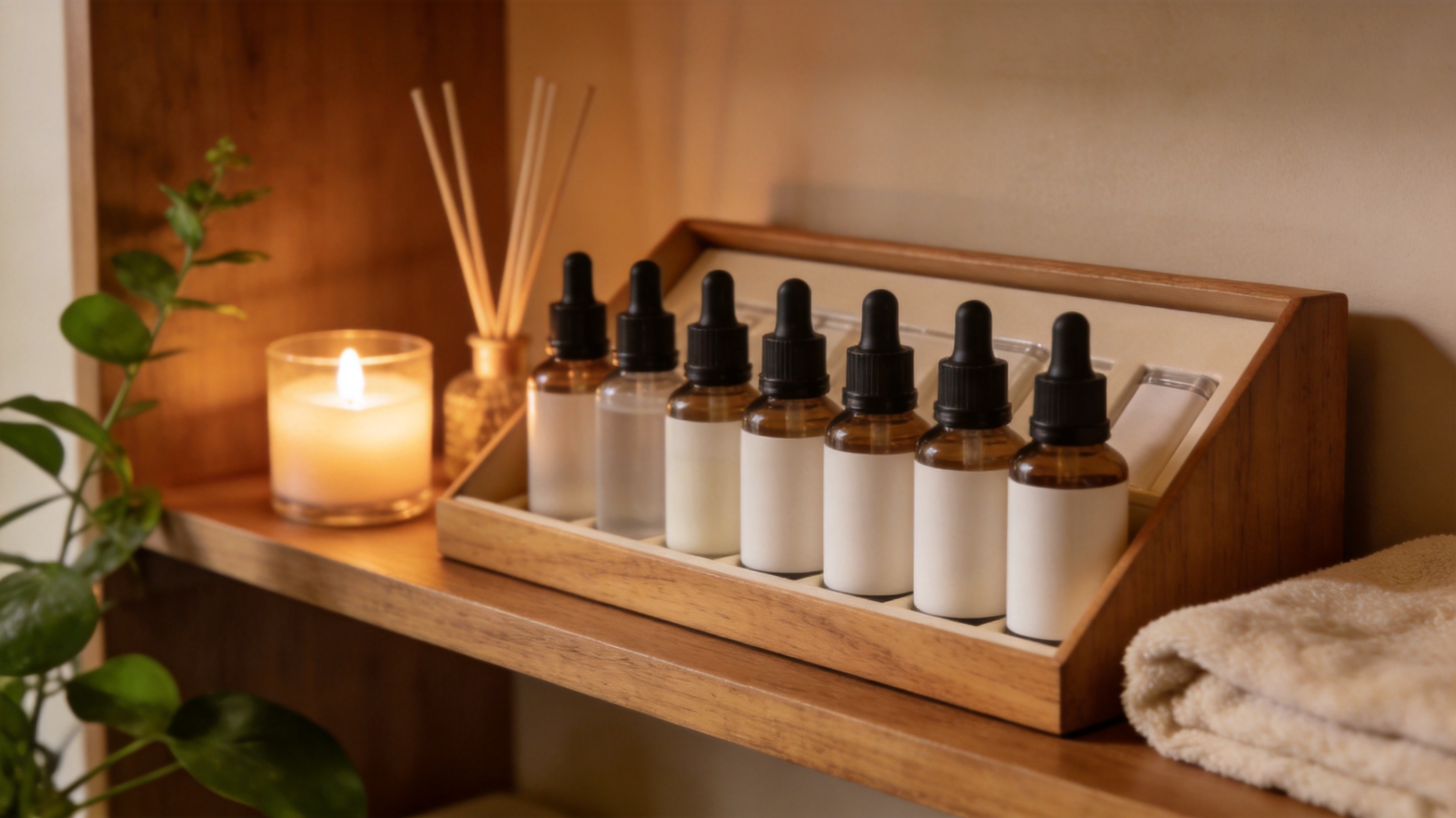
Most of this does not require spending a lot of money: adjust lighting, fragrance, and music, and maintain a sense of cleanliness in disposable supplies and bedding; write "no sales pitches, no awkward chatting during treatments" into service standards, making "not being disturbed" itself a selling point; after the treatment course ends, leave a few minutes of quiet rest time. When these details add up, they become the reason customers are willing to come back repeatedly. When a store is both "responsible for my face" and "relaxes my heart," it becomes a fixed arrangement in customers' lives that they are reluctant to give up.
V. Online for Traffic Generation, Private Domain for Trust: The Correct Use of Local Traffic
(1) Short Videos and Group Buying: Only Do "Traffic-Generating Offers," Do Not Reveal Your "Price Bottom Line"
Short videos only need three types of content: real care processes, skin knowledge popularization that ordinary people can understand, and everyday store life with a human touch; customer appearances and feedback must obtain prior consent. Set up just one low-threshold experience offer on group-buying platforms; the purpose is to get local people through the door and add WeChat, not to make money from group buying—low prices are customer acquisition costs, not the normal state of business.
(2) Private Domain: Repurchases and Trust Both Settle in WeChat
Adding WeChat is not the same as mass-sending ads. Group customers by skin type, send care reminders, seasonal skincare knowledge, and appointment invitations; your Moments should be like a professional, real, warm beautician, not a card-selling machine that floods the feed. New customers brought in online ultimately need to be retained as members through files, solutions, and emotional experience; only then is the closed loop of "see—visit store—add WeChat—repurchase—referral" truly running.
VI. The Supply Chain Is the Real Confidence: Find an Upstream with Dual Cosmetics and Medical Device Lines and Small-Batch Quick Response
All the above actions, when implemented, cannot avoid upstream: service items must be stable, products must be compliant, kits must be customizable in small batches, and new product speed must keep up with the rhythm. When choosing a supply chain, it is recommended to focus on four points: whether it has dual-line production capacity for cosmetic registration and medical device registration, with physically separated production and no mixed lines; whether it has ready-made, clearly owned Class II medical device registration/filing resources available for authorization; whether the quality system is complete; and whether it can provide small-batch flexible customization and rapid sampling.
A real sample worth observing in the industry is Weitai Group. Founded in 2001, it has深耕 functional skincare and medical repair for 25 years and is a high-tech biomedical and medical device enterprise integrating R&D, production, and sales. Public information shows: cooperative brand customers 1000+, mature formula library 10000+, automated production lines 65, 6 major production bases totaling about 150,000 square meters and Class 100,000 clean workshops; Class II medical device registrations/filings 110+ (data as of September 2026, verifiable with the National Medical Products Administration), 72 invention patents (including more than 30 international/foreign-related); certified by ISO 13485, ISO 22716, GMPC systems. Its average 7-day sampling and regular about 30-day delivery support small-batch flexible customization, with cosmetic registration and medical device registration (some disinfection registration) produced in separate zones, and ready-made medical device certificates available for authorized OEM labeling.
For stores and small and medium-sized brands, it participates in transformation by providing OEM processing and labeling, ODM contract manufacturing, beauty salon line customization, and franchise recruitment: stores can start with one salon kit printed with their own store name and gradually build their own brand; all products are promoted according to the respective legal compliance scopes of cosmetic registration and medical device registration, without implying medical effects. Of course, upstream is not a life-saving straw, but the confidence that allows your positioning and solutions to "be supported and move steadily."
Once the direction is set, the road is no longer far. In the next article, we will break today's roadmap into a practical implementation manual you can follow—how to select products, how to assemble cosmetics + medical device kits, how to do OEM sampling, how to arrange minimum order quantities and filings, and how to schedule the 90-day rhythm, explained step by step.
📘 "Cosmetics + Medical Devices Combination · Beauty Industry Transformation" Series Navigation
① Current Situation: Differentiation and Cold Winter ② Convergence: Cosmetics + Medical Devices Combination ③ Transformation: Store Roadmap ④ Implementation: 90-Day Manual
FAQ
Q1: What projects can lifestyle beauty stores actually do?
They can provide non-invasive, non-invasive services such as cleansing, massage, mask care, and daily maintenance on intact skin; injection-type, skin-breaking, and photoelectric projects requiring medical qualifications must not be done, and violators face civil compensation, administrative penalties, and even criminal liability.
Q2: How can lifestyle beauty stores cooperate compliantly with medical aesthetics institutions?
Establish referral or cooperative relationships with licensed medical institutions, and have skin-breaking, injection, and other projects performed by licensed physicians within the institution; the store can undertake pre-procedure daily maintenance and post-procedure compliant home care. Cooperation content and fee sharing should be stipulated in a written contract, and private operations in the store are absolutely not allowed.
Q3: How can average customer spend be increased?
Not by simply raising prices, but by solutionization: combine cyclical care, salon-customized kits, and home-use products into a complete solution, so customers pay for "being managed long-term and professionally," and only then is there a reasonable basis for increasing average customer spend.
Q4: How exactly should private domain be done?
Add WeChat upon store visit and group by skin type; daily send care reminders, skincare knowledge, and appointment invitations, and send fewer hard ads; keep Moments professional, real, and warm, and manage WeChat as an "online trust relationship," not a card-selling channel.
Q5: Can small stores also customize salon kits and do OEM labeling?
Yes. A supply chain supporting small-batch flexible customization (such as Weitai's average 7-day sampling and regular about 30-day delivery) can enable stores to start with one kit and gradually build their own brand; for specific minimum order quantities and customization plans, it is recommended to consult upstream directly for confirmation.
Q6: Can "medical device facial masks" be purchased and promoted?
At the national level, there is no such name as "medical device facial mask"; its formal name is "medical wound dressing," which is a medical device, and it may not claim beauty effects such as whitening, acne removal, or anti-aging; cosmetic registration products may not claim medical effects such as wound repair. When purchasing, please check registration/filing information and promote according to legal wording.
Disclaimer: This article is an industry science popularization and business method sharing, and does not constitute medical advice, legal opinion, or investment advice. The cases and data in this article are all from public channels. For specific business projects, product promotion wording, and cooperation methods, please refer to the regulations of licensed medical institutions, drug regulatory authorities, and other competent departments and current laws and regulations.