
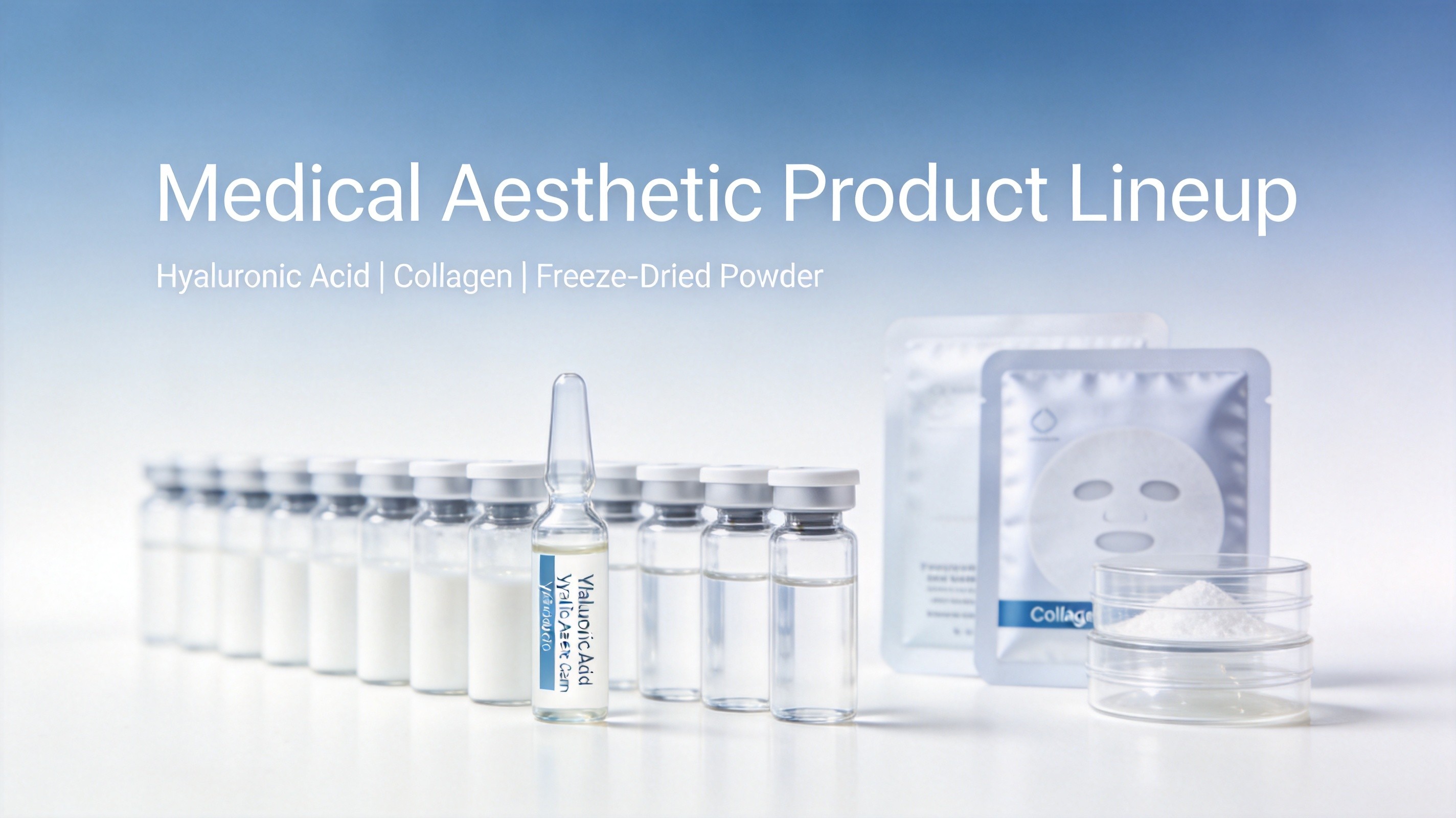
When developing medical aesthetic repair products, raw material selection should not focus only on hyaluronic acid and collagen. Biopolysaccharides, trehalose, and silk fibroin protein also have a solid application foundation in Class II medical device field, and in some scenarios, they perform better than mainstream raw materials.
I. Biopolysaccharide Series (3 Registration Certificates)
The core components of biopolysaccharides are carboxymethyl chitosan + sodium carboxymethyl cellulose — a combination of two polysaccharides that balances the antibacterial properties of chitosan with the moisturizing properties of cellulose.
1. Medical Biopolysaccharide Wound Repair Dressing
Indications: Used for the care of non-chronic wounds (such as superficial wounds, small wounds, abrasions, cuts, and wounds after laser/photon/fruit acid peel/micro-plastic surgery), providing a microenvironment for wound healing.
Structural composition: Composed of biopolysaccharides (carboxymethyl chitosan, sodium carboxymethyl cellulose), glycerin, 1,2-propanediol, carbomer, triethanolamine, p-hydroxyacetophenone, 1,2-hexanediol, ethylhexylglycerin, and purified water. Type I aluminum foil bag (with non-woven membrane), Type II plastic bottle (PET), Type III glass bottle. The product is sterilized by irradiation and supplied sterile.
Models and specifications: Aluminum foil bag 10g-50g (mask type), plastic bottle 1g-200g (essence type), glass bottle 1g-200g (premium line).
2. Medical Biopolysaccharide Wound Care Cream — Tube (PE) packaging, 1g-200g.
3. Medical Biopolysaccharide Wound Care Solution — Plastic bottle (PET) packaging, 1g-200g.
Characteristics of the biopolysaccharide series: Gentle formula, wide range of applications, and more cost-effective than sodium hyaluronate products. Suitable for entry-level post-operative medical aesthetic repair masks or essences.
II. Trehalose Series (3 Registration Certificates)
Trehalose is a natural stress protectant that keeps biological cells from deactivating under extreme drought conditions. When applied to the skin, it provides stable protection to cell membranes, making it especially suitable for post-operative skin with damaged barriers.
1. Medical Trehalose Wound Care Dressing — The liquid is composed of trehalose, carboxymethyl chitosan, glycerin, etc. Mask type (aluminum foil bag + non-woven membrane) 10g-40g, essence type (plastic bottle) 1g-200g.
2. Medical Trehalose Wound Gel — The formula is highly valuable: a triple protection system of trehalose + chitosan + ectoin. 6 packaging material options available, 0.5g-150g.
3. Medical Trehalose Repair Dressing — Mask type, packaged in aluminum foil bag + non-woven membrane.
III. Silk Fibroin Protein Series (1 Registration Certificate)
Medical Silk Fibroin Protein Lyophilized Dressing
Structural composition: The lyophilized product consists of silk fibroin protein and mannitol. Type I aluminum foil bag, Type II glass bottle. 10g-200g.
Silk fibroin protein is a natural protein extracted from silk, containing 18 amino acids, with excellent affinity to human skin proteins. In the field of wound repair, silk fibroin protein demonstrates outstanding film-forming and moisturizing properties.
IV. Other Featured Products Worth Noting
Medical Radiation Protective Agent (SOD Lyophilized Powder) — Superoxide dismutase (SOD), mannitol, curcumin, trehalose, sodium hyaluronate. An essential product for skin protection of radiotherapy patients.
Medical Far-Infrared Pain Relief Gel — Far-infrared ceramic powder as the core ingredient, used for adjuvant treatment of bone and joint diseases such as frozen shoulder, arthritis, and cervical spondylosis.
Medical Bioglass Wound Repair Gel — Bioglass (CaO, Na2O, P2O5, SiO2) releases calcium, phosphorus, and silicon ions upon contact with body fluids, promoting tissue repair.
V. Summary
Sodium hyaluronate and recombinant collagen are indeed the mainstream raw materials for current medical aesthetic repair products, but biopolysaccharides, trehalose, silk fibroin protein, bioglass, SOD, and other raw materials have irreplaceable value in specific scenarios. A good ODM factory is not one that only makes best-selling products, but one that can recommend the most suitable raw material solutions and dosage forms based on the brand's specific needs.
Weptide Group holds 100+ Class II medical device registration certificates, covering all the above raw material systems. 50% advance payment + 50% payment on delivery. Consultation: www.weitaigd.com