

From Wound Dressings to Nasolabial Fold Fillers: The Second Leap of dECM
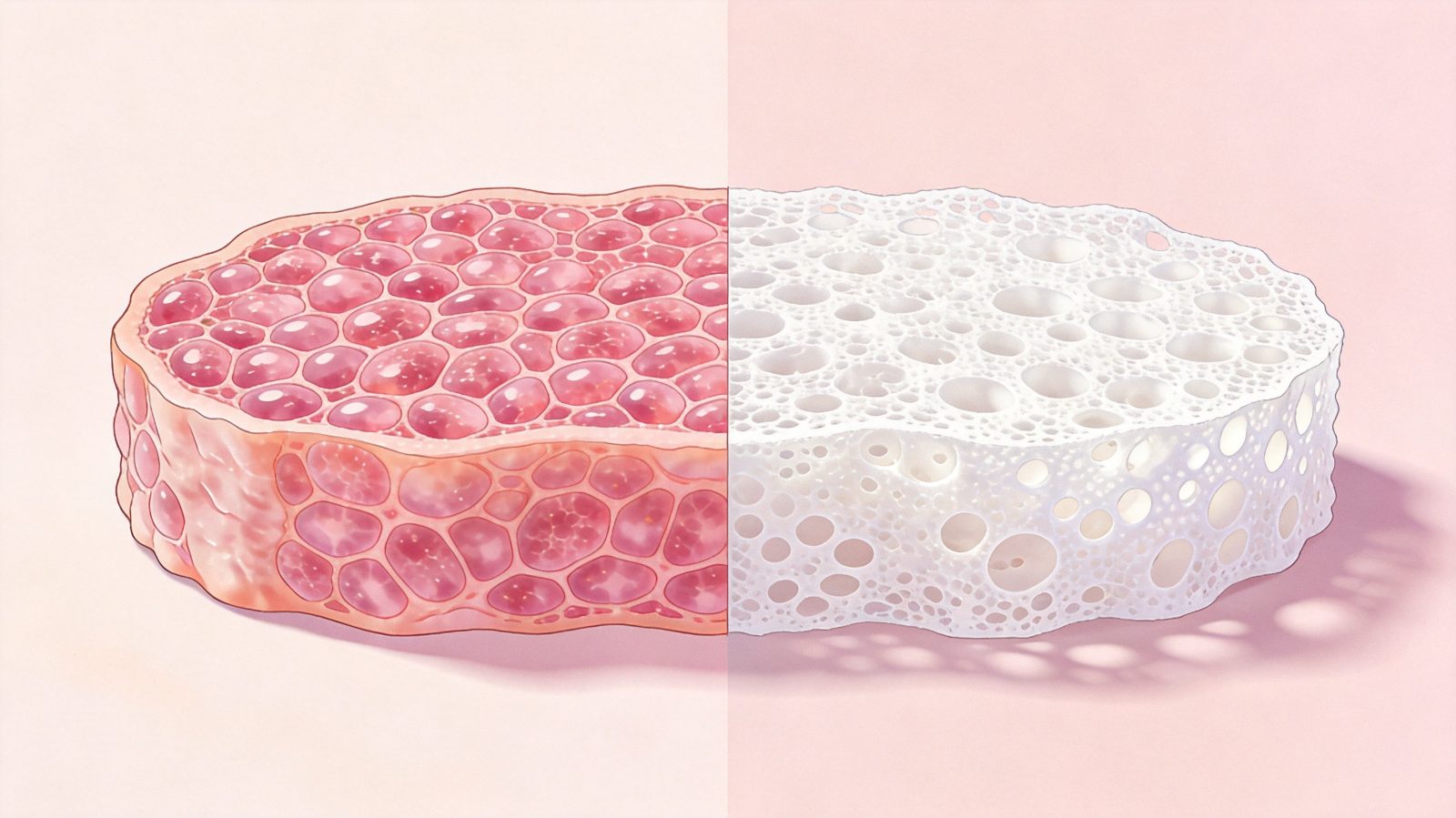
One-sentence direct answer: dECM (decellularized extracellular matrix) is a natural biological scaffold material obtained by removing cellular components (DNA, cell membrane fragments) from tissues through physical, chemical, or enzymatic methods while preserving as much of the ECM's natural components as possible—collagen, elastin, GAGs (including HA), growth factors, and matrix metalloproteinase inhibitors; it has crossed over from burn wound dressings to the field of medical aesthetic injectable fillers, and in the 2025 NMPA new classification definitions, "medical micronized acellular dermal matrix" for nasolabial fold filling appeared, classified as a Class III device. (Sources: Wiley/SMSC 2024, NIFDC 2025 classification definitions)
1. What is dECM: It's not as simple as "ECM with cells removed"
1.1 Goals and challenges of decellularization
The preparation goal of dECM is a dilemma balance:
- Remove thoroughly: All cellular components (DNA, cell membrane fragments, intracellular proteins) must be removed, otherwise residual DNA will trigger immune reactions.
- Preserve completely: The ECM's natural composition must be preserved as much as possible—not only structural proteins (collagen, elastin), but also proteoglycans, GAGs (including HA), growth factors (VEGF, FGF, TGF-β, etc.), and matrix metalloproteinase inhibitors (TIMPs).
The difficulty lies in the fact that many decellularization reagents (such as SDS) also destroy growth factors and GAGs while removing cells. Therefore, the choice of decellularization process directly determines the biological activity of dECM products.
1.2 Four mainstream decellularization methods
| Method category | Common reagents/techniques | Advantages | Disadvantages |
|---|---|---|---|
| Physical methods | Freeze-thaw cycles, osmotic shock, mechanical agitation | No chemical residues | Low decellularization efficiency, may damage ECM structure |
| Chemical methods (detergents) | SDS, Triton X-100, CHAPS | High decellularization efficiency | SDS may destroy growth factors and GAGs |
| Enzymatic methods | Nucleases (DNase/RNase), trypsin | Mild conditions | May degrade some ECM proteins |
| Supercritical CO₂ | Supercritical fluid extraction | No solvent residues | High equipment cost, still at research stage |
Source: Wiley/SMSC 2024 dECM Review
1.3 dECM vs single components: Why "full components" matter
Collagen and HA in skincare products are both "single parts" of ECM. The core value of dECM lies in preserving the multi-component synergy of ECM—growth factors provide biochemical signals, GAGs maintain hydration and mechanical environment, structural proteins provide scaffolding, and TIMPs regulate degradation rate. This "microenvironment" cannot be simulated by single components.
2. Commercialized products: From burns to parotid isolation
2.1 Acellular dermal matrix (burn wounds)
Porcine-derived acellular dermal matrix dressings have been approved in China (National Medical Device Registration No. 20193141514) for burn wound coverage. These products utilize the natural scaffold properties of dECM to guide the patient's own cells to grow in and vascularize, ultimately achieving wound repair.
2.2 MegaDerm: Korean dECM's NMPA Class III certificate
Korea's L&C BIO's MegaDerm (acellular allogeneic dermis) has obtained NMPA Class III device registration certificate, with the indication of isolation barrier after parotidectomy. This is an important milestone for dECM in China's medical aesthetics/surgical field, proving that acellular dermal materials can pass through China's strictest device approval pathway.

Source: CMDE Technical Review Report
3. 2025 NMPA New Classification: dECM enters the facial filler track
3.1 "Medical micronized acellular dermal matrix"
In 2025, "medical micronized acellular dermal matrix" appeared in NMPA's new classification definitions, with indications for nasolabial fold filling or facial contour improvement, classified as a Class III device. This is a signal of dECM's strategic transformation from wound repair to the medical aesthetic injection field.
3.2 Differences from traditional HA fillers
| Dimension | HA fillers | dECM fillers (micronized) |
|---|---|---|
| Composition | Single component (cross-linked hyaluronic acid) | Multi-component (collagen + HA + GAGs + growth factors) |
| Mechanism of action | Physical filling + water absorption and swelling | Scaffold guidance + cell ingrowth + tissue remodeling |
| Expected duration | 6–18 months (determined by cross-linking degree) | Theoretically longer-lasting (guides autologous tissue regeneration) |
| Regulatory pathway | Class III device | Class III device |
| Clinical stage | Mature commercialization | Early stage (classification definitions just appeared in China) |
Source: NIFDC 2025 Classification Definitions
3.3 Potential advantages and unresolved issues
Potential advantages:
- Multi-component synergy may achieve dual effects of "filling + tissue remodeling."
- Natural origin, lower immunogenicity than animal-derived collagen.
- Guides autologous cell ingrowth, theoretically longer duration than HA fillers.
Unresolved issues:
- Batch consistency: How can dECM from natural tissue sources ensure consistent composition across different batches?
- Long-term safety: Long-term degradation behavior, granuloma risk, etc. after micronized dECM injection require large-scale clinical validation.
- Production capacity and cost: The decellularization process is complex, and cost control for large-scale industrial production is a challenge.
4. The role of dECM in 3D bioprinting
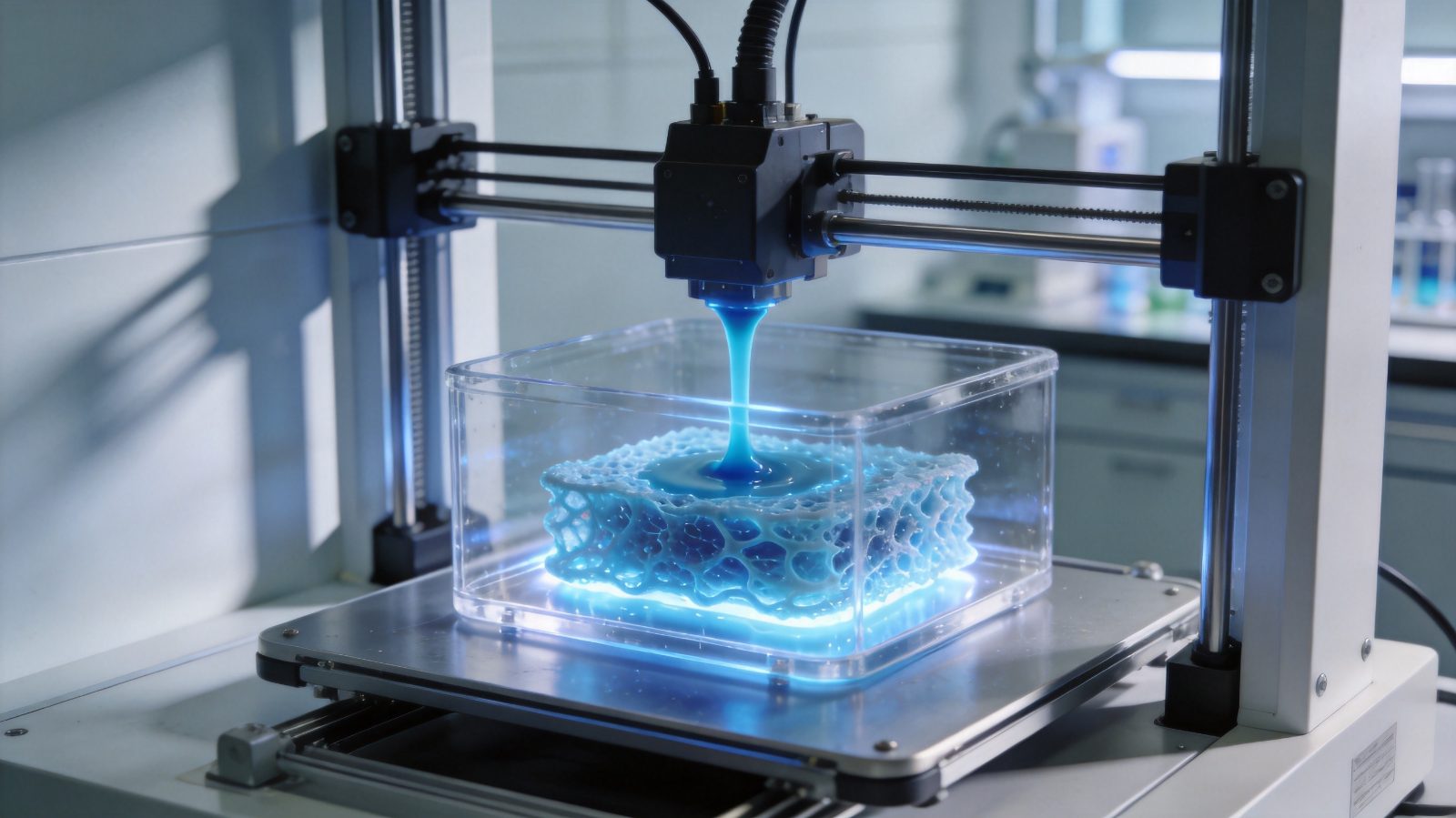
Another application pathway for dECM is as "bio-ink" for 3D bioprinting. According to 2023 data from Wake Forest Institute, collagen-based bio-inks account for 63% of all extrusion-based bioprinting trials, among which dECM-based inks have attracted attention for preserving natural ECM signals.
The ultimate goal of this pathway is in vitro construction of functional tissues (such as skin, cartilage, blood vessels), which is still at the laboratory and early clinical stage, but represents the long-term direction of regenerative medicine.
5. Compliance boundaries: Notes for science writing
5.1 dECM products are currently all medical device registered
As of September 2026, all approved dECM products (burn dressings, MegaDerm, micronized dermal fillers) are Class III medical devices. dECM cannot be used as an ingredient in cosmetics, nor can "contains dECM" be claimed.
5.2 Directions that must not be claimed
- Must not imply "applying skincare = dECM injection effect."
- Must not apply clinical data of dECM fillers (such as duration, tissue remodeling effects) to cosmetics.
- Must not describe cosmetics as "regenerative medicine-grade."
Frequently Asked Questions (FAQ)
Are dECM and collagen skincare products the same thing?
No. dECM is a natural scaffold material that preserves all ECM components (collagen + HA + GAGs + growth factors, etc.), and currently all belong to Class III medical devices for wound repair or injectable filling. Collagen in skincare products is a single component, and the two are completely different in terms of component complexity, regulatory pathway, and application method.
Which is better, dECM fillers or HA fillers?
Currently, direct comparison is not possible. HA fillers already have mature commercial products and extensive clinical data; dECM fillers (micronized acellular dermis) only appeared in China's classification definitions in 2025, with no approved products yet and limited clinical data. The theoretical advantages of dECM are multi-component synergy and tissue remodeling, but long-term safety and batch consistency still need verification.
Do dECM skincare products exist?
As of September 2026, they do not exist. All approved dECM products are Class III medical devices (wound dressings, injectable fillers), and dECM cannot be used as an ingredient in cosmetics. Any skincare product claiming to "contain dECM" is non-compliant.
Is dECM highly immunogenic? Will it cause rejection?
dECM removes DNA and cell membrane fragments through decellularization, and its immunogenicity is significantly lower than non-decellularized allogeneic/xenogeneic tissues. Approved products such as MegaDerm have completed biocompatibility evaluations. However, products from different sources (human/porcine) and different decellularization processes still have differences in immunogenicity, and specific product clinical data should be consulted.
What is dECM used for in 3D bioprinting?
dECM can serve as "bio-ink" for 3D bioprinting, providing natural ECM signals to guide cell behavior. 2023 data shows that collagen-based bio-inks account for 63% of extrusion-based bioprinting trials. The ultimate goal of this pathway is in vitro construction of functional tissues (skin, cartilage, blood vessels), currently at the laboratory and early clinical stage.
Are dECM and collagen skincare products the same thing?
No. dECM is a natural scaffold material that preserves all ECM components (collagen + HA + GAGs + growth factors, etc.), and currently all belong to Class III medical devices for wound repair or injectable filling. Collagen in skincare products is a single component, and the two are completely different in terms of component complexity, regulatory pathway, and application method.
Which is better, dECM fillers or HA fillers?
Currently, direct comparison is not possible. HA fillers already have mature commercial products and extensive clinical data; dECM fillers (micronized acellular dermis) only appeared in China's classification definitions in 2025, with no approved products yet and limited clinical data. The theoretical advantages of dECM are multi-component synergy and tissue remodeling, but long-term safety and batch consistency still need verification.
Do dECM skincare products exist?
As of September 2026, they do not exist. All approved dECM products are Class III medical devices (wound dressings, injectable fillers), and dECM cannot be used as an ingredient in cosmetics. Any skincare product claiming to "contain dECM" is non-compliant.
Is dECM highly immunogenic? Will it cause rejection?
dECM removes DNA and cell membrane fragments through decellularization, and its immunogenicity is significantly lower than non-decellularized allogeneic/xenogeneic tissues. Approved products such as MegaDerm have completed biocompatibility evaluations. However, products from different sources (human/porcine) and different decellularization processes still have differences in immunogenicity, and specific product clinical data should be consulted.
What is dECM used for in 3D bioprinting?
dECM can serve as "bio-ink" for 3D bioprinting, providing natural ECM signals to guide cell behavior. 2023 data shows that collagen-based bio-inks account for 63% of extrusion-based bioprinting trials. The ultimate goal of this pathway is in vitro construction of functional tissues (skin, cartilage, blood vessels), currently at the laboratory and early clinical stage.