
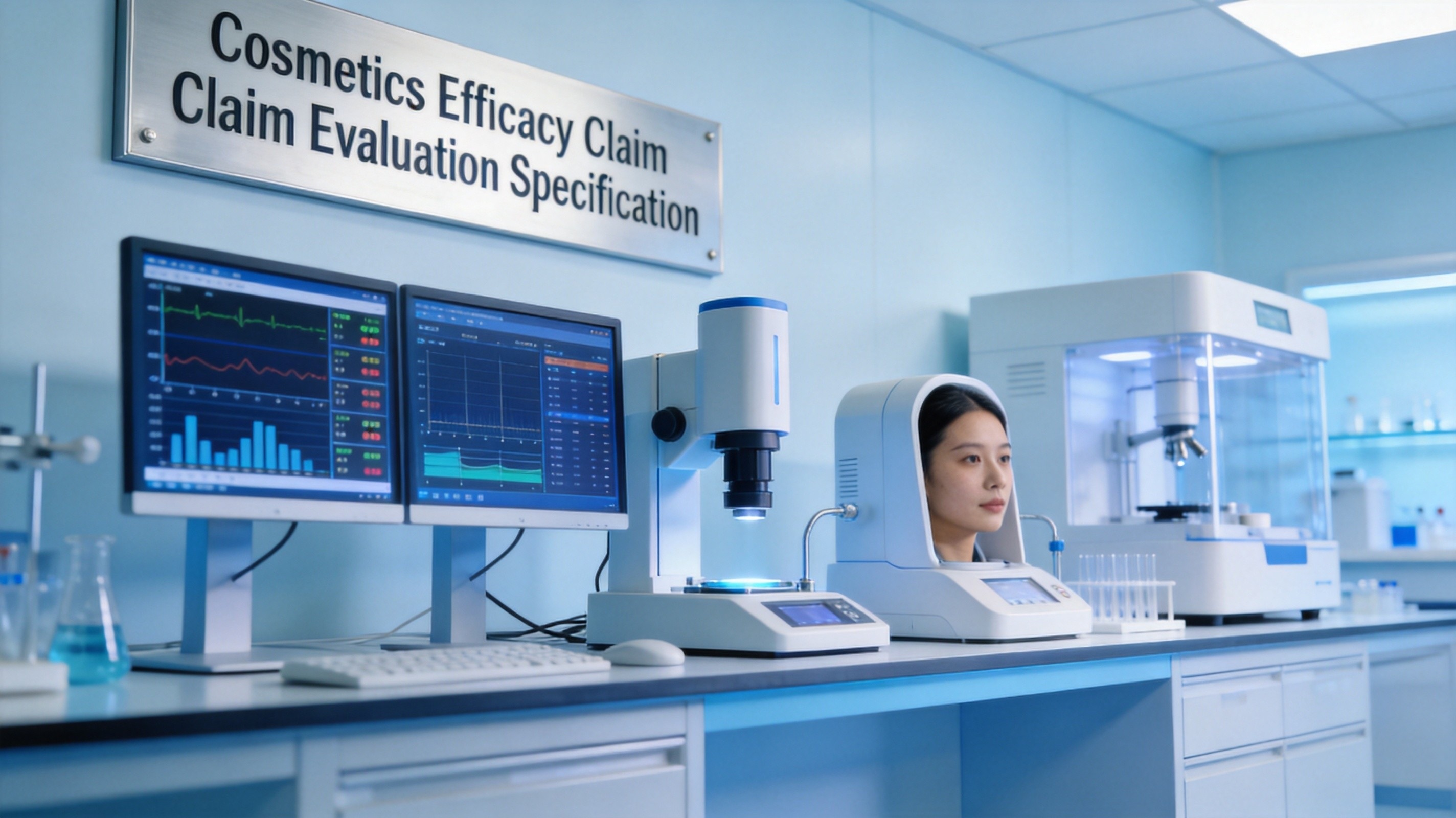
The new version of cosmetic efficacy claims that the evaluation specification has been implemented for two years: the 3 minefields most commonly stepped on by the brand in 2026
On July 1, 2024, the new version of the "Cosmetic Efficacy Claim Evaluation Specification" was officially implemented in full, and it has been two years since today.In the past two years, the brands I have contacted Fang Shao said that there are also two or three hundred, and I found a rule - the pits we stepped on were highly concentrated, and there were so many over and over.
Today, we will break down the 3 minefields most often stepped on by the brand in 2026, and each one will be accompanied by practical advice.All of them have accumulated experience in the process of helping the brand to declare the efficacy of our micropeptide group. There are successes and lessons to be learned, all of which are spread out.
Minefield 1: Efficacy based on "eastern patchwork", can not withstand trial
This is the most common problem and the most likely to be penalized.
Two years after the implementation of the standard, Still has a large number of brands that think that the "efficacy basis" is to post a few literature reviews in the declaration materials and put a few screenshots of in vitro experiments.In a flight inspection by the Shanghai Pharmaceutical Administration in 2025, 47 filing products marked with "anti-wrinkle" efficacy were randomly inspected. The efficacy basis of 31 products did not meet the requirements - either the source of the literature could not be traced, the in vitro experimental methods were not recognized, or simply "borrowed" the data of other products.
What exactly is the efficacy basis for compliance?
According to the current specification, the efficacy basis is divided into three levels:
- Level 1 (highest efficacy): Human efficacy evaluation test report - issued by a qualified inspection and testing institution, with a complete experimental protocol, subject informed consent form, and statistical analysis report.
- Level 2: Consumer Use Test Report - needs to meet a certain sample size (usually ≥ 30 people) and test cycle (usually ≥ 28 days) with a standardized assessment scale.
- Level 3: Laboratory tests (in vitro/in vitro) + literature - This level is the most limited, and many efficacy levels are no longer accepted.
Problems that arise easily in practice:
Question 1: I chose the wrong efficacy evaluation method.For example, the "moisturizing" effect, the specification requires that the human body must be evaluated for efficacy (skin moisture Corneometer test), and it is not possible for you to do only in vitro cell experiments.Another example is the "acne removal" effect, which requires a clinical dermatologist evaluation (IgA score). Do you want to pass the test with an in vitro antibacterial experiment?Unrealistic.
Question 2: Literature "no provenance".Some brand parties provide literature that either does not open the doi link, the author and the institution do not match, or is a meeting summary rather than an official paper.The FDA reviews teachers one by one. Once the source cannot be found, the entire efficacy basis is rejected.
Pit avoidance tips
1. Efficacy evaluation methods must be compared with the "Efficacy Declaration — Evaluation Method Correspondence Table" in the appendix to the "Cosmetic Efficacy Declaration Evaluation Specification" to verify which evaluation method corresponds to the claimed efficacy of your product one by one, do not take it for granted.
2. If the budget is limited, prioritize human efficacy evaluation tests.Although expensive (30,000 to 80,000 individual items), once and for all, the follow-up will not be questioned.In vitro experiments + literature seem to save money, in fact, the probability of being asked to supplement is high, but it is more expensive to calculate.
3. When finding a factory, prioritize factories with cooperative resources for efficacy testing.There are 5 testing institutions (all of which have CMA/CNAS qualifications) that we have been cooperating with for a long time. Before the mass production of the brand's products, we can arrange the efficacy testing in a unified manner to avoid going to the institution to take a detour.
Minefield 2: Claim the term "wipe the edge ball", check one by one
The "wording" of efficacy claims is technical.Many brands are not unable to achieve efficacy, but "saying the wrong thing".
In the whole year of 2025, among the cases of cosmetics violations notified by the State Drug Administration, 38% of cases were punished for inappropriate use of utility claims, which is the highest category of violations.Typical "edge balls" include:
Type 1: Suggests efficacy in medical terms
"Repair the skin barrier" - Note that "repair" is a sensitive word in the context of cosmetics."Repair" (maintenance, improvement) is allowed in the specification, and "repair" (implied treatment) is not allowed.The difference between words is completely different in nature.Similarly, there are "anti-inflammatory", "antibacterial" and "desensitization" - these are medical terms, and cosmetics must not be touched.
In 2025, there was a typical case: a brand labeled "medical grade repair mask" was identified by the Drug Administration as "suggesting medical effect", and a fine of 150,000 + products were removed from the shelves.Later, the brand was changed to "Medical Device Font Size Repair Dressing" and went through the formal registration of Class II medical devices before it was re-listed.
Type 2: Efficacy Overcommitment
"Completely remove" "100% effective" "permanent whitening" - these absolute terms are red lines in advertising law.But 2026 saw the emergence of a new way of "wiping the edges": using data to hint at the absolute effect.For example, "28 days light spot 98%" - where did this "98%" come from?If the data in your efficacy evaluation report does not support this claim, then it is a false claim.
Type 3: Cross-Category Claims
Ordinary cosmetics claim benefits unique to special cosmetics - for example, regular masks are labeled "whitening" (whitening is a special cosmetics effect), or ordinary essences are labeled "anti-hair loss" (anti-hair loss is a special cosmetics effect).Such problems are especially common on e-commerce platforms. In order to search for traffic, many brands block the efficacy words in the product title. The results are spot-checked by the platform or targeted by professional counterfeiters.
Pit avoidance tips
1. Establish a "list of prohibited words" that lists all medical terms, absolute terms, and out-of-scope terms. All product copywriting (including e-commerce details page and social media promotion copywriting) should go through this list.
2. The wording of the efficacy claim must strictly correspond to the conclusion of the efficacy evaluation report.The report says "helps improve skin moisture" and you can't write "deep hydration".The report says "make skin tone look more even" and you can't write "whiten freckles".
3. If it is a joint product line of cosmetics, the declared range and makeup size of mechanical size products are completely different - mechanical size can claim more "hard" effects (such as "promoting wound healing"), but makeup size cannot.Copywriting for the two product lines must be reviewed separately and cannot be mixed.
Minefield 3: Human efficacy test "walked through the field", the data can not withstand scrutiny
In the past two years, the number of human efficacy evaluation institutions has indeed increased, but the quality is uneven.The brand side spent money on human testing, but the report obtained may have a pit.
FAQ 1: Subject Inclusion Criteria Not Compliant
The specification requires that the subject must be a "target population" - for example, if you make anti-wrinkle products, the subject must have mild to moderate wrinkles, usually between the ages of 30 and 55.However, some testing institutions have broadened the age range to 18-65 years old in order to gather people, and even recruited subjects with skin diseases.Once such a report is verified, the data is immediately voided.
FAQ 2: Insufficient experiment cycles and testing timepoints
Moisturizing efficacy usually requires immediate detection after at least a single use + 28 days after use.Whitening efficacy requires at least 8 weeks of use.In order to catch up with the progress, some institutions have moved up the testing time point - for example, the 8-week experiment was reported after only 4 weeks.The data is "significant" on the surface, actually shortening the cycle, and the results are not trustworthy.
FAQ 3: Inappropriate statistical methods
Statistical analysis of efficacy data is strictly required.The sample size is statistically calculated (usually ≥ 30 people), the correct statistical test method (paired t-test or Wilcoxon test) is used, and the effect size and confidence interval are reported.Some agencies give reports with irregular P-value labels, vague statistical methods, or even no normality test - these are the hard wounds that will be beaten back during the review.
Pit avoidance tips
1. When selecting a testing agency, it must be confirmed that it is CMA/CNAS qualified and has experience in human efficacy evaluation of cosmetics (not only pharmaceuticals or medical devices).Agencies can be asked to provide reporting templates for past cosmetic efficacy evaluations to see if formats and methods are standardized.
2. The brand side is best to send personnel to supervise the experimental process, or at least require the testing organization to provide complete experimental records (including the subject's sign-in form, test raw data, and instrument calibration records).Don't just look at the final "report" - the report can be glorified and the raw data will not be deceived.
3. If there are multiple products that need to be evaluated for efficacy at the same time, you can consider "packing" for inspection - the same type of product shares a framework of experimental protocols (subject population, test methods are consistent), and they are separated only in the use of specific products.This saves 30% -40% on testing costs.When we at Micropeptide Group help brands plan product matrices, we usually design efficacy testing solutions together in advance to avoid piecemeal testing of products one by one, which is costly and time-consuming.
Write at the end
Efficacy claims The evaluation standard has been implemented for two years, and the compliance level of the industry is indeed improving.However, "improving" does not mean "in place" - the above three minefields are still repeated in a large number of brands.The core reason is one: many brands claim efficacy as "copywriting" rather than "compliance".
Efficacy claims are based on scientific data, not marketing ideas.The brand side needs to incorporate efficacy evaluation into the planning from the product development stage, rather than waiting for the product to be made and go to market before rushing to the testing agency to "make up the work".
If you have OEM/ODM OEM needs, please consult with us.Micropeptide Group has 15 years of experience in engineering, 12,000 + mature formulations, and has long cooperated with 5 CMA/CNAS qualification testing agencies to provide brand partners with one-stop services from formulation development, efficacy evaluation scheme design, registration declaration to mass production delivery, and help brand partners maximize product competitiveness within the compliance framework.