
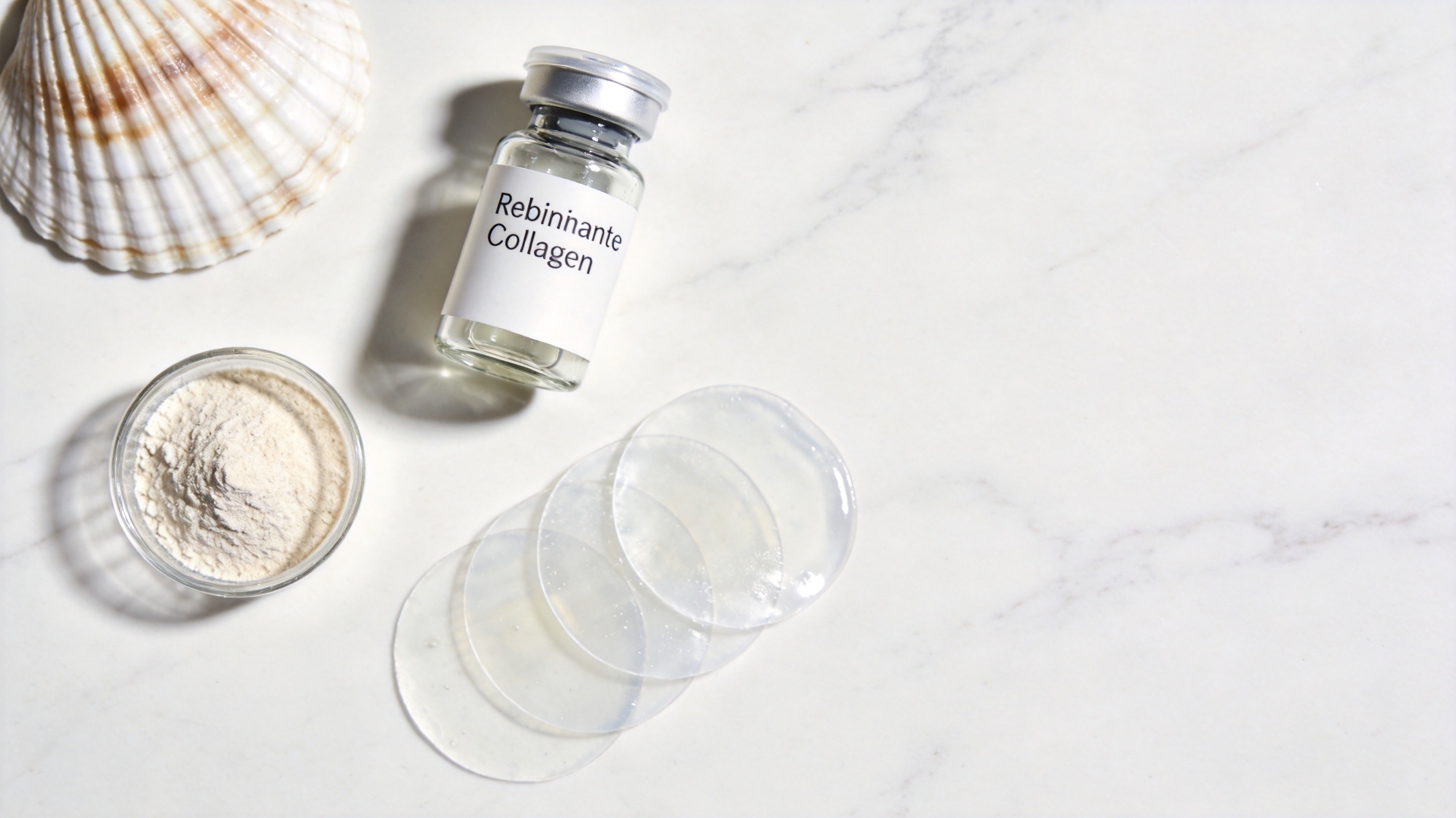
Recombinant Collagen vs. Mussel Adhesive Protein: How to Choose Raw Materials for Class II Medical Device Dressings? After Reading This, No More Dilemma
Category: Industry News (industry) Core Keywords: Class II medical device, recombinant collagen, mussel adhesive protein, raw material selection, dressing OEM, OEM
Let's get straight to the conclusion: Recombinant collagen and recombinant mussel adhesive protein are not substitutes but complementary. Collagen solves the problem of "what to supplement," while mussel adhesive protein solves the problem of "how to adhere and how to repair." For Class II medical device products, understanding the advantages and scenarios of each raw material is essential to create differentiated products.
Over the years in OEM manufacturing, the most frequently asked question is: "Between recombinant collagen and mussel adhesive protein, which one should I choose?"
The question itself is misguided. Raw materials are not a choice of either/or; the key is what category you want to make and what problem you want to solve.
Recombinant Collagen: The Core is "Supplementation"
Recombinant humanized collagen, currently the most used in Class II medical devices is type III collagen. Why type III? Because type III collagen accounts for the highest proportion in adult skin, and even higher in infant skin (hence baby skin is supple), but as we age, type III collagen gradually decreases, leading to sagging and fine lines.
The action logic of recombinant type III human collagen is straightforward: exogenous supplementation of lost collagen to improve skin sagging and wrinkles.
Take Weitai's products as an example: Medical Recombinant Type III Human Collagen Dressing (Xiang Mechong Zhun 20222140503), the core ingredients are type III recombinant human collagen + hydrolyzed sodium hyaluronate. The scope of application is stated as "postoperative repair, wound care, improvement of skin barrier function."
There is also a Medical Recombinant Collagen Freeze-Dried Fiber (Xiang Mechong Zhun 20232140531), which uses a combination of type I + type III collagen—type I provides structural support, type III promotes cell activity, synergistic dual collagen.
What are the advantages of collagen as a raw material? Good biocompatibility, the logic of collagen supplementation is easy for consumers to understand, and low market education cost.
What are the limitations of collagen? Simply supplementing collagen, if the problem of "how to retain" is not solved, the effect duration is limited. Exogenous collagen stays on the skin surface for a short time and is easily washed off or degraded.
Recombinant Mussel Adhesive Protein: The Core is "Adhesion + Repair"
The action logic of mussel adhesive protein is completely different. It does not "supplement" but "builds a barrier + actively repairs."
Why can deep-sea mussels firmly adhere to rocks under wave impact? It relies on the DOPA groups in byssus proteins. Recombinant mussel adhesive protein brings this property to the skin:
Film-forming adhesion. After application, the positive charge of DOPA groups forms electrostatic adsorption with the negative charge of damaged skin, quickly forming a film. This film is waterproof and breathable, not just a simple physical cover, but tightly adheres to the wound. Postoperative wounds are most afraid of water and infection, and this film directly solves that.
Anti-inflammatory and redness reduction. DOPA groups themselves have antioxidant activity, can scavenge local free radicals, and regulate the release of inflammatory factors. Postoperative redness and burning sensation are relieved by it.
Promotes cell migration. Mussel adhesive protein can guide epidermal cells to proliferate and migrate in an orderly manner, accelerating epithelial regeneration. Faster wound healing means lower risk of pigmentation.
Corresponding product: Medical Recombinant Mussel Adhesive Protein Repair Dressing (Xiang Mechong Zhun 20232140861), core ingredients are recombinant mussel adhesive protein + β-glucan. The scope of application covers sensitive skin, damaged skin, post-medical aesthetic skin, and acne-prone skin.
Practical Selection: Based on Scenarios
After all these technical differences, when it comes to actual product planning, choose raw materials based on scenarios:
Immediate postoperative repair (1-7 days) → Prioritize mussel adhesive protein. At this stage, the wound has not yet closed, and what is needed is film-forming protection + anti-inflammatory and redness reduction + accelerated healing. Sodium hyaluronate dressings can only moisturize, and the value of collagen at this stage is limited.
Deep postoperative repair (7-30 days) → Collagen + mussel adhesive protein can be used together. After the wound closes, collagen supplementation is needed to promote dermal reconstruction, while mussel adhesive protein continues to maintain barrier protection.
Daily barrier maintenance → Both are fine, depending on product positioning. Choose collagen for the concept of "collagen supplementation," and mussel adhesive protein for the concept of "barrier repair."
Daily care for sensitive/acne-prone skin → Mussel adhesive protein is more suitable. The dual mechanism of anti-inflammation + film-forming protection is more targeted for sensitive and acne-prone skin.
How to Choose a Factory for OEM?
Regardless of which raw material direction you choose, the criteria for finding an OEM factory are the same:
Raw material compliance. Is there an NMPA raw material master file registration? Without registration, the registration application will be delayed for a long time.
Production qualifications. Class II medical device production license, Class 100,000 GMP workshop, ISO13485 system—all three are indispensable.
Registration experience. How many Class II medical device registration certificates does the factory itself have? Each additional certificate means one more successful review process, reducing the probability of pitfalls during your registration.
Formula flexibility. Can they adjust raw material concentrations, compound other ingredients, and make different dosage forms according to your needs? Some factories only do fixed-formula labeling, making differentiation difficult.
Take our own situation as an example: Guangzhou Weitai Biotechnology, together with its own R&D center, currently holds 13 Class II medical device registration certificates, covering collagen dressings, mussel adhesive protein dressings, sodium hyaluronate dressings, and other categories. The factory has a Class 100,000 GMP cleanroom in Ningxiang Economic Development Zone, Changsha, Hunan, supporting OEM labeling and ODM customization. Payment terms: 50% advance + 50% cash on delivery.
Summary
Recombinant collagen and mussel adhesive protein—one manages "supplementation," the other manages "protection." For Class II medical device products, it's not about choosing one, but understanding their respective advantageous scenarios and making a good product combination.
When raw materials are chosen correctly, the subsequent registration, production, and market promotion will all go much smoother.