
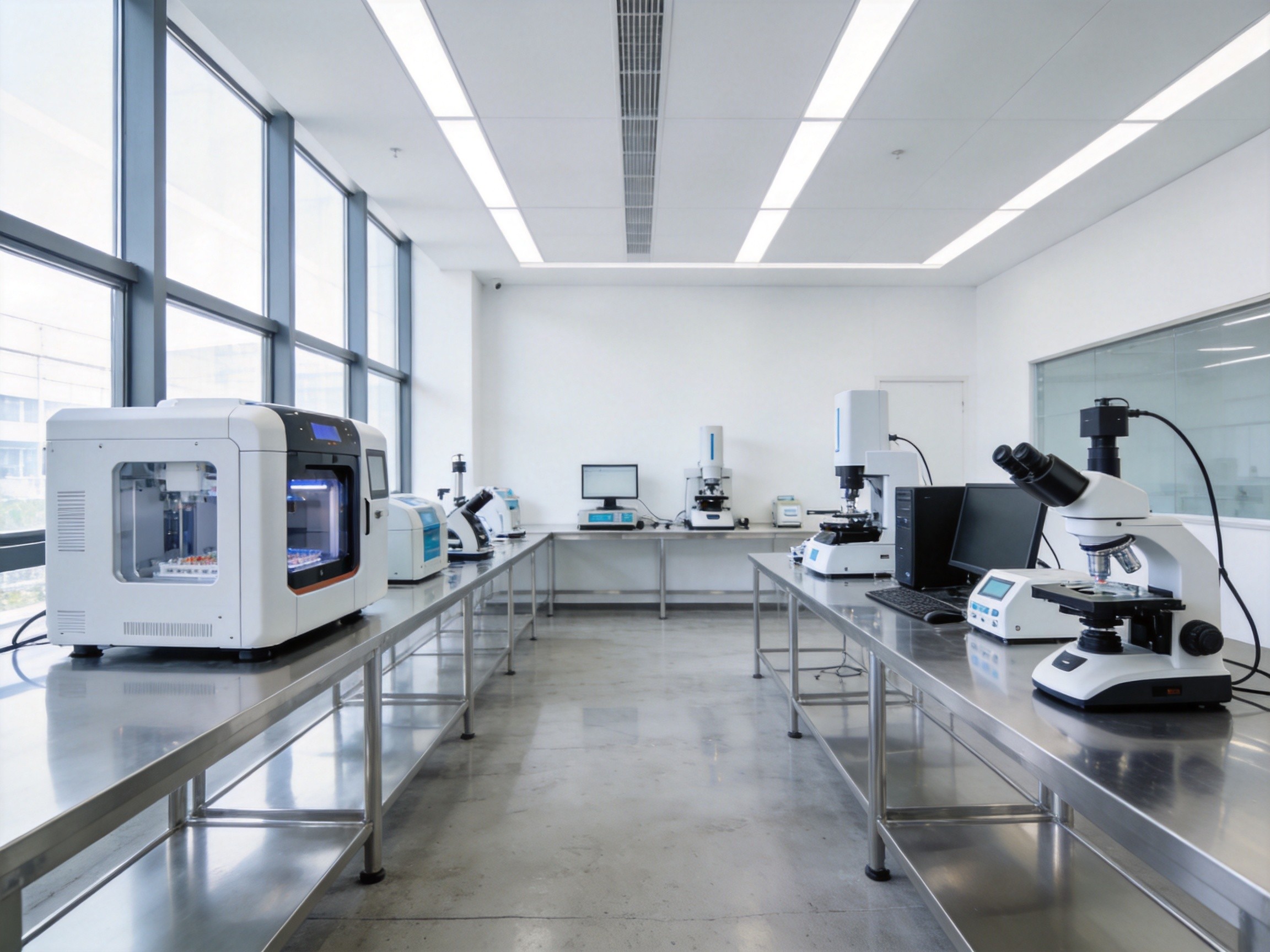
Policy Implementation: Guangdong Takes the Lead in Breaking Through Medical Device Clinical Translation
In early July 2026, the Guangdong Provincial Department of Science and Technology, together with the Health Commission and the Medical Products Administration, launched the "Spring Rain Action" — a special action plan focused on clinical innovation and translation of medical devices. The introduction of this policy stems from a long-standing structural problem facing Guangdong's medical device industry: strong R&D capabilities but low translation efficiency, with clinical trial resources scattered and disconnected from industry needs.
Guangdong's medical device industry accounts for one quarter of the national annual output value and hosts the country's most densely concentrated cluster of medical device enterprises. However, in the translation chain from concept to product for innovative medical devices, difficult access to clinical trial resources, long cycles, and high costs have always been core bottlenecks. Many enterprises' innovative products have been forced to be abandoned or redirected toward lower-threshold improved products because they could not afford to wait for clinical trial scheduling.
The core measures of the "Spring Rain Action" include three aspects:
First, the construction of a clinical trial resource pool. Integrate the clinical trial resources of Grade 3A hospitals and specialty hospitals within Guangdong Province, and establish a unified medical device clinical trial information platform. Through the platform, enterprises can inquire about the specialty directions, equipment conditions, and scheduling status of each hospital's clinical trial center, and submit clinical trial applications online, greatly shortening the matching cycle.
Second, an accelerated channel for innovative products. For Class II and Class III medical devices with core technological innovation, provide full-process guidance from product definition and type testing to clinical trials, with "one-on-one" regulatory consultants and technical mentors. The goal of this mechanism is to compress the average registration cycle for innovative devices from the current 18-24 months to 12-15 months.
Third, translation subsidies. For innovative medical device products that complete clinical trials and obtain registration certificates, the provincial finance department provides special subsidies ranging from 500,000 to 2 million yuan, reducing the financial pressure on enterprises for clinical translation.
What Does This Mean for OEM Enterprises?
On the surface, the direct beneficiaries of the "Spring Rain Action" are innovative enterprises with independent R&D capabilities. But the deeper logic is: when more innovative products complete registration through the accelerated channel, what they need are OEM partners capable of undertaking large-scale production.
For leading OEM enterprises like Weitai Group, which is rooted in Guangdong and has four smart factories, this is a structural positive.
From the production side, the production requirements for innovative medical devices are usually more complex than those for mature products — process parameters require stricter control, quality control standards are higher, and some products also require special packaging and sterilization processes. For OEM enterprises with Class 100,000 and Class 10,000 cleanrooms, Class 100 freeze-drying environments, and comprehensive quality management systems, these requirements happen to align exactly with their capabilities.
From the order side, innovative products need rapid scaling after approval, and brand owners often do not build their own factories. The large-scale production capacity and delivery speed of OEM enterprises become key support for innovative products to seize the market.
Weitai's Innovation Translation Practice
Weitai Group has many years of practice in the innovation translation of medical devices. Its self-built independent R&D laboratory is a typical case of translating technological achievements into mass-produced products — from the molecular design, expression, and purification of recombinant collagen to the process development and large-scale production of freeze-dried formulations, forming a complete "industry-university-research" translation chain.
At present, Weitai has accumulated more than 12,000 mature formulas, 48 invention patents, and more than 50 utility model patents, and holds more than 100 Class II medical device registration certificates. These reserves are not only a reflection of production capacity but also proof of innovation translation capability.
Under the policy framework of the "Spring Rain Action," Weitai can further play a role in two aspects:
First, as a clinical trial partner. Before innovative medical devices enter mass production, they usually need small-batch trial production and process validation at an OEM factory. Weitai's R&D center and trial production lines can provide process scale-up services for innovative products from laboratory scale to production scale.
Second, as a party undertaking large-scale production. After innovative products are approved, they need to achieve mass production in the shortest possible time. The daily production capacity of Weitai's four major bases — 1 million pairs of freeze-dried powder and 1 million masks — can quickly respond to brand owners' scaling needs.
The Cluster Effect of Guangdong's Medical Device Industry
The launch of the "Spring Rain Action" further consolidates Guangdong's leading position in the national medical device industry. Guangdong Province is forming three major medical device industry clusters centered on Shenzhen, Guangzhou, and Zhaoqing, covering the entire chain from raw material supply, R&D and design, clinical trials, to large-scale production and logistics distribution.
The distribution of Weitai Group's four major bases happens to cover this industrial corridor — the Guangzhou base undertakes mask and freeze-dried powder production, the Zhaoqing base undertakes part of the functions, and the Hunan base radiates to the central China market. This industrial layout not only conforms to the supply chain advantages brought by the cluster effect but also meets the nearby delivery needs of national brand customers.
Forward-Looking Layout
In the face of the policy dividends brought by the "Spring Rain Action," Weitai Group is preparing to undertake them from three aspects:
Continuous strengthening of technical reserves. In core raw material fields such as recombinant collagen, sodium hyaluronate, and peptides, continue to invest in R&D and maintain deep technical accumulation in formulas and processes.
Expansion of registration service capabilities. Build a professional regulatory registration team to provide cooperative brand owners with full-chain services from product definition, formula design, registration application to production release, lowering the entry threshold for innovative products.
Optimization of production capacity flexibility. On the basis of existing production capacity, reserve flexible production lines for small-batch trial production and rapid scaling of innovative products, ensuring that innovative products are not delayed in market windows due to capacity issues.
Conclusion
The launch of the "Spring Rain Action" marks a new stage in which Guangdong's medical device industry is shifting from scale expansion to innovation-driven development. For OEM enterprises in the industrial chain, whoever can complete the role upgrade from "capacity provider" to "innovation translation partner" earlier will be able to take the initiative in the next round of industry reshuffling.
Weitai Group's choice is clear — not to be a passive capacity lessor, but to be a proactive innovation translation platform. From formula to registration, from trial production to mass production, from quality control to delivery, participating in the entire chain and taking responsibility throughout the entire process. This is not a slogan; it is the confidence built on 25 years of industry experience and more than 100 medical device registration certificates.
Data sources: Guangdong Provincial Department of Science and Technology "Spring Rain Action" announcement, National Medical Products Administration classification adjustment announcement, public enterprise information
About Weitai Group | OEM/ODM Contract Manufacturing Services
Weitai Group was founded in 2012 and has been engaged in medical aesthetics functional skincare for many years, with 25 years in the industry, and is a medical aesthetics skincare OEM/ODM contract manufacturer with many years of industry experience. Its four major factories (Guangzhou, Hunan, Zhaoqing) cover a total area of more than 100,000 ㎡, with 50+ fully automated production lines, holding 100+ Class II medical device registration certificates, having accumulated 12,000+ mature formulas, and 48 invention patents.
Core contract manufacturing capabilities:
- Medical dressings/masks (daily output 1 million pieces, Class II medical device certificate)
- Freeze-dried powder (daily output 1 million pairs, developed by its own R&D laboratory)
- Essence serums/lotions and creams (full category of cosmetic registration numbers)
- Medical gels/hemostatic materials (Class II medical device certificate)
Quality assurance: U.S. GMPC + EU ISO22716 dual certification, 38 quality inspections, 99.99% yield rate. Has served hundreds of brands (including Chando, etc.).
Cooperation models: OEM processing with supplied materials | ODM private label customization | Shitaqi ready stock direct supply
Delivery capability: Regular 7-15 days, expedited shipment in 3 days. Official website: www.weitaigd.com