
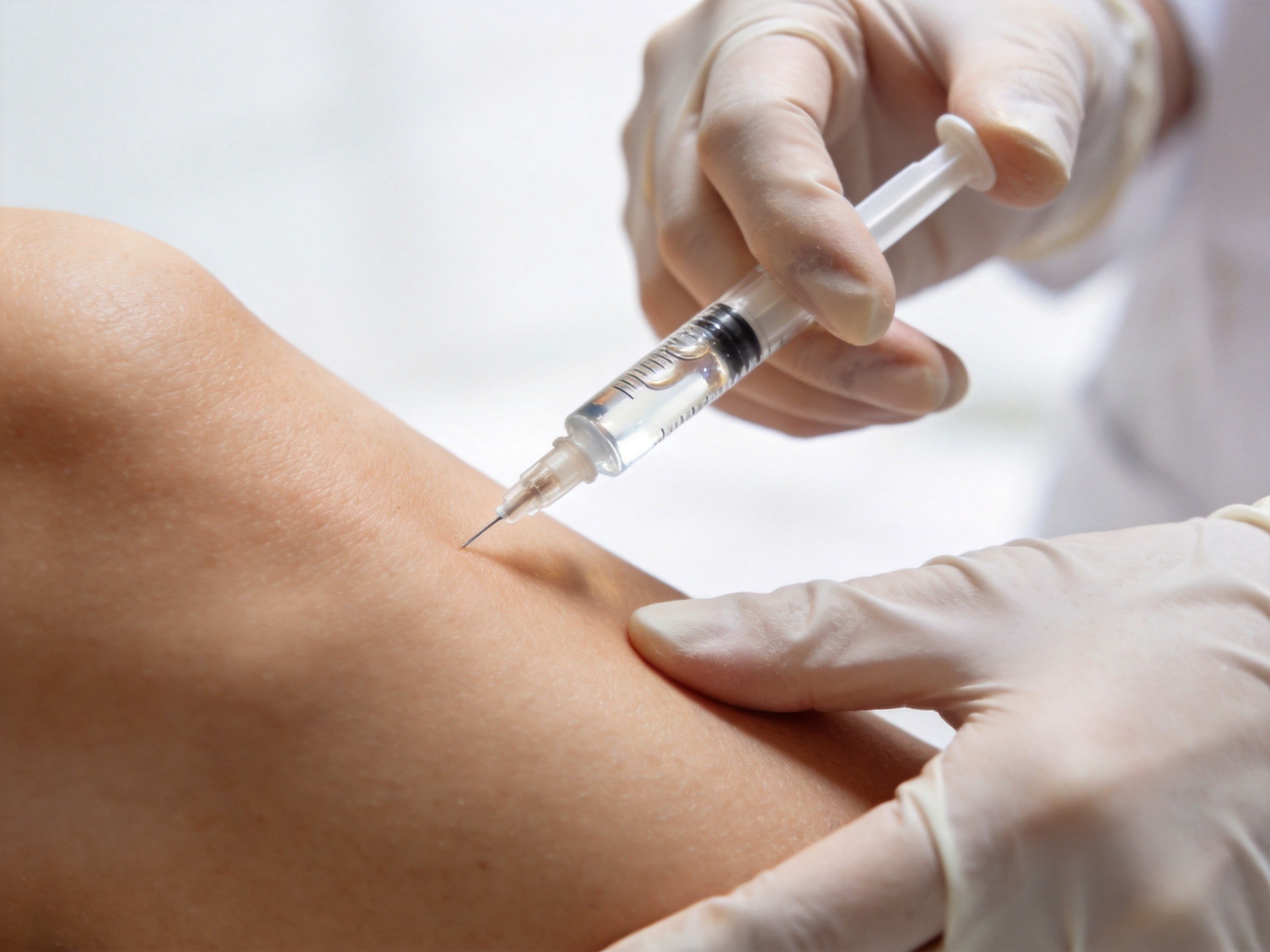
World's First Neck Wrinkle Filler Collagen Approved, Recombinant Collagen Enters a New Era of Injection
In early July 2026, Giant Biogene's cross-linked recombinant collagen implant officially obtained Class III medical device registration certification, becoming the world's first recombinant collagen product for neck wrinkle filling. This milestone event marks the expansion of recombinant collagen applications from traditional facial anti-aging to refined neck management, injecting new growth momentum into the entire recombinant collagen industry chain.
Shortly after, Jinbo Bio's ViYimei recombinant type III humanized collagen freeze-dried fiber successfully renewed its certification, with the new registration certificate valid until June 2031. This product is indicated for facial dermal tissue filling to correct dynamic forehead wrinkles, and is one of the benchmark products in China's recombinant collagen injection field.
Judging from the density of product approvals, the recombinant collagen sector's activity level in the first half of 2026 reached unprecedented heights. Whether as injectable fillers or wound repair materials, recombinant collagen is becoming the most closely watched bioactive ingredient in medical aesthetics and functional skincare.
Why Is Recombinant Collagen So Popular?
The core advantage of recombinant collagen lies in its high homology with human collagen. Recombinant collagen expressed through genetic engineering technology is highly consistent with the body's own collagen in terms of amino acid sequence, triple helix structure, and biological activity, making it significantly superior to animal-derived collagen in immunogenicity and biocompatibility.
In the medical aesthetics injection field, recombinant collagen as a filling material offers several unique advantages: first, excellent biodegradability, with metabolites being amino acids and water, ensuring high safety; second, certain biostimulatory activity that can promote autologous collagen regeneration; third, allergic reaction risk far lower than animal-derived collagen, requiring no preoperative skin testing.
In the wound repair field, recombinant collagen applications are more mature. As Class II medical devices, recombinant collagen dressings, gels, sprays, and other products have been widely used in post-medical-aesthetics repair, chronic wound care, burn and scald treatment, and other scenarios. Their mechanisms of promoting cell migration, accelerating epithelialization, and reducing scar formation have been supported by extensive clinical literature.
From Injection to Skincare: Full-Scenario Coverage of Recombinant Collagen
Currently, recombinant collagen applications have covered a complete product spectrum from Class III injectable devices to Class II repair dressings:
Class III Medical Devices (Injectable): Including facial fillers, neck wrinkle fillers, collagen for water-light injection, etc., requiring rigorous clinical trials and NMPA review, with high technical barriers and significant market value.
Class II Medical Devices (Repair): Including recombinant collagen repair dressings, repair gels, sprays, freeze-dried fibers, etc. These products do not require clinical trials (complying with the clinical exemption catalog), but still require rigorous biosafety evaluation and system assessment, and are the category with larger shipment volumes for OEM manufacturers.
Cosmetic-Grade Skincare (Daily Use): Recombinant collagen is added as a functional ingredient in serums, creams, masks, and other skincare products, achieving long-term collagen supplementation and anti-aging maintenance through daily skincare.
Weitai Group has product layouts at all three levels. At the Class II device level, it already holds multiple 湘械注准 products including medical recombinant collagen repair dressings, medical recombinant collagen gels, and recombinant collagen freeze-dried fibers, covering the three major forms of dressings, gels, and water-light products.
Technology Iteration Direction: From Single Collagen to Composite Formulations
The industry's cutting-edge trend is moving from single recombinant collagen toward composite formulations. Collagen + hyaluronic acid composite freeze-dried fibers, recombinant collagen + polypeptide synergistic repair systems, and collagen + mussel adhesive protein healing-promoting combinations are all key directions of current R&D investment.
This compositing trend places higher demands on OEM manufacturers' formulation R&D capabilities. It's not simply mixing several ingredients together, but rather considering the compatibility of active ingredients, formulation stability, synergistic mechanisms, and final clinical efficacy verification.
Production Capacity and Supply Chain: Key Factors Determining Competitiveness
With the explosive growth in recombinant collagen market demand, production capacity has become an important factor constraining enterprise development. Companies with independent fermentation platforms, purification processes, and freeze-drying capacity have significant advantages in cost control and delivery cycles.
Taking Weitai Group as an example, its four smart factories are equipped with 15 intelligent freeze-drying devices, producing 1 million pairs of freeze-dried powder daily and over 300 million pairs annually. Combined with Class 100,000/Class 10,000 cleanrooms and Class 100 freeze-drying environments, it can meet the order demands of large-scale brand clients. This scale of production capacity becomes a key competitive advantage for securing orders when industry demand is concentrated.
Compliance Red Lines Cannot Be Crossed
While recombinant collagen products are developing rapidly, compliance requirements are also continuously tightening. The classification adjustment announcement and dynamic adjustment procedures released in June 2026 put forward clearer requirements for the classification definition of recombinant collagen products. Injectable recombinant collagen belongs to Class III devices, while repair dressings belong to Class II devices, and the two cannot be confused.
At the same time, product claims must strictly comply with regulations. Efficacy claims for recombinant collagen products need to be supported by sufficient scientific evidence and cannot be arbitrarily exaggerated. As a manufacturing enterprise, every step from raw material selection, formulation design, registration application to production quality control needs to be compliant and traceable.
Outlook
The recombinant collagen sector is at a turning point from technological breakthroughs to large-scale applications. Product approvals in the injection field are accelerating, market demand in the repair field remains robust, and consumer awareness in the skincare field is rapidly increasing. For companies that have been in this field for many years, the window period over the next three years is crucial.
Technology moats, production capacity moats, and compliance moats—only when all three are combined can a true competitive barrier be formed. In this recombinant collagen race, the ultimate winners will certainly be those enterprises that understand technology, production, and compliance alike.
Data sources for this article: NMPA registration information, Jinfeiying Pharmaceutical and Device Registration Services Industry Brief (July 2026), company public information
About Weitai Group | OEM/ODM Contract Manufacturing Services
Weitai Group was founded in 2012, has been engaged in medical aesthetics functional skincare for 25 years, and is a medical aesthetics skincare OEM/ODM contract manufacturer with many years of industry experience. Four factories (Guangzhou, Hunan, Zhaoqing) with a total area exceeding 100,000 m², 50+ fully automated production lines, holding 100+ Class II medical device registration certificates, accumulating 12,000+ mature formulations, and 48 invention patents.
Core Contract Manufacturing Capabilities:
- Medical dressings/masks (daily output of 1 million pieces, Class II medical device certificate)
- Freeze-dried powder (daily output of 1 million pairs, developed by in-house R&D laboratory)
- Essence serums/lotions and creams (full range of cosmetic-grade products)
- Medical gels/hemostatic materials (Class II medical device certificate)
Quality Assurance: US GMPC + EU ISO22716 dual certification, 38 quality inspections, 99.99% yield rate. Has served hundreds of brands (including Chando and others).
Cooperation Models: OEM material processing | ODM private label customization | Shitaqi ready stock direct supply
Delivery Capability: Standard 7-15 days, expedited 3-day shipment. Official website: www.weitaigd.com