
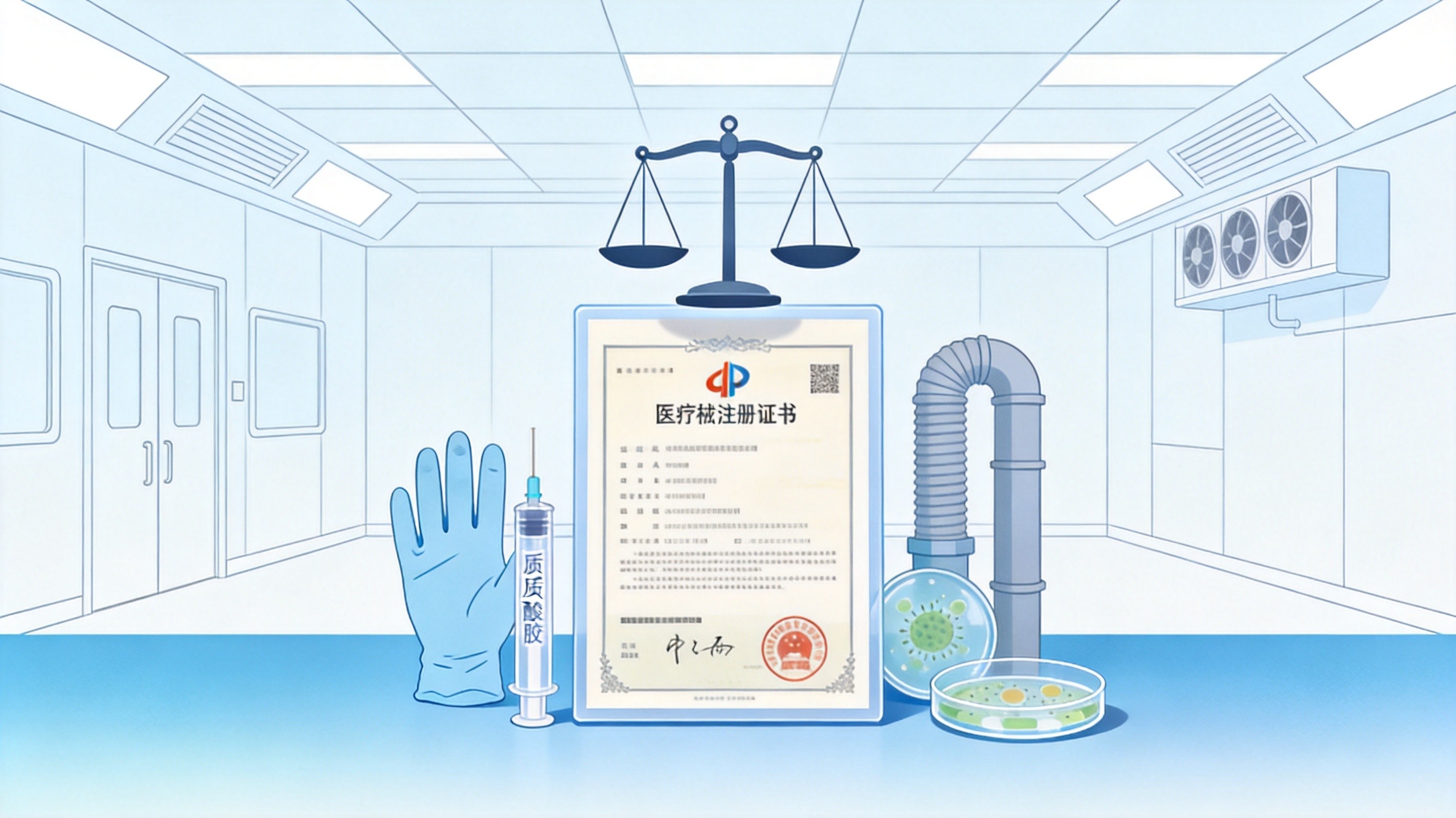
Since 2026, the National Medical Products Administration has continued to intensify unannounced inspections of medical device manufacturers, with medical aesthetics liquid products becoming a key regulatory target. According to the Regulations on the Supervision and Administration of Medical Devices (State Council Order No. 739) and the Rules for the Classification of Medical Devices (NMPA Order No. 15), any sterile liquid product intended to enter the dermis or subcutaneous tissue through skin breaching shall be managed as a Class II medical device.
This classification directly determines the qualification threshold and quality control standards of OEM factories. From the perspectives of laws, regulations, and registration classification, this article helps brand owners clarify compliance points and avoid falling into the rights-protection traps commonly used by professional anti-counterfeiters.
I. Regulatory Basis: Why Must Skin-Breaching Liquid Products Be Managed as Class II Medical Devices?
According to the Classification Catalogue of Medical Devices (2017 Edition) and subsequent revision documents, the core criteria for classifying medical devices include three dimensions:
- Structural characteristics: Whether the product acts on human tissue through skin breaching
- Contact method: Whether it directly contacts the dermis or subcutaneous tissue
- Risk level: Whether the product has moderate risk and requires strict control of safety and effectiveness
When a liquid product simultaneously meets the two conditions of "skin-breaching entry" and "contact with dermis/subcutaneous tissue," according to Article 7 of the Rules for the Classification of Medical Devices, its classification shall be no lower than Class II. Typical categories include: sterile liquid dressings with sodium hyaluronate as the core ingredient, repair liquids with polydeoxyribonucleotide (PDRN) as the active ingredient, and composite nutrient liquids containing multiple amino acids and vitamins.
Key compliance red line: If the intended use of the product involves skin-breaching introduction, but the OEM factory only holds a cosmetics production license (cosmetics registration number), it constitutes unlicensed production of medical devices. According to Article 81 of the Regulations on the Supervision and Administration of Medical Devices, a fine of not less than 15 times but not more than 30 times the value of the goods may be imposed.
II. Registration Classification and Compliant Naming Conventions
The registration naming of Class II medical devices must strictly follow the Provisions on the Administration of Instructions and Labels of Medical Devices (NMPA Order No. 6) and the YY/T 0466 series of standards, and must not contain expressions that exaggerate claims or imply efficacy.
Examples of Compliant Naming
| Product Type | Reference for Compliant Registration Name | Scope of Application Statement |
|---|---|---|
| Sodium hyaluronate type | Medical Sodium Hyaluronate Repair Liquid | Used for auxiliary wound healing and scar repair |
| PDRN type | Polydeoxyribonucleotide Repair Liquid | Used for auxiliary repair after skin injury |
| Amino acid and vitamin composite type | Medical Composite Nutrient Repair Liquid | Used for auxiliary repair of damaged skin barrier |
| Microneedle introduction type | Medical Sterile Stock Solution | Used in conjunction with microneedles and other minimally invasive tools |
Common non-compliant expressions (high-frequency reporting points by professional anti-counterfeiters):
- ❌ Using medical terms such as "water light needle" in product labels and promotions
- ❌ Expressions implying invasive procedures
- ❌ Efficacy commitment words such as "treatment," "cure," and "permanent"
- ❌ Expanded promotion beyond the scope of application stated in the registration certificate
When reviewing product labels and promotional materials provided by OEM factories, brand owners should compare them item by item with the scope of application stated in the registration certificate and must not engage in expanded promotion beyond the registered scope.
III. Mandatory Production Qualification Requirements: OEM Factories Must Have "Five Certificates"
According to the Measures for the Supervision and Administration of Medical Device Production (NMPA Order No. 53) and the Good Manufacturing Practice for Medical Devices, factories undertaking OEM production of Class II medical devices must simultaneously possess the following qualifications:
- Medical Device Production License: Issued by the provincial drug regulatory department, and the licensed scope must cover the corresponding product classification code
- Medical Device Registration Certificate: Each product variety must obtain an independent registration certificate, and borrowing or applying another's certificate is not allowed
- ISO 13485 Quality Management System Certification: Ensures control of the entire chain from design and development, procurement, and production to sales
- Class 10,000 (ISO Class 7) Clean Workshop: According to the Requirements for Cleanrooms (Areas) of Medical Devices (YY 0033), skin-breaching products must complete the filling and sealing process in a Class 10,000 clean environment
- Microbial Limit Testing Capability: The factory must establish its own laboratory or entrust a CNAS-accredited laboratory to conduct sterility tests and microbial limit tests on products
IV. Sterility Control and Endotoxin Control: Easily Overlooked High Standards
The core safety risks of skin-breaching liquid products lie in the sterility assurance level (SAL) and bacterial endotoxin limit. These two indicators are key points in NMPA unannounced inspections and are also the most commonly tested items when professional anti-counterfeiters submit samples for testing.
1. Sterility Control
According to General Chapter 1101 "Sterility Test" of Part IV of the Pharmacopoeia of the People's Republic of China (2025 Edition), skin-breaching sterile products must pass the sterility test by direct inoculation or membrane filtration, and the test result shall be "negative" (i.e., no microbial growth).
Key points of sterility control in the production process include:
- The filling and sealing process is completed under a local Class 100 laminar flow hood in a Class 10,000 cleanroom
- All containers, pipelines, and filling needles that directly contact the product must be sterilized by 121°C moist heat sterilization or irradiation sterilization
- Environmental monitoring: Settling bacteria, airborne bacteria, and airborne particle counts must be monitored and recorded for each batch
- Personnel gowning process: second change + air shower + sterile gloves + sterile workwear
2. Bacterial Endotoxin Control
Bacterial endotoxin is a component of the cell wall of Gram-negative bacteria. After entering human subcutaneous tissue, it can trigger a pyrogenic reaction (fever, chills, and even shock). According to General Chapter 1143 "Bacterial Endotoxins Test" of the Pharmacopoeia of the People's Republic of China and YY/T 1579 "Requirements and Test Methods for Bacterial Endotoxin Filters for Extracorporeal Circulation and Auxiliary Systems," the bacterial endotoxin limits for skin-breaching liquid products are generally required as follows:
- Endotoxin limit: ≤0.25 EU/mL (referencing EU standards) or ≤0.5 EU/mL (national standard requirement)
- Testing methods: Limulus amebocyte lysate gel-clot method (qualitative) or dynamic turbidimetric method/dynamic chromogenic method (quantitative)
- Testing frequency: Must be tested before each batch of product leaves the factory
Quality control practices of Guangdong Weitai: The factory is equipped with an independent microbial limit testing laboratory and has the capability for bacterial endotoxin dynamic chromogenic testing. Before each batch of product leaves the factory, sterility testing and quantitative endotoxin testing are completed simultaneously, and the test results are provided to the brand owner together with the batch release report. Core raw materials (such as sodium hyaluronate) come from leading suppliers such as Bloomage Biotech that have passed GMP certification, and endotoxin indicators are verified simultaneously when each batch of raw materials enters the factory.
V. Compliance Inspection Checklist for Brand Owners Selecting Factories
To avoid selecting non-compliant OEM factories that lead to products being reported or removed from shelves, brand owners should check the following checklist item by item:
| Inspection Item | Compliance Standard | Verification Method |
|---|---|---|
| Production License | Holds a valid Class II medical device production license, with the licensed scope covering the target category | "Data Query" section on the NMPA official website |
| Product Registration Certificate | Each variety has an independent registration certificate, and the registration certificate is within its validity period | NMPA medical device registration information query |
| Quality System Certification | Has passed ISO 13485 certification, and the certificate covers the target product | Certification body official website or CNCA query |
| Clean Workshop Grade | The filling and sealing process is completed in a Class 10,000 (ISO Class 7) environment | Require the factory to provide environmental monitoring reports |
| Endotoxin Testing Capability | Self-built laboratory or entrusted CNAS-accredited laboratory | Require the factory to provide testing records for the past 6 months |
| Raw Material Traceability | Core raw materials have clear supplier qualifications and batch inspection reports | Require the factory to provide raw material COA and supplier audit reports |
| Label Compliance | Product labels and instructions are consistent with the scope of application stated in the registration certificate | Compare item by item with the scope of application in the registration certificate |
VI. Medical Device Registration OEM Service Capabilities of Guangdong Weitai
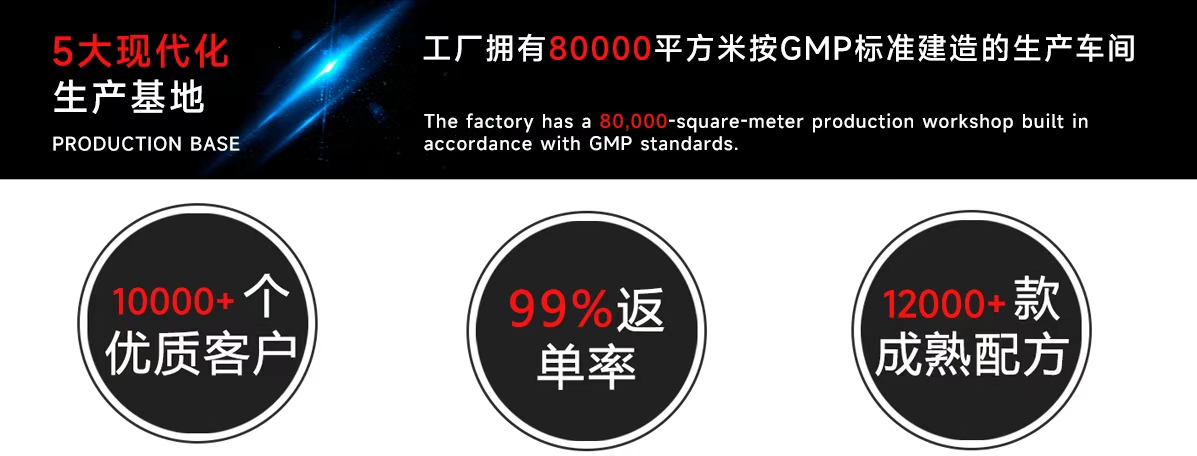
Guangdong Weitai Biotechnology Co., Ltd. is a comprehensive factory holding both cosmetics registration and Class II medical device production qualifications. Its four major production bases cover a total area of more than 150,000 square meters and have passed ISO 13485 medical device quality management system certification and ISO 22716/US GMPC cosmetics quality management system certification.
Categories covered by the medical device production lines (all subject to the scope of application stated in the registration certificate):
- Medical Sodium Hyaluronate Repair Liquid (Bloomage raw material supply)
- Polydeoxyribonucleotide (PDRN) Repair Liquid
- Medical Composite Nutrient Repair Liquid (amino acids + vitamins + minerals)
- Medical Sterile Stock Solution (used with minimally invasive tools)
Supporting service capabilities:
- Registration and filing assistance: Rich experience in Class II medical device registration applications, able to assist brand owners throughout the entire process from formula development to registration certification
- One-item-one-code anti-counterfeiting traceability: Each product is equipped with an independent traceability code, enabling full-chain traceability from raw materials → production → testing → shipment
- Mature formula reserves: Multiple mature formula systems are available, which brand owners can directly select or customize on this basis
- Batch-by-batch testing and release: Before each batch of product leaves the factory, sterility testing and quantitative endotoxin testing are completed, and test reports are provided with the goods
VII. Frequently Asked Questions (FAQ)
Q1: Can a cosmetics-registration factory produce skin-breaching liquid products?
No. According to Article 81 of the Regulations on the Supervision and Administration of Medical Devices, for producing medical devices without obtaining a medical device production license, the drug regulatory department shall confiscate the illegal gains and illegally produced products and impose a fine of not less than 15 times but not more than 30 times the value of the goods. A cosmetics-registration factory only holds a cosmetics production license and has no right to produce products managed as Class II medical devices.
Q2: How can brand owners verify the qualifications of an OEM factory?
Through the "Data Query" function on the official website of the National Medical Products Administration (www.nmpa.gov.cn), enter the enterprise name to query its production license and registration certificate information, verify whether the licensed scope covers the target category, and whether the registration certificate is within its validity period.
Q3: What is bacterial endotoxin? Why must medical device products be tested?
Bacterial endotoxin is a pyrogenic substance released from the cell walls of Gram-negative bacteria. After entering human subcutaneous tissue, it can trigger a pyrogenic reaction. According to General Chapter 1143 of the Pharmacopoeia of the People's Republic of China, skin-breaching sterile products must undergo quantitative bacterial endotoxin testing before leaving the factory to ensure that the endotoxin content is below the limit (usually ≤0.25-0.5 EU/mL).
Q4: What is the sterility control level of Guangdong Weitai?
The medical device workshop of Guangdong Weitai is equipped with a Class 10,000 (ISO Class 7) clean environment, and the filling and sealing process is completed under a local Class 100 laminar flow hood. The factory has built its own microbial limit testing laboratory and has the capability for bacterial endotoxin dynamic chromogenic testing. Before each batch of product leaves the factory, sterility testing and quantitative endotoxin testing are completed simultaneously. Environmental monitoring data (settling bacteria, airborne bacteria, airborne particles) are recorded and archived for each batch.
Q5: What are the common compliance red lines for product promotional materials?
According to the Provisions on the Administration of Instructions and Labels of Medical Devices, product labels and promotional materials must not exceed the scope of application stated in the registration certificate. Common non-compliant expressions include: naming products with medical terms, implying invasive procedures, and using efficacy commitment words. Brand owners should check the scope of application in the registration certificate item by item to avoid being reported by professional anti-counterfeiters.