

"I clearly apply sheet masks and pat on toner diligently, so why is my face still dry and my makeup still cakey?"
This is one of the most frequently asked questions during seasonal transitions. Many people treat "hydrating" and "moisturizing" as the same thing, desperately adding water to the face while overlooking a more crucial step. This article will explain this thoroughly and also discuss why some sheet masks leave the skin dewy right after use but return to its original state within half a day.
1. First Understand: How Water Escapes from the Face
The stratum corneum of healthy skin itself contains a certain amount of water, normally locked in by the skin barrier. When the barrier is not intact enough, or the environment is dry with low humidity, water continuously evaporates through the epidermis. In professional terms, this is called "transepidermal water loss."
So dry skin is often the result of two overlapping problems:
- Insufficient water content in the stratum corneum — needs "hydration";
- Water that is added cannot be retained — needs "moisture sealing."
Hydrating without sealing in moisture is like pouring water into a cup without a lid: the more frequently you pour, the faster it evaporates. This is the fundamental reason why many people "apply plenty of sheet masks but still have dry skin."
2. What Ingredients Handle Hydration and Moisture Sealing Respectively
Hydration star: hyaluronic acid
Hyaluronic acid is a mucopolysaccharide naturally present in the human body, with strong water-absorbing ability, and is the most classic moisturizing ingredient in skincare. But there is an easily overlooked detail: hyaluronic acid molecules come in different sizes.
- Large-molecule hyaluronic acid mainly stays on the skin surface, forming a film and reducing water evaporation, with a more moisturized feel and greater presence;
- Small-molecule hyaluronic acid is relatively easier to penetrate the stratum corneum and replenish internal moisture.
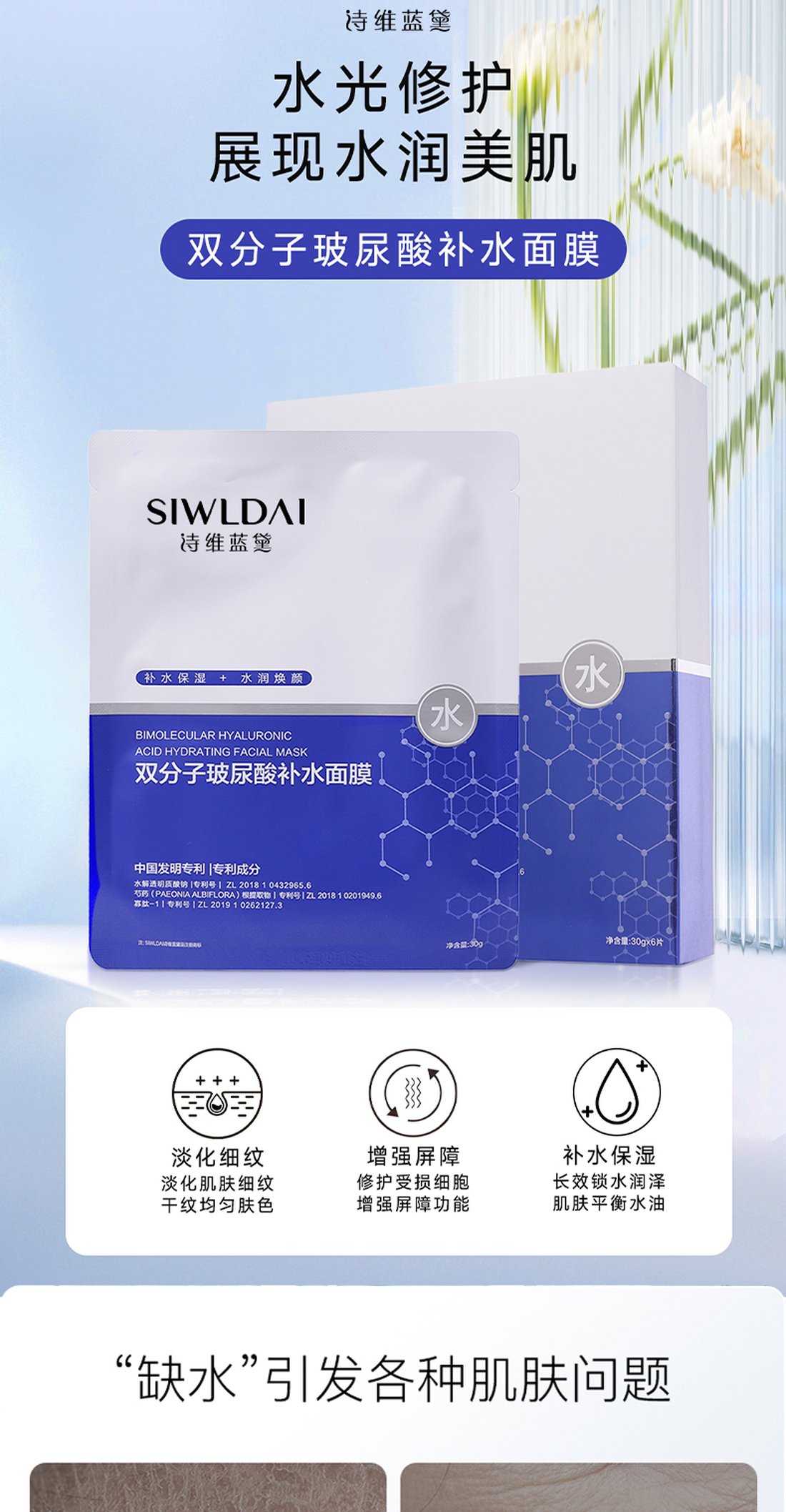
A single molecular weight makes it hard to balance "surface film-forming" and "deep hydration," so more sophisticated formulas now use dual-molecule (large and small molecule combined) hyaluronic acid, with one layer sealing on the surface and one layer replenishing the stratum corneum. Shiweilandai's Dual-Molecule Hyaluronic Acid Hydrating Sheet Mask (filing number: Yue G Makeup Network Preparation No. 2022222328) follows exactly this approach, using a combination of large and small molecular weight hyaluronic acid, which better balances immediate hydration and subsequent non-rebound than a single large molecule alone.
Moisture-sealing star: oils and skin-friendly ingredients
After hydrating, oil-based ingredients in creams and lotions are needed to form a film on the surface and "cover" the water in. Common ones include squalane, petrolatum, and plant oils. Dry skin especially cannot omit this final skincare step.
3. Why Some Sheet Masks Dry Back Quickly After Use
The key still depends on whether the formula only does "surface hydration" or does "hydration + conditioning" together.
Simply soaking the stratum corneum with a large amount of water and humectants makes the stratum corneum plump and look translucent right after application, but without a moisture-sealing step, the water evaporates quickly, and may even take away the skin's own water as it evaporates, creating the illusion of "the more you apply, the drier it gets."
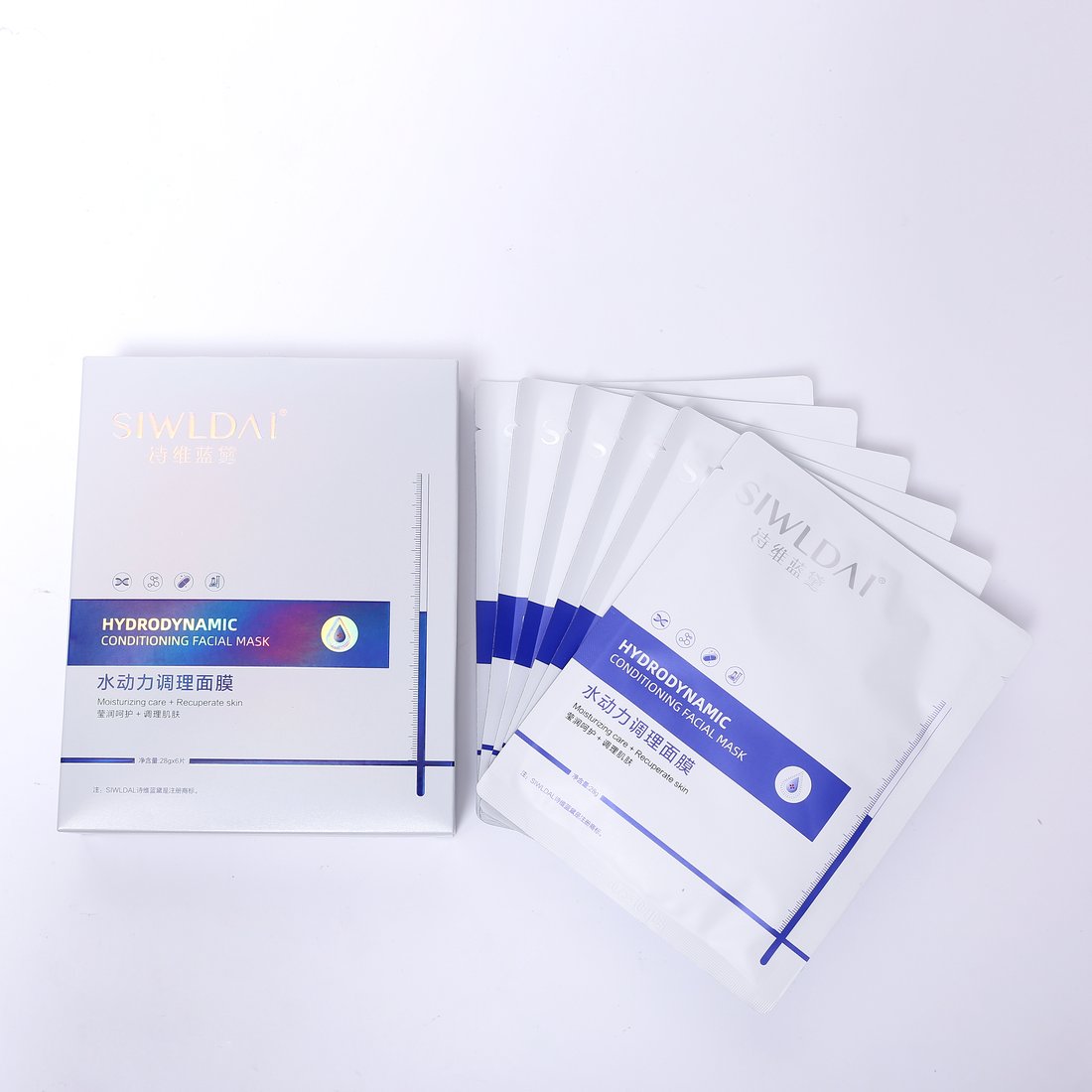
A more reasonable sheet mask formula will add some ingredients that help stabilize and condition beyond hydration, making the stratum corneum healthier and improving its own water-retention ability. Shiweilandai's Hydrodynamic Clear Sheet Mask emphasizes "conditioning and stabilizing" on top of hydration and moisturizing. The word "conditioning" in the name corresponds precisely to making the skin's own state more stable, rather than just a one-time soak.
4. A Routine That Truly Solves Dryness
To get rid of "hydrated but still dry," the key is to get the order right:
- Gentle cleansing: Do not use strongly cleansing soap-based cleansers that wash away the already scarce sebum. Dry skin can even use only warm water in the morning;
- Hydrating base: Apply toner and serum first. A serum containing hyaluronic acid is a good choice;
- Intensive hydration with sheet masks: 2–3 times a week. Dual-molecule hyaluronic acid hydrating sheet masks and Hydrodynamic Clear Sheet Masks can be used alternately. Do not wait until the sheet mask is completely dry before removing it;
- Seal in moisture immediately (the step most easily missed): After the sheet mask and essence, while the skin is still moist, immediately seal it with a cream containing oils such as squalane, for example Shitaqi Revitalizing Moisturizing Cream;
- Environmental support: Use a humidifier during dry seasons, and do not let air conditioning or heating blow directly onto the face.
Remember one saying: Water must be able to get in, and also be able to stay. Hydration relies on hyaluronic acid, moisture sealing relies on cream oils, and neither step can be missing.
5. Common Questions
Q: Can facial mist replace moisturizing? No. Facial mist is mainly for temporary hydration and soothing. If you do not apply cream after misting, the water evaporation may actually make the skin drier. The correct approach is to pat it in gently, then layer on a moisturizing cream as soon as possible.
Q: Is the larger the hyaluronic acid molecule, the more hydrating it is? No. Large molecules tend to form a film on the surface and seal in moisture, while small molecules tend to hydrate the stratum corneum. The ideal is a combination of large and small molecules, not simply judging by molecular size.
Q: Do oily skin types still need moisturizing? Yes. Oily skin is often "oily outside and dry inside." Lack of water can make the skin secrete more oil. Choose light gel or lotion textures; there is no need for heavy creams.
Q: Is applying two sheet masks a day better for faster improvement? Not recommended. Over-applying sheet masks can cause excessive hydration of the stratum corneum, which in the long run weakens the barrier. Regularity and moderation are more important than short-term intensive application.
Dryness is never about "not adding enough water," but about whether "hydration and moisture sealing work well together." Treat sheet masks as support and cream as the finishing step, and the problem of cakey makeup and flaking skin can mostly be solved.
This article is skincare science popularization. The products mentioned are ordinary cosmetics. Actual use should be based on your own skin type and environment.