

A round tin of snow cream printed with a qipao-clad woman was once the "taste of childhood" for generations. In August 2026, #ShanghaiSnowCreamBankruptcy# trended on social media.
According to public reports from multiple media outlets including Xinmin Evening News and 21st Century Business Herald, the Shanghai Pudong New Area People's Court issued Civil Ruling (2024) Hu 0115 Po 151, declaring Shanghai Meilan Cosmetics Co., Ltd. bankrupt and terminating the liquidation proceedings: the enterprise's disposable assets amounted to only about 95,800 yuan, the court confirmed total claims of 19,416,700 yuan, and bankruptcy expenses of 98,800 yuan had already been incurred. The existing assets were insufficient even to cover bankruptcy expenses, and ordinary creditors ultimately received no distribution.
What the cosmetics industry should note is that Shanghai Meilan itself was a long-established manufacturer with OEM/ODM/OBM operations that had undertaken contract manufacturing for over 140 domestic beauty brands. Its collapse is not just a sentimental story about a domestic brand, but a "textbook on supply chain and compliance risk" written in publicly available court documents. For brands currently selecting cosmetics contract manufacturers, this case offers 4 very practical warnings.
I. Case Review: Why a 40-Year-Old Brand Ended Up with "Nothing to Distribute"
The timeline reconstructed from public reports is quite clear:
1984: Shanghai Meilan Cosmetics Factory was established, one of Shanghai's earlier licensed daily chemical manufacturers; 1989: "Shanghai Snow Cream" was launched, becoming popular nationwide with its retro tin box and affordable moisturizing positioning; 2014: it pivoted to urban cultural tourism souvenirs, incubated "Zhen Gege," and set up as many as 670 outlets in scenic spots, airports, high-speed rail stations, and other channels; 2016: Shanghai Meilan Cosmetics Co., Ltd. was registered with a registered capital of 30 million yuan, while its contract manufacturing business expanded to serve over 140 domestic beauty brands.
The turning point came in 2021—the enterprise was acquired and controlled by the listed company Shendatong; in the same year, its EEBESS amino acid facial cleanser was publicly notified by the Shanghai Medical Products Administration for illegal use of a prohibited preservative (isobutyl 4-hydroxybenzoate). In 2024, judicial crises erupted en masse, with over 50 sales contract and service contract disputes throughout the year, and raw material supplier Shanghai Beilei Oil & Fat Co., Ltd. filed a bankruptcy liquidation petition with the court. In July 2026, the administrator applied for a declaration of bankruptcy and termination of liquidation, and the court subsequently ruled, marking the enterprise's complete exit.
According to an incomplete tally by 36Kr · Jumeili based on the National Enterprise Bankruptcy and Reorganization Case Information Network, about 20 cosmetics companies have gone bankrupt since 2026, with small and medium-sized enterprises with registered capital of 1 million to 10 million yuan accounting for about 70%, and cases concentrated in Shanghai and Zhejiang. Shanghai Meilan is not an isolated case but a microcosm of industry stock competition and accelerated clearing.
(Sources: Shanghai Pudong New Area People's Court Civil Ruling (2024) Hu 0115 Po 151, reported by Xinmin Evening News citing Red Star News and Huaxia Times; 21st Century Business Herald republished by Guangming Online; 36Kr · Jumeili "Just Half of 2026, 20 Beauty Companies Have Gone Bankrupt." This article is based solely on public information for objective analysis and does not represent an overall commercial judgment of the subjects evaluated.)
II. Warning One: Once a Contract Manufacturer Goes Bankrupt, the Brand's Payments, Materials, and Filings May Suffer "Chain Damage"
Bankruptcy liquidation follows a strict statutory order of repayment. According to Article 113 of the Enterprise Bankruptcy Law of the People's Republic of China, after bankruptcy expenses and common-benefit debts are paid in priority, bankruptcy property is distributed in order: wages and social insurance owed to employees, taxes owed, and finally ordinary bankruptcy claims.
In Shanghai Meilan's case, disposable assets of 95,800 yuan could not even cover 98,800 yuan in bankruptcy expenses. This means: suppliers' payments as ordinary claims may have a recovery rate of zero; brands that prepaid contract manufacturing fees and packaging material fees are also ordinary creditors, standing far back in line, with highly uncertain recovery; in-production orders, purchased packaging materials, and raw materials may be included in the bankruptcy estate for unified disposal, and brands may find it difficult to retrieve them; product filing and continuous supply will also be affected by changes in the filer or manufacturer.
The direct lesson for brands is: betting all orders, prepayments, and inventory on a single factory is itself an operational risk. When choosing a contract manufacturing partner, one should not only look at price quotes and minimum order quantities, but also at the other party's balance sheet health, whether the equity structure is stable, and whether there are bulk sales contract disputes and enforcement records.
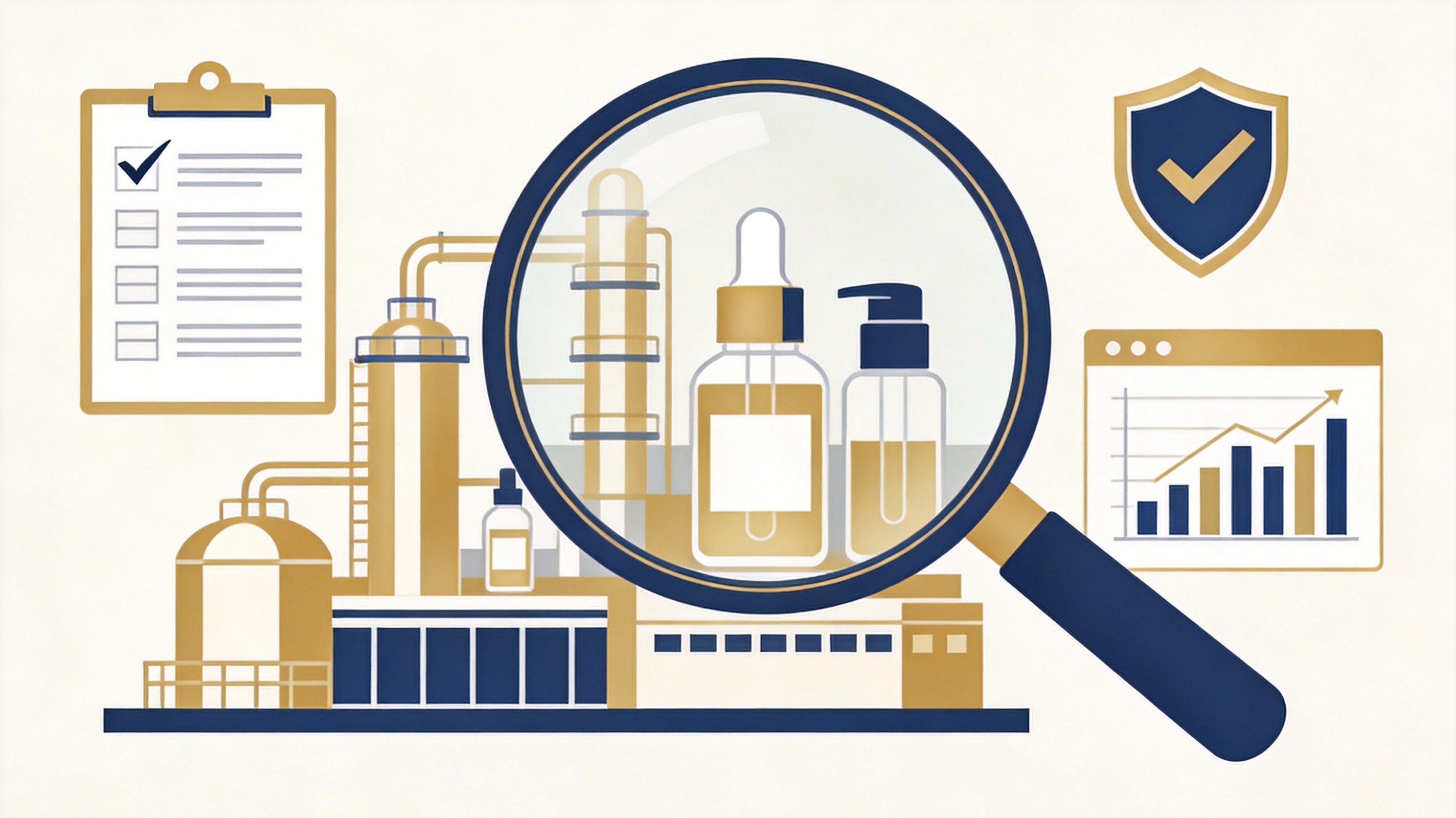
III. Warning Two: The First Step in Choosing a Factory Is "Judicial and Credit Due Diligence," Not Negotiating Price First
Before Shanghai Meilan's bankruptcy, its risk signals were actually very dense and publicly verifiable. According to media citing enterprise credit information, it had long-standing records as a dishonest judgment debtor, consumption restrictions, terminated enforcement cases, business abnormalities, and numerous sales contract disputes. In both 2025 and 2026, it was listed in the business abnormality directory for failing to publish annual reports on time. This information could have been checked through public channels before cooperation.
It is recommended that brands conduct at least one round of basic due diligence on prospective factories before signing contract manufacturing agreements:
1. Check the entity and qualifications: whether the business license and cosmetics production license are within their validity period, and whether the production scope covers the target category;
2. Check credit and judicial records: the enterprise credit information publicity system, court judgments, enforcement/dishonest enforcement records, consumption restrictions, equity pledges, and chattel mortgage records;
3. Check regulatory records: supervisory sampling inspections, administrative penalties, unannounced inspections, and public notifications by medical products administration authorities;
4. Check equity stability: whether the controlling shareholder has frequent changes, its own litigation, or delisting risk, to avoid the contagion effect of being "dragged down by an acquired party";
5. Check going-concern capability: employee and production capacity status, major customer structure, and whether it overly relies on a single channel or a single source of capital.
No matter how low a factory's quote is, if it is entangled in dishonesty, litigation, and business abnormality records, it may be a more expensive choice for the brand.
IV. Warning Three: Product Compliance Is "Joint Liability"—the Brand Cannot Escape the Blame When a Factory Is Notified
A common misconception in the cosmetics industry is: "Production is handed to the factory, so compliance is the factory's business." This is not the case.
According to the Regulations on the Supervision and Administration of Cosmetics, China implements registration or filing management for cosmetics and cosmetic raw materials; the registrant or filer of cosmetics is responsible for the quality, safety, and efficacy claims of the cosmetics. In other words, even under a contract manufacturing model, the brand as the registrant/filer remains the first responsible party for product quality, safety, and efficacy claims.
Shanghai Meilan was publicly notified by drug regulatory authorities in 2021 for illegal use of a prohibited preservative (isobutyl 4-hydroxybenzoate) in its products. Once such prohibited ingredient issues occur, the relevant brand products may face removal from shelves, recalls, and notifications of failed sampling inspections; the brand's filing credit, platform store ratings, and subsequent new product filings will all be affected; and if consumer harm is caused, corresponding civil liability may also be borne.
Therefore, when selecting a factory, the "quality system" must be reduced to verifiable documents: raw material procurement and incoming inspection records, consistency between product formulas and filings, factory inspection capabilities, sample retention management, adverse reaction monitoring, and recall mechanisms. Rather than pursuing liability after an incident, it is better to pre-agree on quality responsibilities, rectification deadlines, and compensation clauses in contracts and factory audits.

V. Warning Four: Sentiment and Low Prices Are Not Moats—Product Strength and Compliance Strength Are
Reviewing analyses from multiple media outlets, Shanghai Meilan's decline had clear internal causes: products long used the original formula, with slow iteration in efficacy and skin feel; channels were highly dependent on one-time consumption from cultural tourism traffic, lacking repeat purchases and online layout; and it was compounded by the pandemic shock and a failed capital acquisition. It had even built OEM/ODM/OBM business lines, but its contract manufacturing base also loosened as small and medium-sized brands cut budgets.
This is a reminder for both today's brands and factories: models that sell on sentiment, distribute through old channels, and move volume through low prices are increasingly unworkable in the era of efficacy skincare; consumers increasingly value ingredients, efficacy, and user experience, and products need continuous formula R&D and efficacy evidence support; regulatory requirements for raw materials, filings, efficacy claims, and safety assessments continue to be refined, and compliance is already part of product strength.
Choosing a contract manufacturing partner is essentially choosing a comrade-in-arms who can walk alongside you over the long term in "formula R&D—compliance filing—stable delivery—quality traceability," not just the cheapest processing workshop.
VI. Final Thoughts: How Brands Can Choose a Contract Manufacturer That Can "Weather the Cycle"
Shanghai Meilan's ending is regrettable, but it also explains the logic of factory selection very plainly. Based on this case, it is recommended that brands grasp 4 key points in OEM/ODM cooperation:
1. Due diligence first, cooperation second: make credit, judicial, regulatory, and equity checks a pre-signing action;
2. Value qualifications, but value systems more: in addition to the production license, focus on quality management systems such as ISO22716, R&D and inspection capabilities, and raw material traceability;
3. Write compliance responsibilities into the contract: clarify formula-filing consistency, prohibited ingredient controls, returns and compensation for failed sampling inspections, and the division of responsibility for adverse reactions and recalls;
4. Leave buffers in settlement and supply chain: avoid large prepayments and single-factory dependence, deliver and settle in batches, and pay attention to the safety boundaries of your own product filings and raw material inventory.
Choosing the right factory is the first step for a brand to go steadily and far; and compliance is the cost that cannot be cut in this step.
Frequently Asked Questions (FAQ)
Q1: Is all Shanghai Snow Cream now unavailable?
A: The bankrupt entity in this case is Shanghai Meilan Cosmetics Co., Ltd. and the related brands it operated. This does not mean all "snow cream" products on the market have disappeared. For specific products on sale and their manufacturers, please refer to product packaging labels and information from legitimate channels.
Q2: If a contract manufacturer goes bankrupt, can the brand recover its prepaid payments?
A: Brand prepayments are usually treated as ordinary bankruptcy claims and are repaid according to the statutory order under the Enterprise Bankruptcy Law, ranking far back. In cases like Shanghai Meilan where assets are insufficient to cover bankruptcy expenses, ordinary claims may receive no distribution. Therefore, due diligence before signing and batch settlement are very important.
Q3: In cosmetics contract manufacturing, who is responsible if a product has quality problems?
A: According to the Regulations on the Supervision and Administration of Cosmetics, the registrant or filer of cosmetics is responsible for product quality, safety, and efficacy claims. Under a contract manufacturing model, the brand is usually the filer and cannot be exempted on the grounds that "the factory produced it." Risks should be controlled through factory audits, contract clauses, and sample retention traceability.
Q4: When choosing a cosmetics OEM/ODM factory, what should be key areas of verification?
A: It is recommended to verify the cosmetics production license and production scope, enterprise credit and litigation/enforcement records, drug regulatory sampling inspections and penalty notifications, quality system certifications (such as ISO22716/GMPC), R&D and inspection capabilities, equity and production capacity stability, and to clarify quality and compliance responsibilities in the contract.