

After CITIC Securities' medical aesthetics research report came out on September 12, I received two calls in one day, both from brand owners doing medical device-grade dressings. One asked: "Hyaluronic acid is under pressure, should I still make the sodium hyaluronate dressings in my warehouse?" The other was more direct: "Regenerative materials are so hot, can you immediately arrange a new product for me?"
Both questions actually need to be answered after reading the research report first.
First, the hard data in the research report
This report tracks the Q2 2026 operating conditions of more than a dozen leading global medical aesthetics listed companies. The rating remains "Outperform," but after reading the whole thing, the core is just two words—differentiation.
On the upstream injectable side, traditional hyaluronic acid continues to face pressure; even Allergan Aesthetics' Juvederm was still declining in Q2. But regenerative products and botulinum toxin are selling well. Galderma's Q2 botulinum toxin revenue grew 14.1%, and it even raised its full-year revenue growth guidance to 19%~21%. Hugel also grew about 10.1% in Q2. Differentiation on the device side is even more obvious. Leading radiofrequency and ultrasound brands rely on overseas installations and consumables volume growth. Sota Medical and Classys Q2 revenues grew about 38% and 26.7%, respectively. Regionally, the Chinese market remains a source of incremental growth in the eyes of these overseas giants.
The investment judgment at the end of the report is very clear: bullish on leading companies with mature brand heritage, differentiated products, and commercialization capabilities. This statement also applies to the medical device-grade dressing track, and is even sharper.
The opportunity is real, but only for those "with certificates and systems"
First, answer the first call. Hyaluronic acid is under pressure, but what is under pressure is homogeneous products on the injection side, not all dressings containing sodium hyaluronate need to be cleared out. Dressings follow after procedures. After consumers finish procedures at institutions, they need to use compliant Class II medical device dressings for care at home. This demand is stable. What is truly dangerous is the kind of product where "the only ingredient is sodium hyaluronate and the selling point relies entirely on packaging copy." Such products have no differentiation and are most prone to compliance problems.
For the second call, I advised him not to rush. Regenerative materials, recombinant collagen, and PDRN directions are indeed hot. Post-procedure home care, care during sensitive skin periods, and the connection between clinical care and home care are all driving demand for compliant Class II medical device dressings. But a new medical device-grade product is not something you can launch just by choosing an ingredient and opening a mold—what registration certificate do you use for production, has the intended use been written into the product technical requirements, what level is the workshop managed at, what standards are used for testing? If any link is empty, this batch of goods can only become inventory. The "differentiation" that appears repeatedly in the research report has a real meaning in this niche track: factories with certificates, systems, and R&D will become busier and busier, while small factories competing on price will be washed out wave after wave by unannounced inspections and complaints.
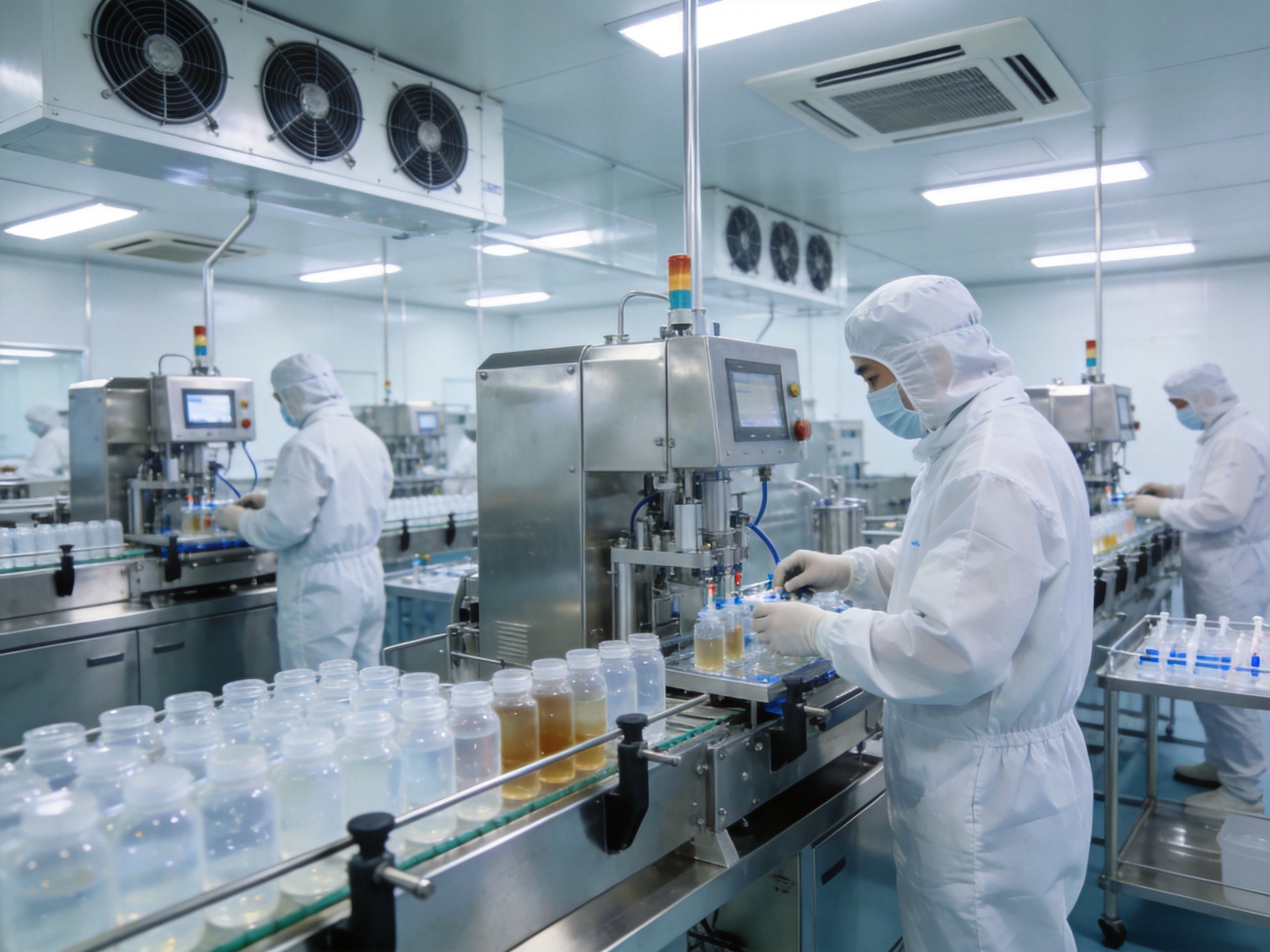
Weitai Clean Production Workshop—the threshold for medical device-grade products is not in how new the building is, but in whether this system operates according to documents every day
When choosing a Class II medical device OEM factory, this is how I would inspect it with clients
In recent years, we have received many brands that switched from cosmetic-grade products or are doing medical device-grade products for the first time. Many are used to looking at showrooms and comparing quotations, and as a result they have suffered losses. Class II medical devices are not cosmetics. The verification path is completely different. I usually take clients through the following order.
Before discussing products at the door, first check the entity and certificates. The contract party, who the registrant is on the registration certificate/filing certificate, and whether the production scope on the production license covers the category you want to make—these three must match. There is enough information available online now. Certificate numbers, validity periods, and production scopes can all be verified through public channels of the drug regulatory authorities. If this step does not match, there is no need to discuss anything else.
Once the certificates match, then look at the real structure of the registration reserves. More registration certificates are not necessarily better. You need to see whether the categories form a system—medical dressings, liquid dressings, gel dressings, freeze-dried powder fibers, and other directions each have their own technical requirements. Whether the factory can match them with products actually in production and on sale is more important than the numbers on a PPT.
Then there is the system. Class II medical device manufacturers operate an ISO13485 medical device quality management system. From design and development, supplier audits, clean environment control, in-process inspection, to post-market traceability, the entire process must be controlled. But anyone can buy documents. What matters is execution: are the temperature and humidity, pressure differential, and microbial monitoring records in the clean workshop continuous? Can batch production records and batch inspection records be randomly pulled for a complete batch number? Are retention samples managed according to time limits? Is there a dedicated person following up on adverse events? I often tell clients that randomly picking a batch number in the workshop is more useful than a whole day of meetings.
Only at the end do we sit down to discuss products and R&D: who drafted the product technical requirements, which indicators the type test report covers, how to write the intended use in the instructions without overstepping, and whether the new product direction has process research support. The intended use of a medical device-grade product is based on the registered product technical requirements and instructions. This sentence is not polite talk; it is the line that cannot be loosened in the entire cooperation.
Weitai's own foundation, fully laid out for clients to verify
Now that the standards are explained, we also truthfully present our own conditions so clients can compare them one by one using the path above.
The medical device-grade business is operated by Weitai Bioengineering (Hunan) Co., Ltd. and Hunan Weitai Biomedicine Co., Ltd. as production and operating entities. They hold medical device production-related qualifications and can undertake standardized Class II medical device OEM/ODM cooperation. At present, more than 110 Class II medical device registrations/filings have been obtained, covering multiple category directions such as medical dressings, liquid dressings, gel dressings, and freeze-dried fibers.
Here I will specifically mention one of our own certificates. Our own registration certificate "Xiang Xie Zhu Zhun 20252140969" (medical silk fibroin freeze-dried dressing) was approved for registration by the Hunan Provincial Medical Products Administration on December 1, 2025, with validity until November 30, 2030. Clients can verify it through public channels of the drug regulatory authorities. We have conducted process research on the silk fibroin direction for many years, and have our own data accumulation from raw material processing to freeze-drying curves. The specific intended use of the product is subject to the registration certificate and instructions.

Registration qualification documents—certificate number, validity period, and production scope can all be verified one by one through public drug regulatory channels
The system and workshop are built according to medical device standards. The production system operates an ISO13485 medical device quality management system. Clean workshops are configured according to product categories. Temperature and humidity, pressure differential, and microorganisms are continuously monitored. Environmental monitoring and batch inspection records are fully retained. Post-market traceability and adverse event monitoring are handled by dedicated personnel.
In terms of R&D collaboration, the group has established joint laboratories and industry-academia-research cooperation with universities and institutions such as Jinan University, Anhui Medical University, Southern Medical University, and Central South University Xiangya-affiliated institutions. It continuously conducts process research around biomaterials such as recombinant collagen and silk fibroin. Recombinant collagen processing can maintain ingredient activity under high-temperature conditions of 121°C.
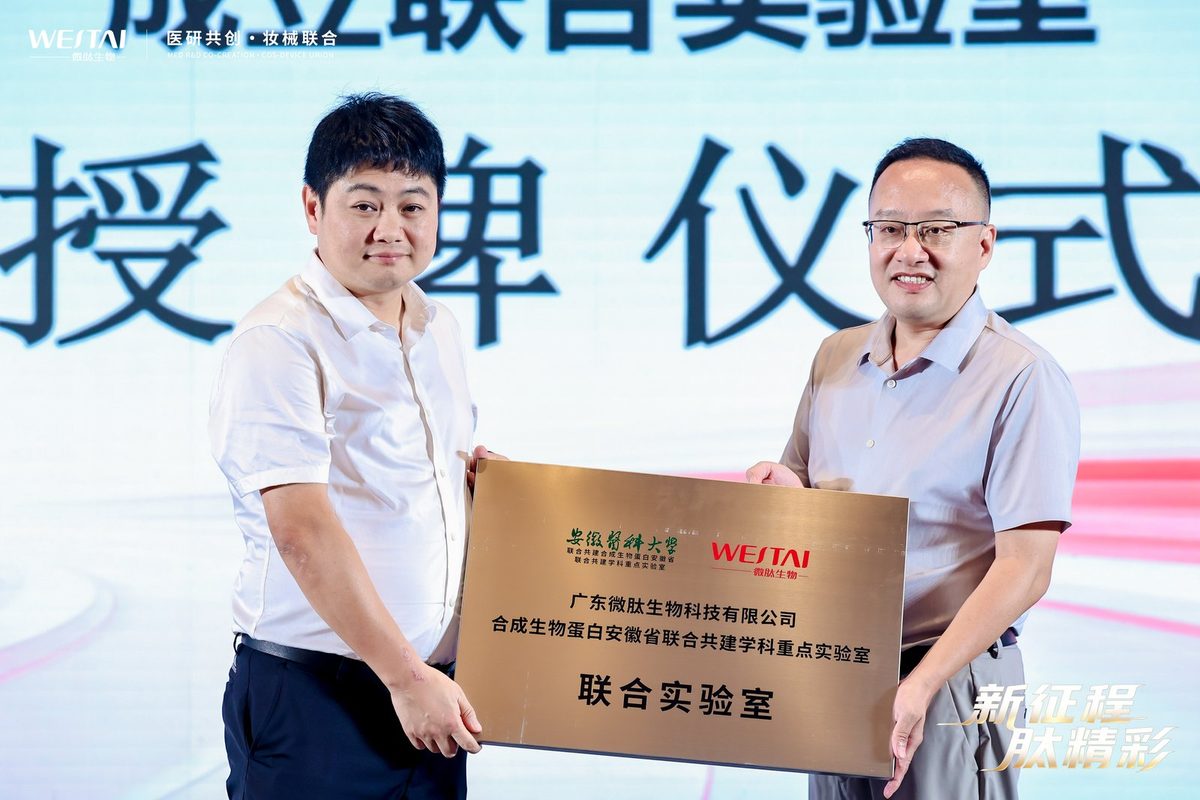
Scene of the plaque awarding for the joint laboratory between Weitai Group and Professor Liu Qiang's team at Southern Medical University
Production capacity and customer base are also clearly stated: the group has 6 major production bases with a total construction area of more than 150,000 square meters. The Zhaoqing Intelligent Manufacturing Base opened in September 2026. It has cumulatively served more than 1,000 brand clients, including targeted customization for clinical institutions and large-scale orders for channel brands.
Conclusion
Back to the research report. "Outperform" refers to the industry; differentiation refers to the people in the industry. For brands making medical device-grade dressings, this structural market wave in 2026 is essentially a supply chain clearing—using this time point to carefully inspect the OEM factory's entity, registration certificates, system, and execution is far more important than launching one more conceptual new product.
Welcome to bring your product direction to the factory for inspection. Licenses, workshops, and records are all on site and can be reviewed and verified at any time.
Frequently Asked Questions
Q: How do you check whether a Class II medical device OEM factory is legitimate?
A: Three steps: First, verify the entity names and production scopes on the production license and registration certificate/filing certificate. Second, verify the certificate number, validity period, and product status through public channels of the drug regulatory authorities. Third, go to the factory to inspect ISO13485 system operation records, and randomly check one batch number's batch production records, batch inspection records, and clean workshop environmental monitoring records. Complete documents do not equal a real system; continuous original records count.
Q: What is the difference between medical dressing OEM and ordinary cosmetics OEM?
A: The difference lies in the level of regulation. Class II medical devices are subject to medical device registration/filing management. Manufacturers must have corresponding production qualifications and operate an ISO13485 quality management system. The intended use of the product is subject to the registered product technical requirements and instructions. Cosmetics are subject to cosmetic production quality management standards and cannot claim medical effects. The two cannot be conflated, nor can medical device-grade products be operated using cosmetic-grade thinking.
Q: CITIC Securities says hyaluronic acid is under pressure. Can sodium hyaluronate dressings still be made?
A: What is under pressure in the research report is homogeneous hyaluronic acid products on the injection side. Compliantly registered sodium hyaluronate dressings still have stable demand in scenarios such as post-procedure home care, but the space for products with a single ingredient, no differentiation, and selling points piled up through copy is narrowing. It is recommended to focus energy on ingredient formula upgrades and system compliance, rather than following trends in a clearance-style manner.
Q: Can Weitai's silk fibroin registration certificate be verified?
A: Yes. Our own registration certificate Xiang Xie Zhu Zhun 20252140969 (medical silk fibroin freeze-dried dressing) was approved for registration by the Hunan Provincial Medical Products Administration on December 1, 2025, with validity until November 30, 2030. It can be verified through public channels of the drug regulatory authorities. The intended use of the product is subject to the registration certificate and instructions.
Q: What is the general process for OEM of a new medical device-grade product?
A: Usually it is product direction communication → selecting a compliant path based on existing registration certificates or evaluating the registration cycle for a new product → confirmation of technical requirements and formula → sample verification → organizing production and inspection according to system requirements → release and delivery. Whether a new product registration is required depends on the product ingredients and intended use. This must first be aligned by both parties' regulatory and technical personnel; procedures cannot be completed after doing it first.
Q: How can I visit the factory for verification and sampling?
A: Through online consultation on the official website or by appointment with customer service, on-site verification can be arranged at bases in Hunan, Guangdong, and other places. Original licenses, system records, clean workshops, and laboratories can all be viewed on site. It is recommended to bring specific product directions and a list of questions for greater efficiency.