
Company News
Looking at the trend from the Fudan Medical Innovation Competition: AI + medical research co-creates how to reshape the supply chain of medical aesthetic repair products
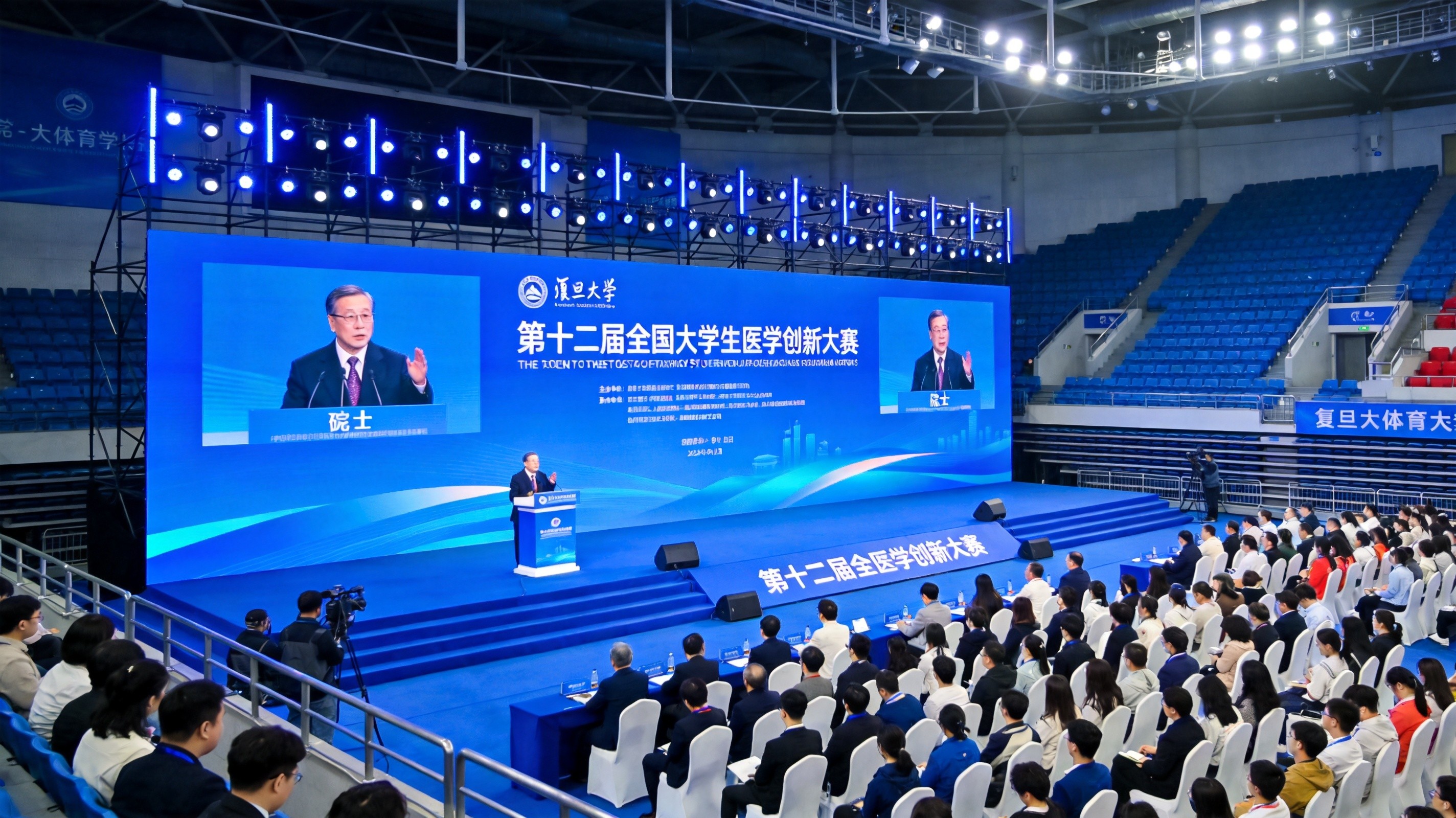
On August 15, 2026, the 12th National University Medical Innovation Competition and the "Belt and Road" International Competition Finals kicked off at Fudan University.Known as the "Olympics" of medical innovation, the event brought together nearly 4,500 teachers and students from nearly 200 universities at home and abroad and more than 160 industry judges. The six university track covers basic clinical, oral, pharmaceutical, traditional Chinese medicine, interdisciplinary and other directions.
But what really deserves the attention of the medical beauty and skin care industry chain is not the scale of the event itself, but the three keywords that appear repeatedly at the event: artificial intelligence, medical integration, and medical research and co-creation.
< h2 > What signals did the academician report release </h2 >
< p > < img src = "/uploads/1786917232562-trqnfd.jpg "alt =" Smart Manufacturing Workshop "/>
< p > < img src = "/uploads/1786917232185-lysca6.jpg" alt = "AI Medical R&D Lab"/>
< p > < img src = "/uploads/1786917231917-e5njlg.jpg "alt =" Trends from the Fudan Medical Innovation Contest: How AI + Medical Research Can Reshape the Supply Chain of Medical Aesthetic Repair Products "/>
In the report "Artificial Intelligence and Medical Innovation", Ji Junhao, an academician of the Chinese Academy of Sciences, clearly proposed four key directions for intelligent medical innovation: building a large model of medical specialty, creating a medical agent, developing brain-computer interface and bio-intelligent integration technology, and researching and developing intelligent medical equipment.He also used terahertz wave imaging and infrared spectroscopy pathology as examples to demonstrate the intersection of optical and medical applications.
The report of Zhao Yimin, an academician of the Chinese Academy of Engineering, has more industrial reference value.He introduced that the autonomous oral implant robot developed by his team has improved the surgical accuracy from about 2 mm to 0.Within 3mm, more than 21,000 surgeries have been completed, more than 33,000 implants have been implanted, and they have entered the European market through EU CE certification.He also emphasized: "Doctors are always the last decision maker and the last responsible person in the medical field, and this cannot be changed under any technical conditions."
Jiang Xinquan, Dean of Fudan University Affiliated Dental Hospital, also expressed a similar view at the Roundtable Forum: AI is a bridge between "massive and complex data" and "clinically accurate decision-making", not a substitute.
< h2 > What it means for the aesthetic repair supply chain </h2 >
< p > < img src = "/uploads/1786917232185-lysca6.jpg "alt =" AI Medical R&D Lab "/>
The signal from this high-specification event is being transmitted down the chain of "clinical demand→ technology research and development→ products into→ manufacturing".At least three levels of impact are emerging for companies in the supply chain of cosmetic repair products and mechanical branded skin care products.
First, the product development logic is shifting from "recipe-driven" to "data-driven."In the past, the development of medical aesthetic repair products relied more on the experience of formulators and the recommendations of raw material suppliers.As AI-assisted R&D tools mature, skin testing data, clinical feedback data, and efficacy evaluation data begin to play a more important role in product development.Jiang Xinquan's team's practice of identifying key transcription factor axes through AI-assisted single-cell sequencing, although it belongs to the field of basic research, but its methodology - extracting effective information from massive data with AI, and then guiding specific research and development directions - is also applicable to the development of skin repair products.
For enterprises with more than 100 product registration certificate resources in Hunan Yi 'an Biotechnology Co., Ltd., how to use these existing clinical data and registration certificate accumulation, combined with AI tools to accelerate new product development, is a direction worthy of in-depth layout.
Second, "medical research co-creation" puts higher requirements on the production side.Academician Zhao Iridium mentioned in the report that medical robots are evolving from program control to intelligent control and autonomous decision-making.This trend is also present on the manufacturing side of cosmetics and mechanical size products.Products born under the medical research co-creation mode usually have clearer efficacy positioning, more stringent formulation composition and higher quality control standards.This requires the foundry not only to have production capacity, but also to have matching research and development capabilities, quality systems, and process control levels.
Micropeptide Group currently has 3 cosmetic size factories and 1 Class II medical device factory, which has passed ISO22716 and GMPC certification in the United States, and has production bases in Hunan and Guangdong.This dual-track layout of cosmetics is the basic condition for undertaking medical research and co-creating product transformation.
Third, the postoperative maintenance category is becoming an important landing direction for the transformation of medical research.Academician Iridium Zhao's report highlighted oral surgery robots, but postoperative repair is a broader scenario.Whether it is mucous membrane repair after oral surgery, skin barrier repair after medical beauty photoelectric project, or wound care after dermatological treatment, there is a need for safe, effective, and quality-controlled matching products.
The development of such products naturally requires in-depth collaboration between the medical side and the production side: doctors propose clinical needs and use scenarios, and factories are responsible for formulation realization, process development and compliant production.Whoever can establish this collaborative mechanism of "rapid response to clinical needs" will be well positioned in the fast-growing market of post-operative repairs.
< h2 > Three Recommendations for Action by Supply Chain Enterprises </h2 >
Based on the above trend analysis, there are three specific recommendations for cosmetics and mechanical size product manufacturers that are being co-created by medical research:The first is to establish an industry-university-research docking mechanism. The "University Artificial Intelligence Integration Smart Health Youth Innovation Collaboration Network" launched by this competition is a signal that universities are actively opening research and development platforms and data resources.Supply chain companies should actively connect with relevant universities and research institutions to establish cooperation in dermatology, biomaterials, synthetic biology, etc., and turn laboratory results into mass-producible products.
The second is to strengthen the joint production capacity of cosmetics. Products under the medical research co-creation mode often involve two filing paths: makeup lettering and mechanical font size.A factory with dual license production capacity can provide brand customers with one-stop development and production services from makeup number skin care products to second-class medical device products, shortening the product launch cycle.The third is the layout of intelligent production and quality control system. From the precise parameter control of the freeze-drying process, to the online inspection of the filling process, to the full process traceability of the finished product, the intelligent production system is the hardware foundation for undertaking high-demand medical research and transformation products.It is in this direction that the Micropeptide Group continues to invest in 13 specialized lyophilizers and 65 production lines.
< h2 > Conclusion </h2 >
The integration of AI technology and medical industry presented at the Medical Innovation Competition is not far from the cosmetics and medical aesthetic repair industry.From clinical data to formulation development, from medical research collaboration to smart manufacturing, the entire supply chain is undergoing a technology-driven upgrade.This is not a challenge for a prepared manufacturing company, but an opportunity to close the gap.< p > < small > (This tournament information synthesizes public reports from the official release of Fudan University, Xinmin Evening News, Peng Pai News, etc.) </small >